
By KBR
Being a professional musician has never been more accessible.
A few decades ago, getting your music heard often depended on catching the attention of a record label, signing a deal, and hoping someone else believed in your vision enough to invest in it.

Photo by Seventy Four | Adobe Stock
Today, the music industry looks completely different.
Independent artists can record songs from their bedrooms, distribute music worldwide, build communities on social media, and create careers without waiting for permission from traditional gatekeepers.
But accessibility comes with a new challenge:
There is more music being released than ever before.
Having a great song is only the beginning. The artists who stand out are the ones who know how to tell their story, consistently create content, and give people a reason to become invested in their journey.
At Contagion Media, our mission is to make artists more important by helping creatives build their brands, share their stories, and connect with audiences through powerful media. A song is no longer just a song—it is a visual identity, a community, and an experience.
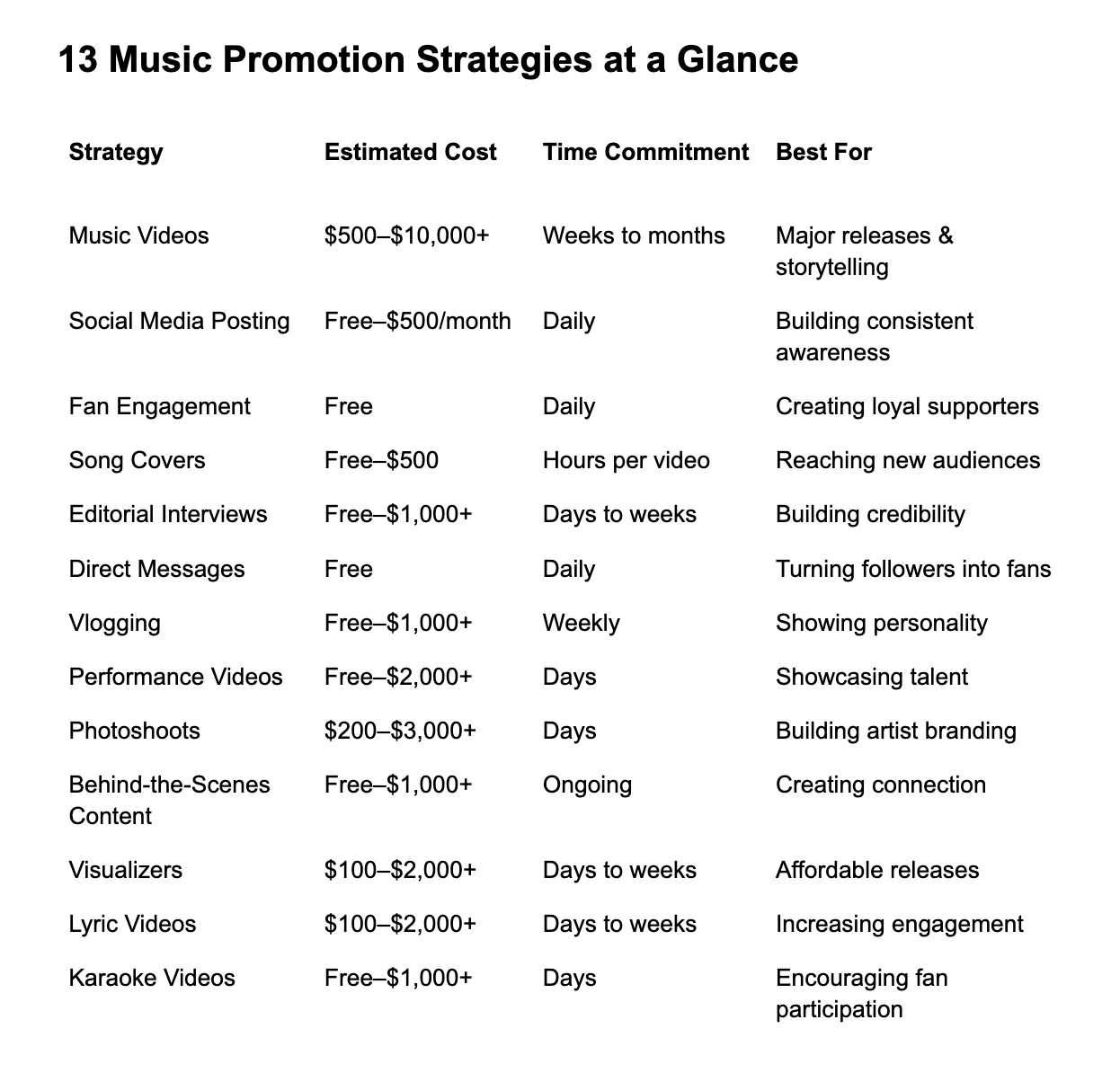
Whether you are releasing your first single or building a long-term music career, here are 13 ways to promote your music online and get more people listening.
Build Awareness: Get More People Discovering Your Music
1. Create Music Videos That Tell Your Story
Estimated Cost: $500–$10,000+
Time Commitment: 2–8 weeks
Music videos remain one of the most powerful ways to promote a song because they transform audio into an experience.
A great music video gives fans something to remember. It introduces your personality, your aesthetic, and the world surrounding your music.
The biggest mistake artists make is treating a music video as simply a visual version of the song. The strongest videos add another layer to the music.
Think about the difference between:
A band performing in a room because they needed a video.
An artist creating a visual world that makes fans want to watch again.
The second option builds a brand.
A music video can also become dozens of pieces of content:
short clips for TikTok and Instagram Reels
behind-the-scenes footage
teaser trailers
photos
interviews about the concept
premiere content
Independent artists do not always need a massive budget. A creative concept with strong direction can often outperform an expensive production without a clear idea.
For example, many Contagion Media artists use visual storytelling to create a stronger connection between their music and identity. The goal is not simply to present an artist—it is to introduce people to their world.
2. Post on Social Media Every Day
Estimated Cost: Free–$500/month
Time Commitment: 30 minutes–2 hours daily
Social media is one of the most important tools available to independent musicians—but many artists misunderstand how to use it effectively,
Social media is not just a place to announce new releases.
If every post says: "New song out now. Link in bio."
People eventually stop paying attention. The artists who grow are the ones who create ongoing conversations.
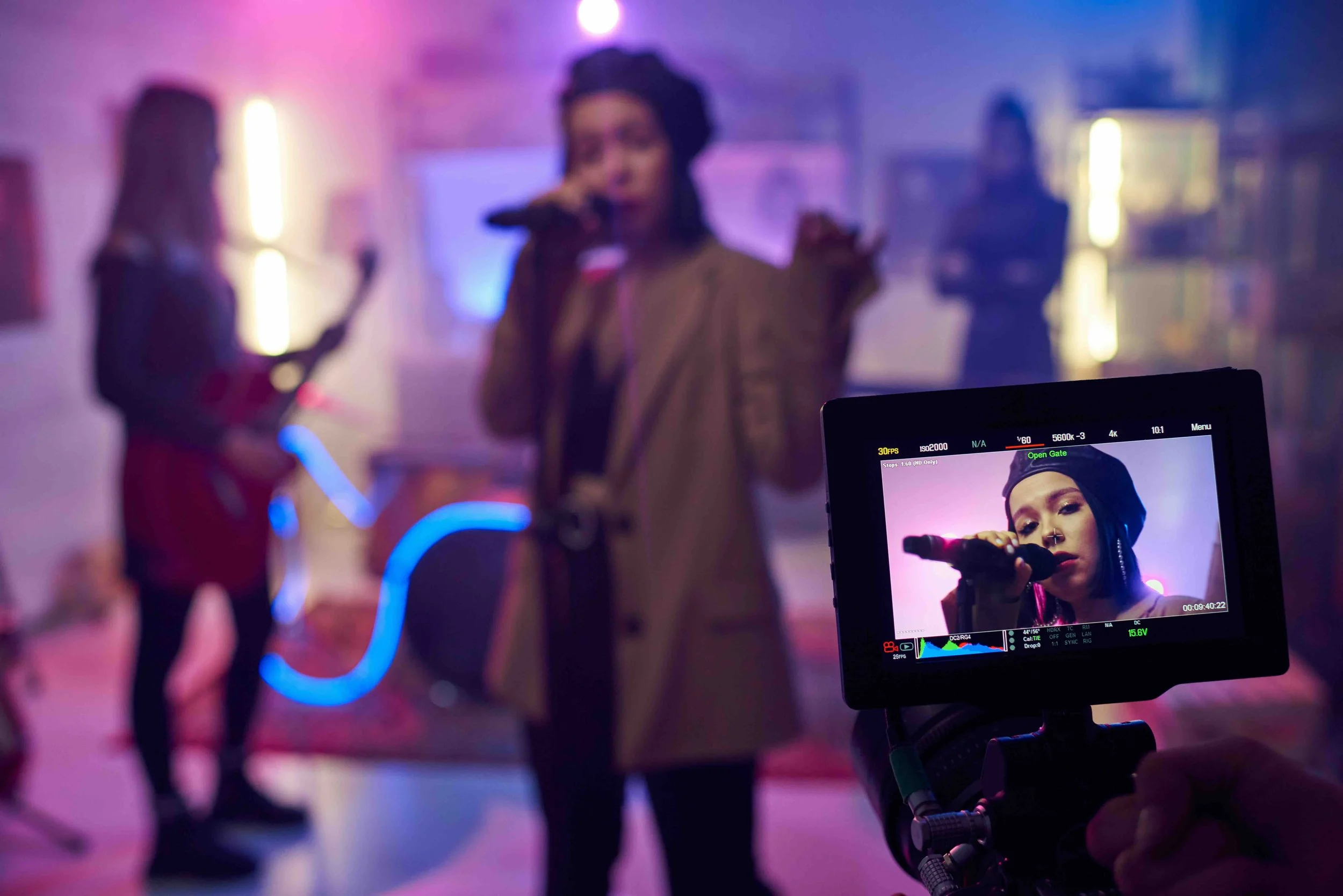
Photo by pressmaster | Adobe Stock
Daily content can include:
songwriting clips
studio sessions
opinions about music
lifestyle moments
rehearsal footage
fan reactions
personal stories
unfinished ideas
creative inspiration
The goal is to make people feel like they are part of the journey.
A fan who watches you create a song, sees the struggles behind it, and follows the process is much more likely to care when the final release arrives.
Consistency matters because most people will not discover you the first time they see your content. They may need to see your name, hear your music, and interact with your personality multiple times before becoming a true supporter.
3. Include Your Fans in the Process
Estimated Cost: Free
Time Commitment: Ongoing
The relationship between artists and fans has changed.
Fans no longer want to only experience the finished product—they want to feel involved in the journey.
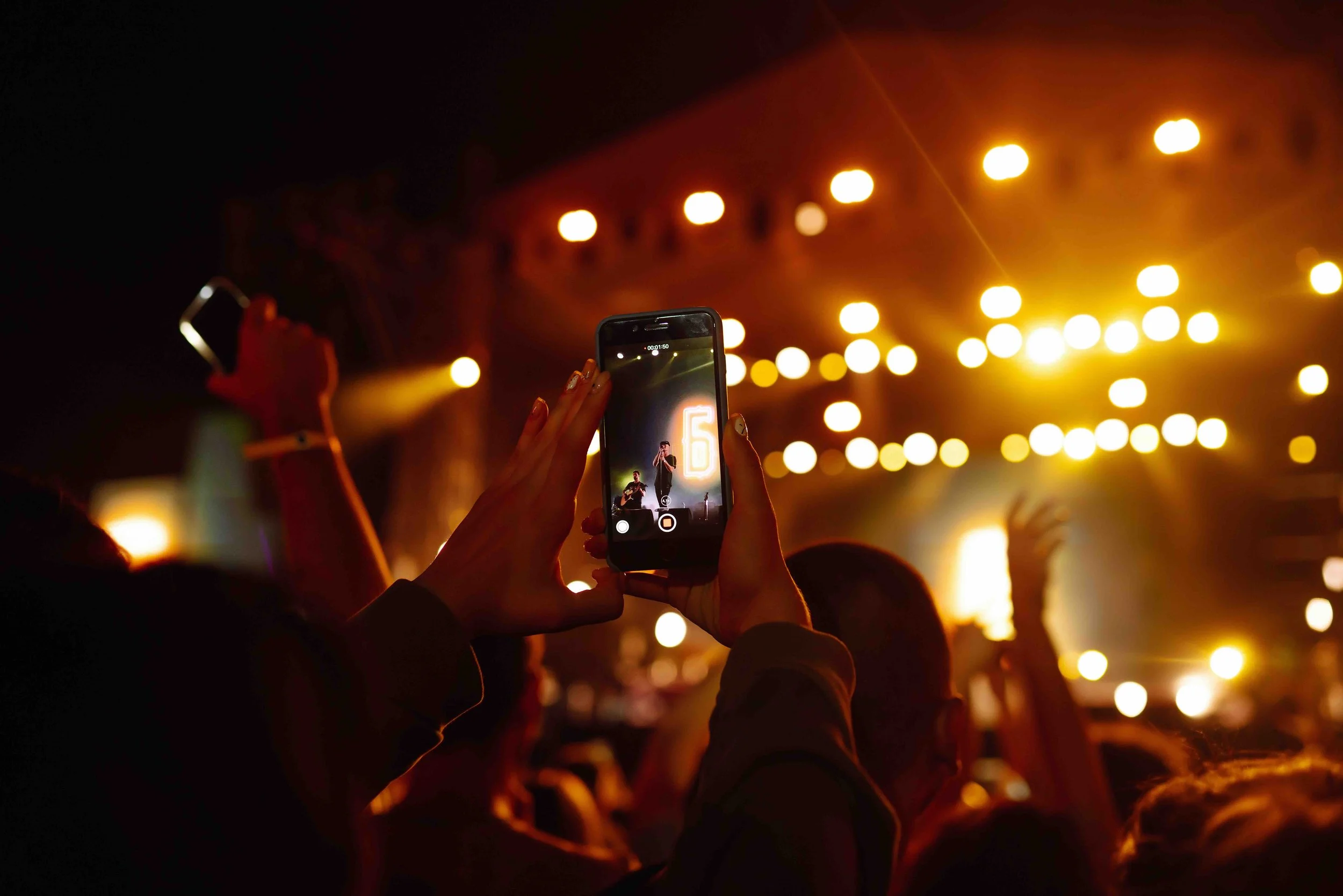
Photo by maxbelchenko | Adobe Stock
Inviting your audience into your creative process can create a deeper connection before a song is even released.
Ideas include:
Asking fans to choose between cover artwork options
Letting followers vote on merch designs
Sharing unfinished song ideas
Asking for opinions on lyrics
Showing behind-the-scenes decisions
Creating challenges around your music
This turns your audience from passive listeners into active supporters.
A person who helped choose your album artwork or watched your song develop over months feels personally connected to the final result.
That emotional investment is what creates longtime fans.
4. Post Song Covers
Estimated Cost: Free–$500
Time Commitment: A few hours per video
Song covers are one of the oldest forms of music promotion, but they remain effective because they allow artists to connect with existing audiences.
When someone searches for a popular song, cover videos can introduce them to a new artist.
The key is making the cover your own.
Simply recreating the original version may show skill, but it does not always show identity.
Consider:
changing the arrangement
performing an acoustic version
adding a different genre influence
creating a unique visual style
A great cover answers the question:
"Why should someone listen to this artist instead of the original?"
Covers are especially useful for newer musicians because they allow audiences to discover your voice before committing to your original songs.
5. Get Featured in Online Editorial Interviews
Estimated Cost: Free–$1,000+
Time Commitment: Days to weeks
Music promotion is not only about reaching people—it is also about building credibility.
Online interviews, artist features, and editorial articles give musicians something valuable:
A story.
People connect with artists because of who they are, not just what they create.
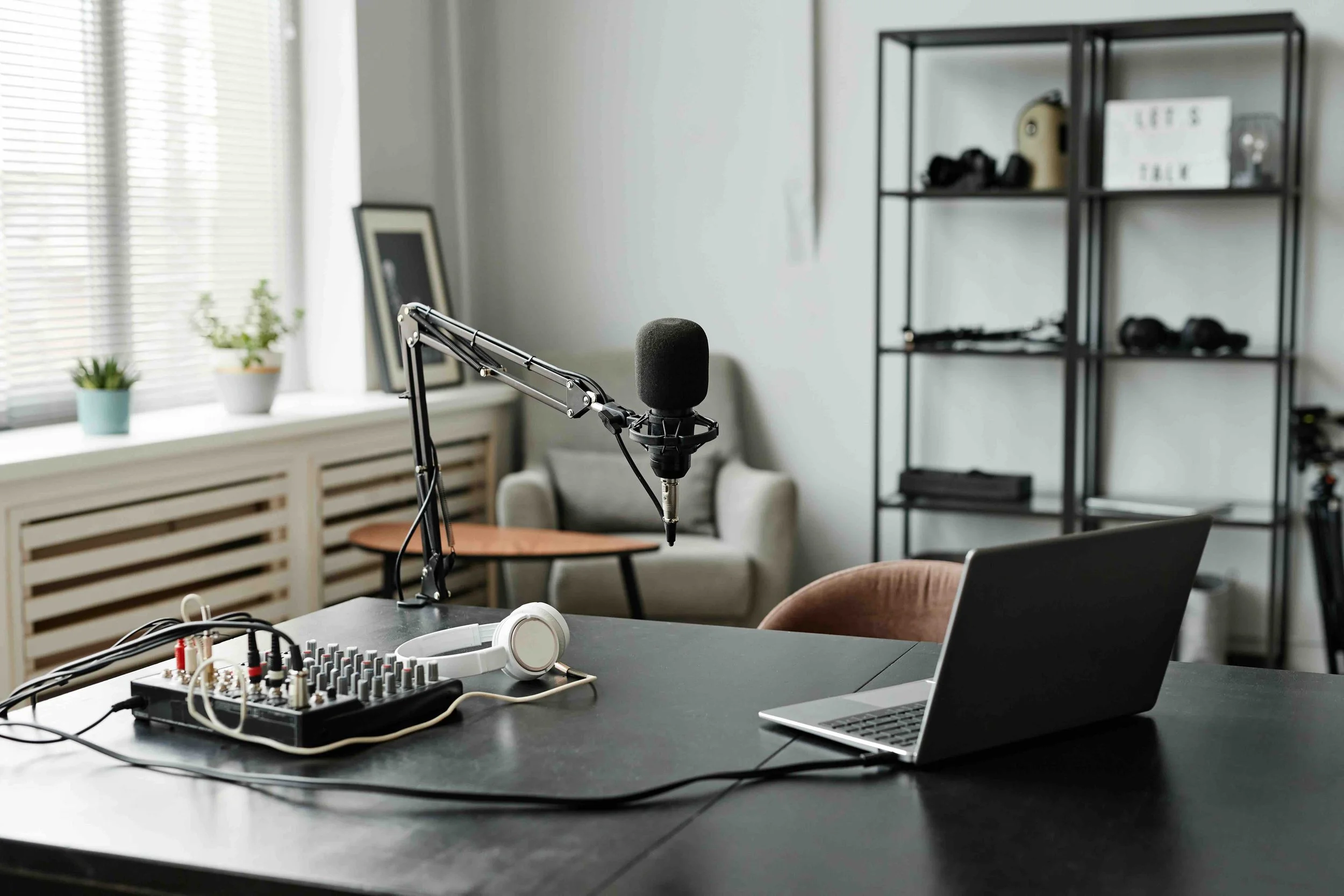
Photo by Seventy Four | Adobe Stock
An editorial feature can highlight:
your background
your creative process
your influences
your latest release
your goals as an artist
It also creates content you can share across your platforms.
Instead of posting:
"Listen to my new song."
you can share:
"Read the story behind my new release."
That creates curiosity and gives fans a reason to engage.
Independent artists should look for opportunities with:
music publications
local magazines
creative platforms
podcasts
artist communities
Contagion Media was built around this idea—giving artists more visibility through storytelling, interviews, and creative media.
6. Send a DM to Your New Followers
Estimated Cost: Free
Time Commitment: 15–60 minutes daily
One of the most overlooked music promotion strategies is also one of the simplest: actually talking to people.
Many artists focus so much on gaining followers that they forget followers are real people who chose to interact with their work.
A new follower is not automatically a fan—but they are an opportunity to start a relationship.
Sending a genuine message can turn a casual follower into someone who actively supports your music.
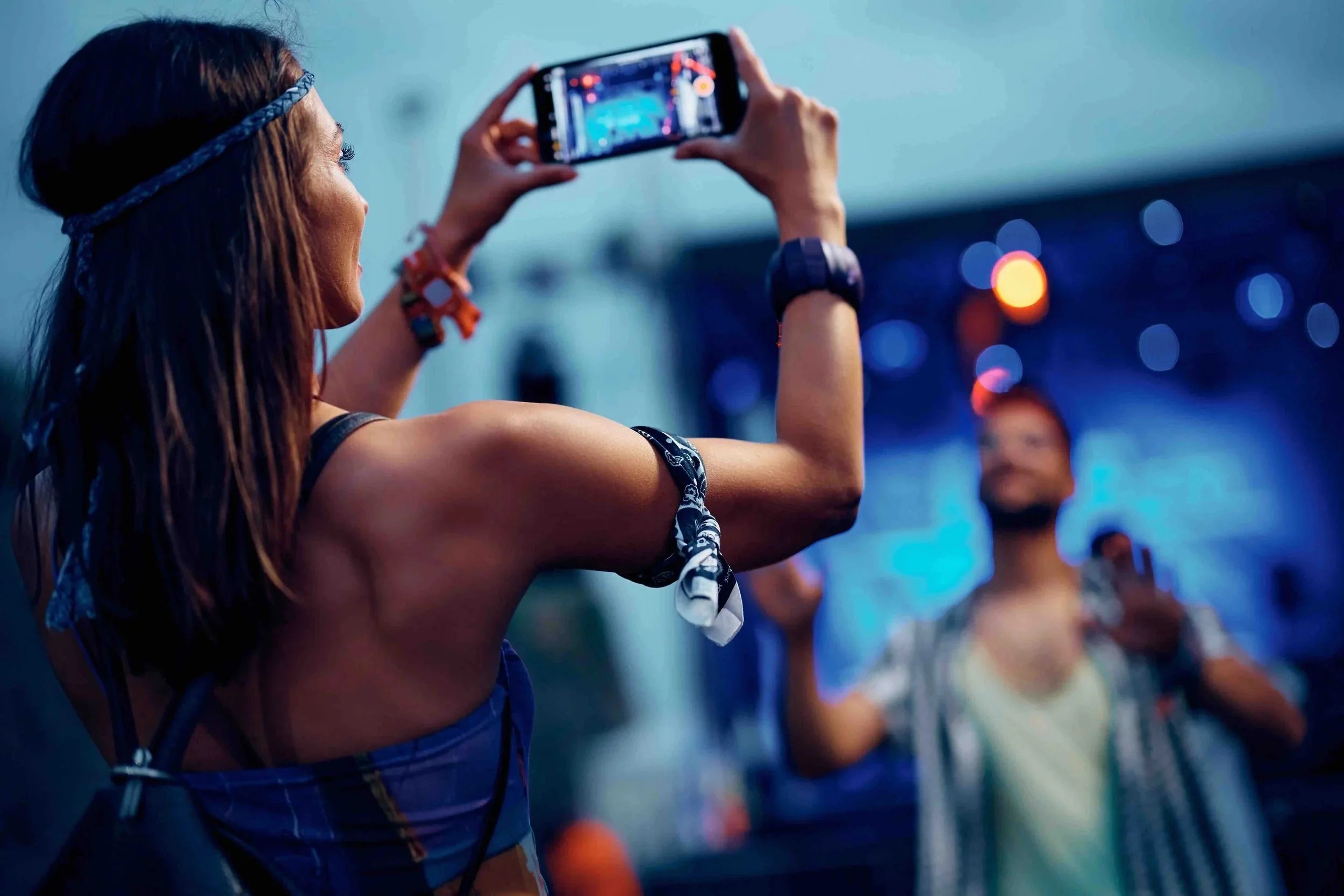
Photo by Drazen | Adobe Stock
The key word is genuine.
A bad message:
"Thanks for following. Stream my new song."
A better message:
"Hey, thanks for following! I checked out your page and saw you’re into local shows. I appreciate you supporting independent artists."
The goal is not to immediately sell something. The goal is to create a connection.
Some of the biggest supporters of independent artists are not discovered through advertisements—they are people who felt personally connected to the artist.
Simple conversations can lead to:
loyal fans
concert attendees
playlist shares
collaborations
future opportunities
For smaller artists especially, direct interaction can be one of the biggest advantages they have over larger musicians.
A global superstar may have millions of followers, but they cannot personally connect with everyone. Independent artists can.
7. Start Vlogging Your Artist Journey
Estimated Cost: Free–$1,000+
Time Commitment: 1–3 hours weekly
Music is emotional, and fans want to understand the person behind the songs.
Vlogging gives audiences a window into your life beyond the final product.
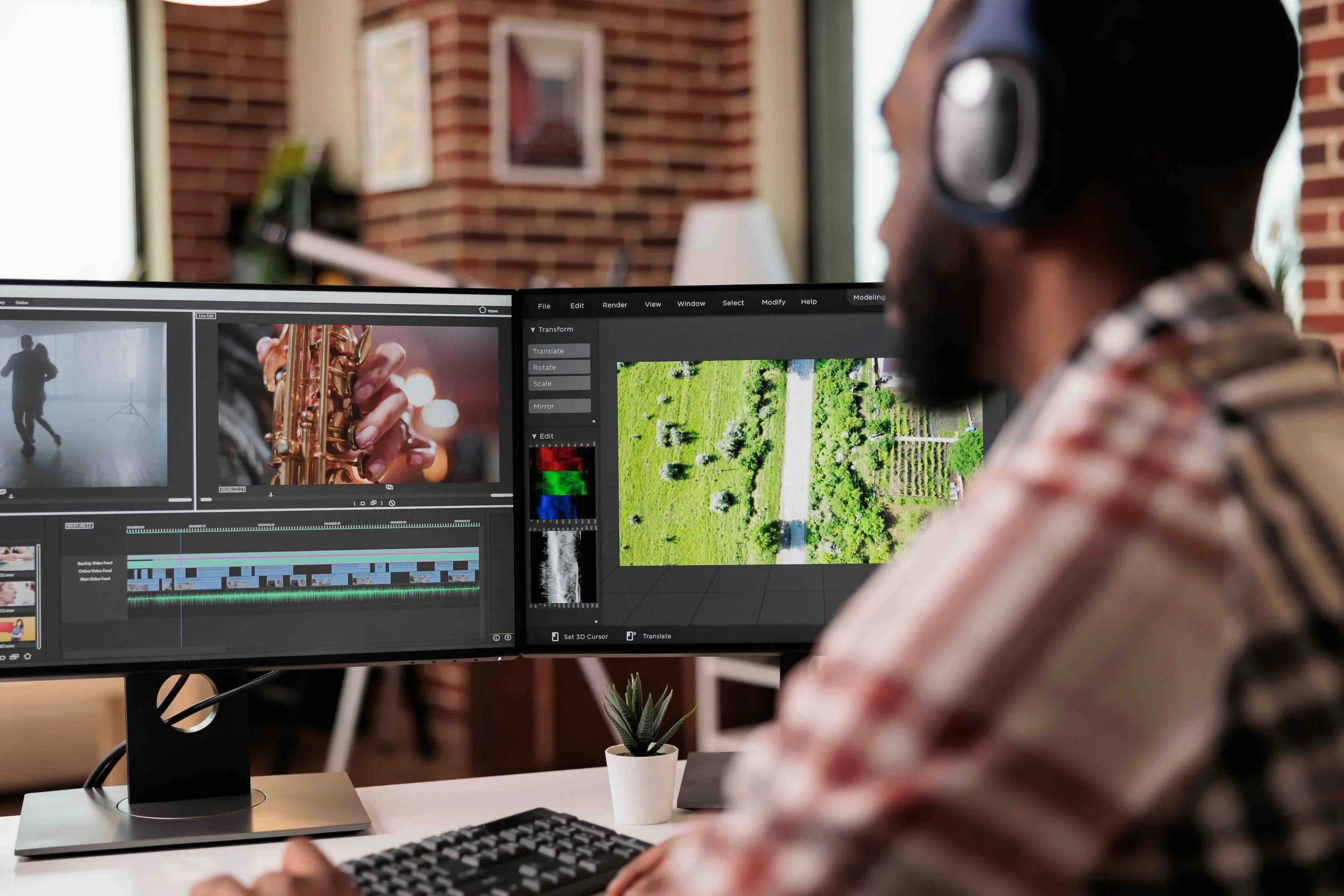
Photo by DC Studio | Adobe Stock
A vlog can include:
Creating a song from scratch
Preparing for a performance
Touring experiences
Recording sessions
Meeting collaborators
Day-to-day life as an artist
Challenges and lessons learned
The biggest misconception about vlogging is that something dramatic needs to happen.
It doesn't.
A compelling artist vlog is not necessarily about having the most exciting life—it is about telling an honest story.
People enjoy watching the journey.
They want to see:
the artist before success
the work behind the music
the personality behind the brand
This is why documentary-style content has become so powerful. Fans don't only want to hear the finished song—they want to understand why it exists.
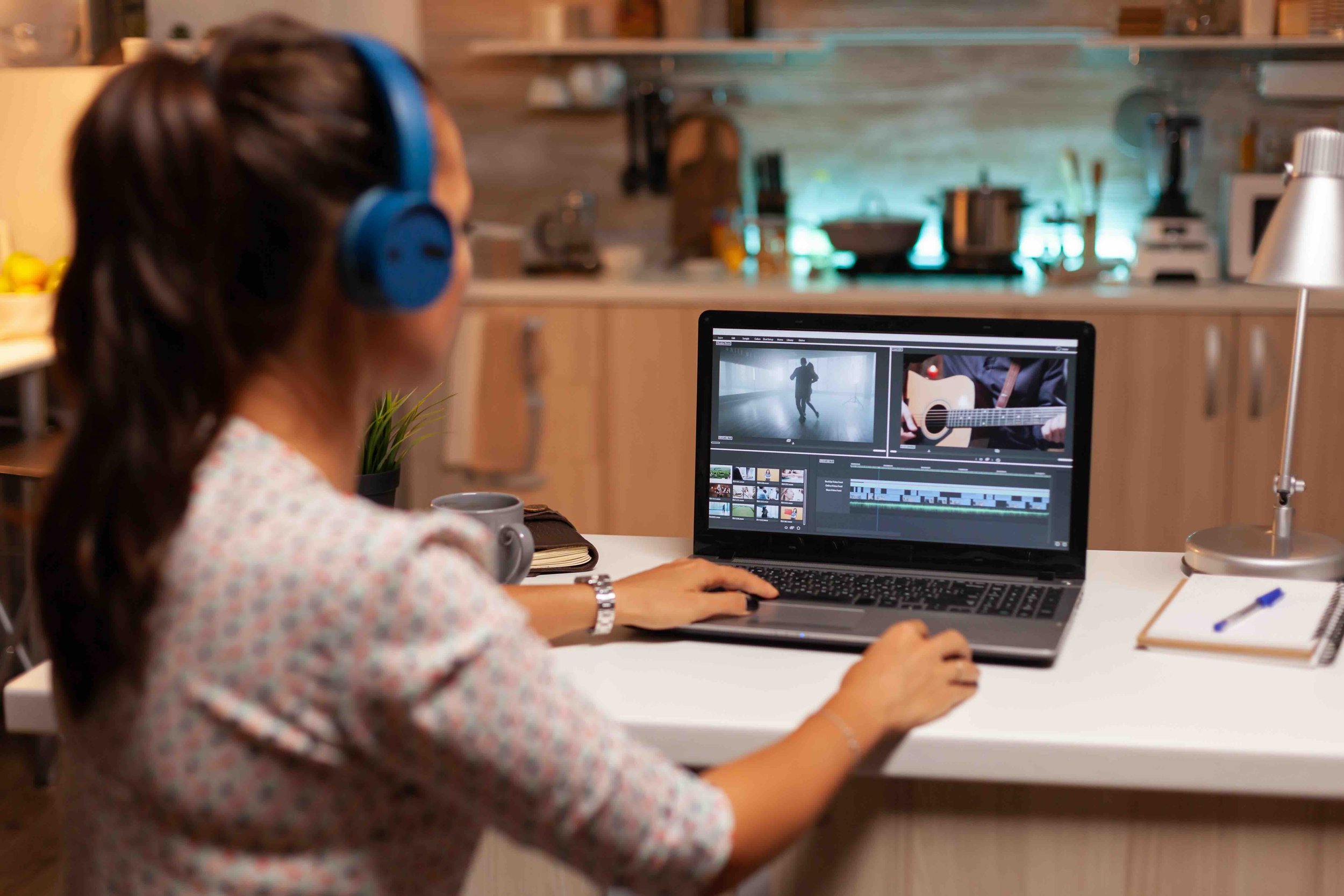
Photo by DC Studio | Adobe Stock
A vlog also creates long-form content that can be repurposed into:
YouTube videos
Instagram Reels
TikToks
short clips
interviews
One day of filming can become weeks of promotional material.
8. Create Performance Videos
Estimated Cost: Free–$2,000+
Time Commitment: A few days to plan and produce
Performance videos are different from music videos.
A music video focuses on storytelling, concepts, and visuals.
A performance video focuses on one thing: Showing people your talent.
These videos allow potential fans to experience what you sound like without heavy production.
Examples include:
Live studio sessions
Acoustic performances
Rooftop performances
Concert clips
One-take recordings
Instrument-focused videos
Performance videos are especially valuable because they build trust.
Someone discovering you online may wonder:
"Can this artist actually perform?"
A strong performance video answers that immediately.
Many musicians also underestimate the value of simple, authentic performances. A professionally recorded vocal in an intimate setting can sometimes create a stronger emotional response than a highly produced video.
The best format depends on the goal:
Music video: "Experience my artistic world."
Performance video: "Experience my talent."
Both serve different purposes.
9. Invest in Professional Photoshoots
Estimated Cost: $200–$3,000+
Time Commitment: 1–3 days
Your music is your art—but your image is part of your brand.
In today's digital world, people often discover artists visually before they ever listen to a song.
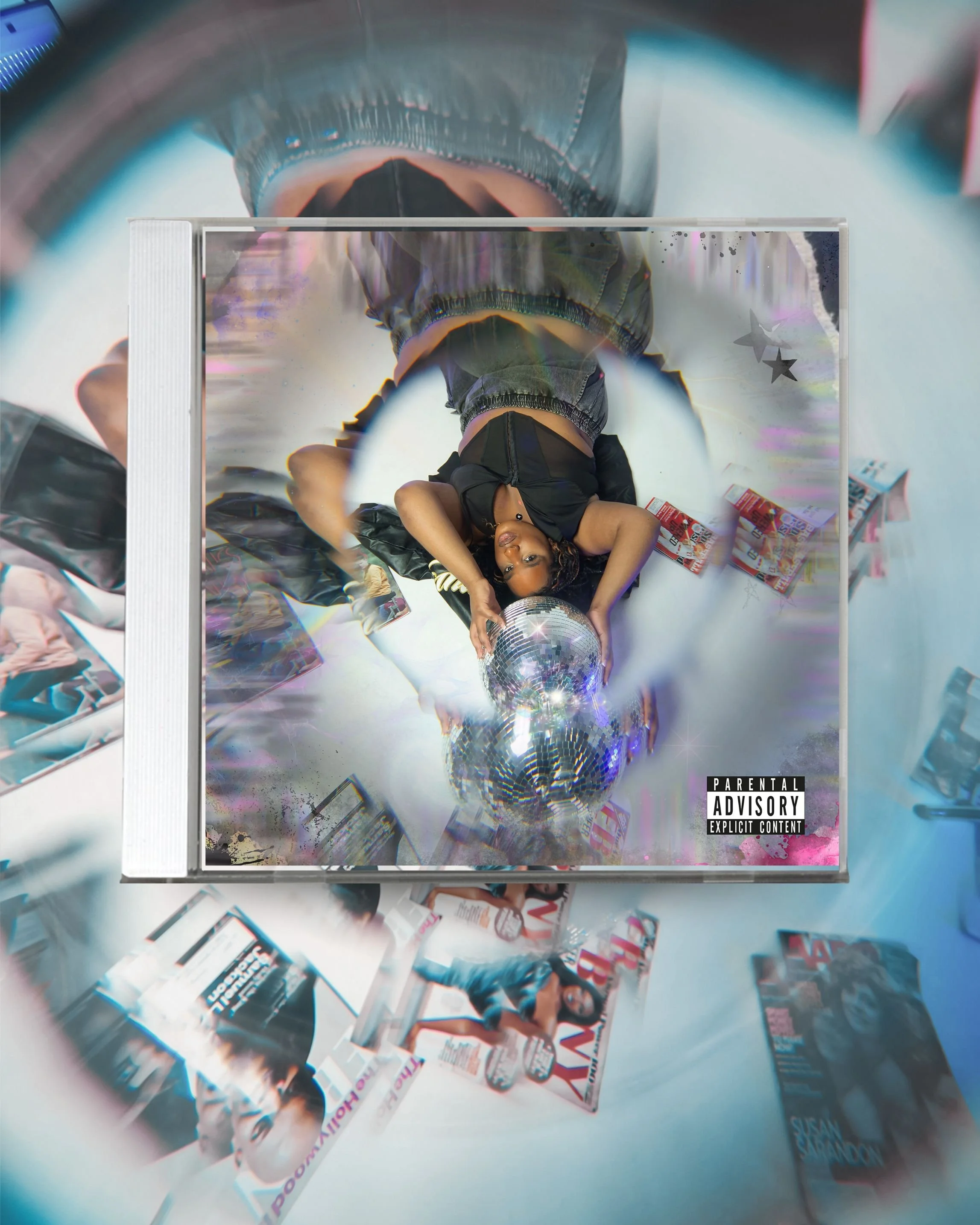
Photo of Junovxrse by KBR | Contagion Media
Your profile picture, album artwork, press photos, website, and social media all communicate something about who you are.
A professional photoshoot helps create consistency across your platforms.
Strong artist photography can be used for:
Spotify and streaming profiles
Press releases
Editorial interviews
Social media content
Posters
Merchandise
Event promotions
The goal is not simply to look professional.
The goal is to communicate identity.
A good artist photoshoot asks:
What emotions represent this musician?
What makes this artist different?
What visual world matches their sound?
A pop artist, metal artist, country musician, and hip-hop artist should not all have the same visual approach.
The strongest images feel connected to the music.
For example, Contagion Media approaches photography as storytelling rather than just taking portraits. The goal is to create images that help artists become more recognizable and memorable.
10. Share Behind-the-Scenes Content
Estimated Cost: Free–$1,000+
Time Commitment: Ongoing
Behind-the-scenes content is one of the easiest ways to create more content from the work you are already doing.
Many artists make the mistake of only sharing the final result.
They released the music video.
They post the finished song.
They announce the show.
But they skip the story behind it.
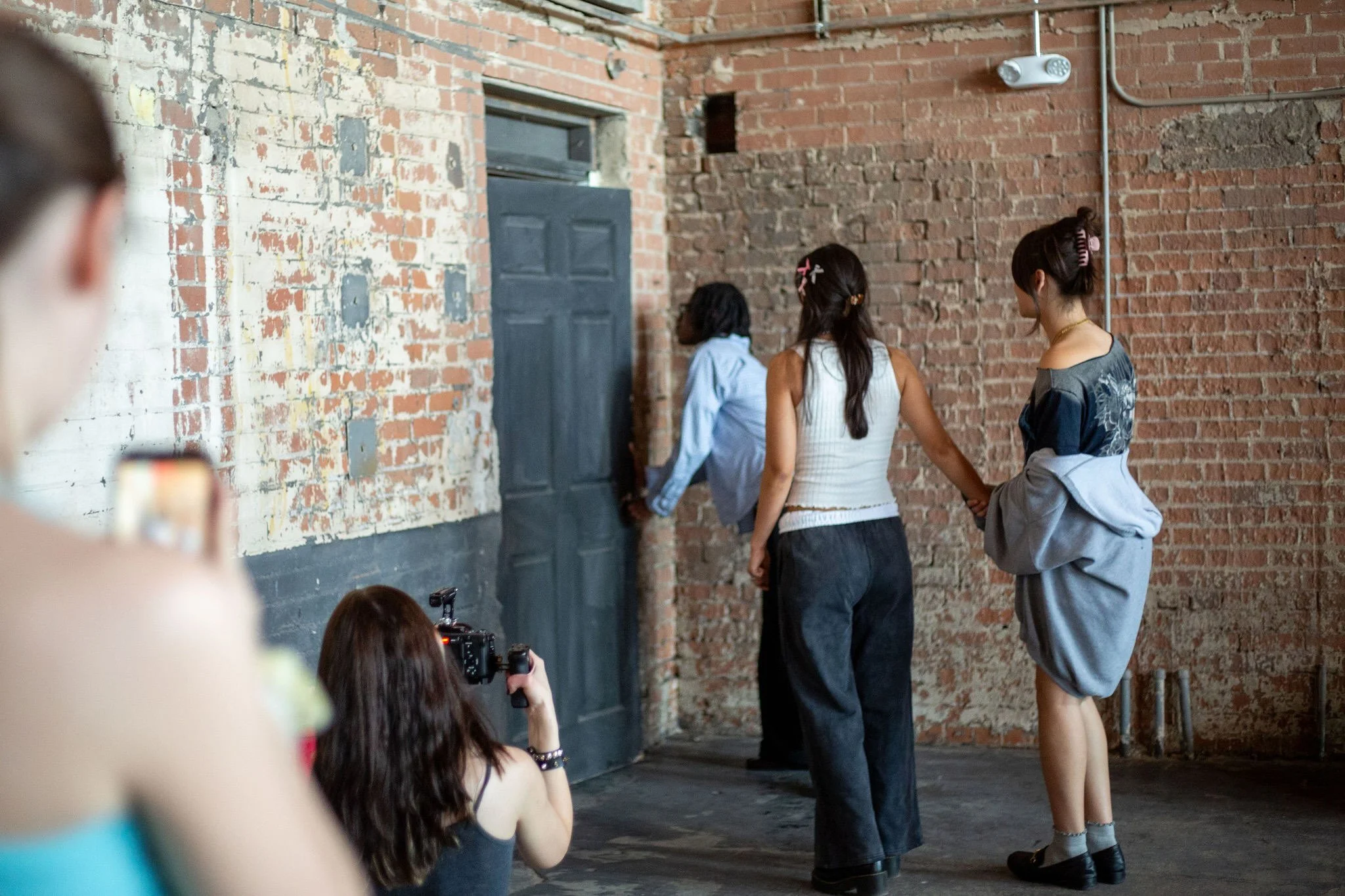
Behind the Scenes from “Simple” Music Video for Mandy Slate, Photo by KBR | Contagion Media
The process is often what creates the strongest connection.
Behind-the-scenes content can include:
Recording sessions
Rehearsals
Video shoots
Photoshoots
Writing sessions
Team meetings
Travel days
Equipment setups
First reactions
People love seeing how things are made.
A 15-second clip of you recording a difficult vocal take may be more engaging than a polished promotional graphic because it shows something real.
Behind-the-scenes content also helps stretch your creative projects further.
A single music video shoot can create:
The final music video
A behind-the-scenes vlog
Short social clips
Photographer content
Crew interviews
Production photos
Release teasers
Instead of thinking:
"I only have one piece of content."
Think:
"How many stories can come from this moment?"
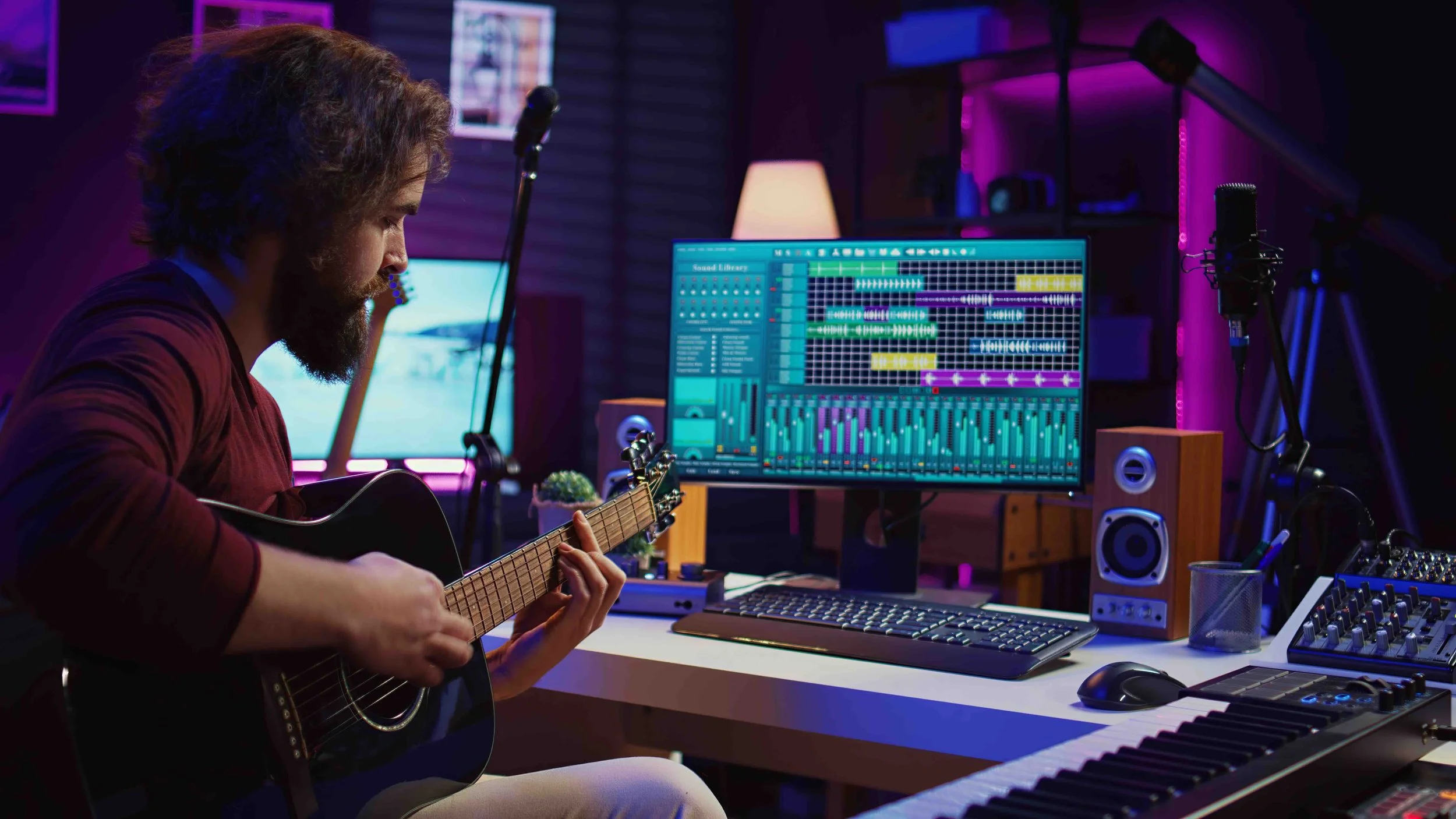
Photo by DC Studio | Adobe Stock
Why Branding Matters for Independent Musicians
The common thread between these strategies is that successful artists are not only promoting songs.
They are building worlds.
The modern music fan does not just follow a sound—they follow an identity.
Your music, visuals, personality, story, and community all work together to create your brand.
The artists who consistently grow are usually the ones who understand that every piece of content is another opportunity for someone new to discover them.
11. Create Visualizers for Your Songs
Estimated Cost: $100–$2,000+
Time Commitment: A few days to several weeks
Not every song requires a full-scale music video.
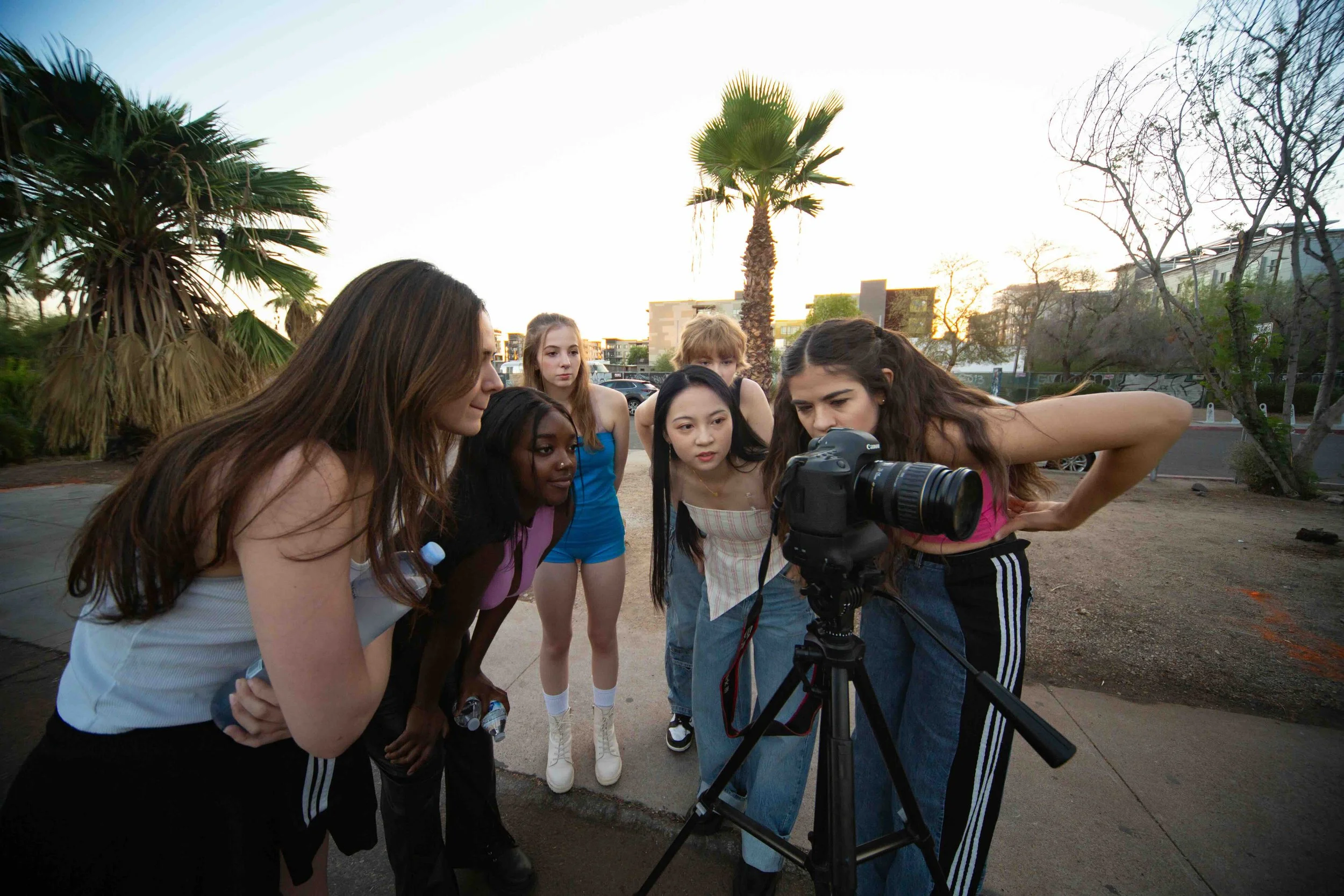
Photo of Zone A Dance Team by KBR | Contagion Media
While music videos are powerful storytelling tools, they can also require significant planning, budgeting, and production time. For independent artists releasing music consistently, creating a professional music video for every song may not always be realistic.
That is where visualizers become valuable.
A visualizer is a piece of visual content designed to accompany a song without requiring a full narrative production.
They can include:
Animated artwork
Motion graphics
Looping visuals
Abstract imagery
Artist photography
Lyric elements
Performance clips
Visualizers give listeners something to watch while experiencing your music.
They are especially effective for:
singles between major releases
album tracks
experimental songs
frequent releases
The biggest advantage of visualizers is flexibility.
A music video might represent the main story behind a song.
A visualizer can reinforce the mood.
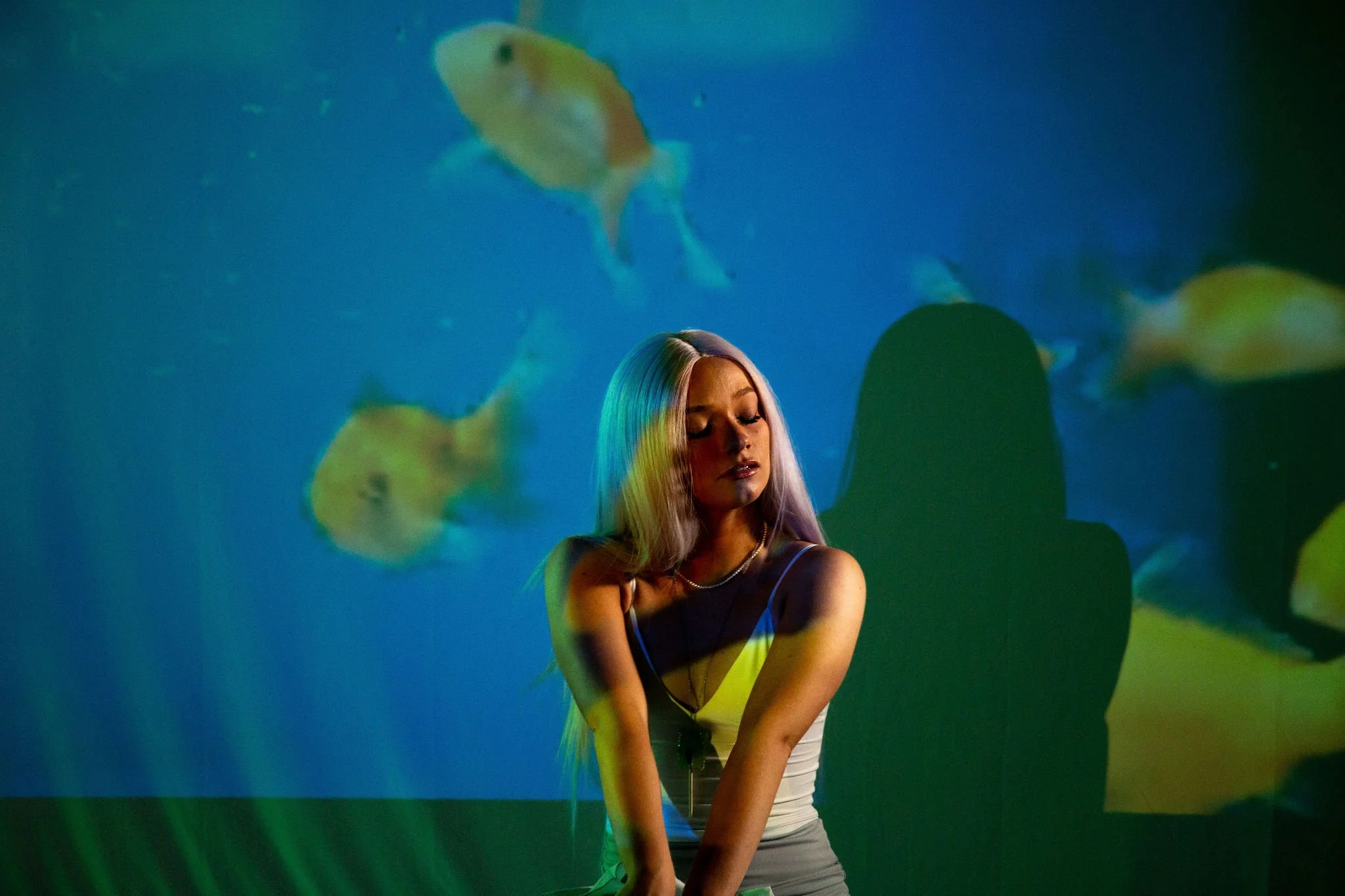
Photo of Mandy Slate by KBR | Contagion Media
For example:
A dark, emotional song may use atmospheric visuals, slow movement, and cinematic imagery.
An energetic song may use fast edits, vibrant graphics, and motion effects.
The visual should match the feeling of the music.
A strong visualizer also creates another opportunity to appear on platforms like YouTube, where people can discover your music through search.
12. Release Lyric Videos
Estimated Cost: $100–$2,000+
Time Commitment: A few days to several weeks
Lyrics are one of the most personal parts of music.
They tell the story behind the song, communicate emotions, and often become the lines fans remember most.
Lyric videos help transform those words into a visual experience.
Unlike a visualizer, which focuses primarily on mood and atmosphere, a lyric video places the actual message of the song at the center.
A lyric video can help fans:
understand the meaning behind a song
remember important lyrics
sing along
connect emotionally with the message
This is especially valuable for artists whose music relies heavily on storytelling.
A songwriter with powerful lyrics has an opportunity to turn those words into shareable moments.
Fans often post their favorite lyrics online because certain lines represent something they are experiencing personally.
A lyric video gives those moments a place to live.
Many artists also use lyric videos strategically after a song release:
Release Day: Official song + promotional content
Following Week: Lyric video
Later: Performance video, acoustic version, behind-the-scenes content
This keeps a release active longer instead of allowing it to disappear after the first few days.

Photo by Syda Productions | Adobe Stock
13. Create Karaoke Videos for Your Fans
Estimated Cost: Free–$1,000+
Time Commitment: A few days
Karaoke videos are one of the most interactive ways to promote your music online.
Unlike traditional promotional content, karaoke videos invite your audience to participate.
They turn listeners into creators.
Fans can:
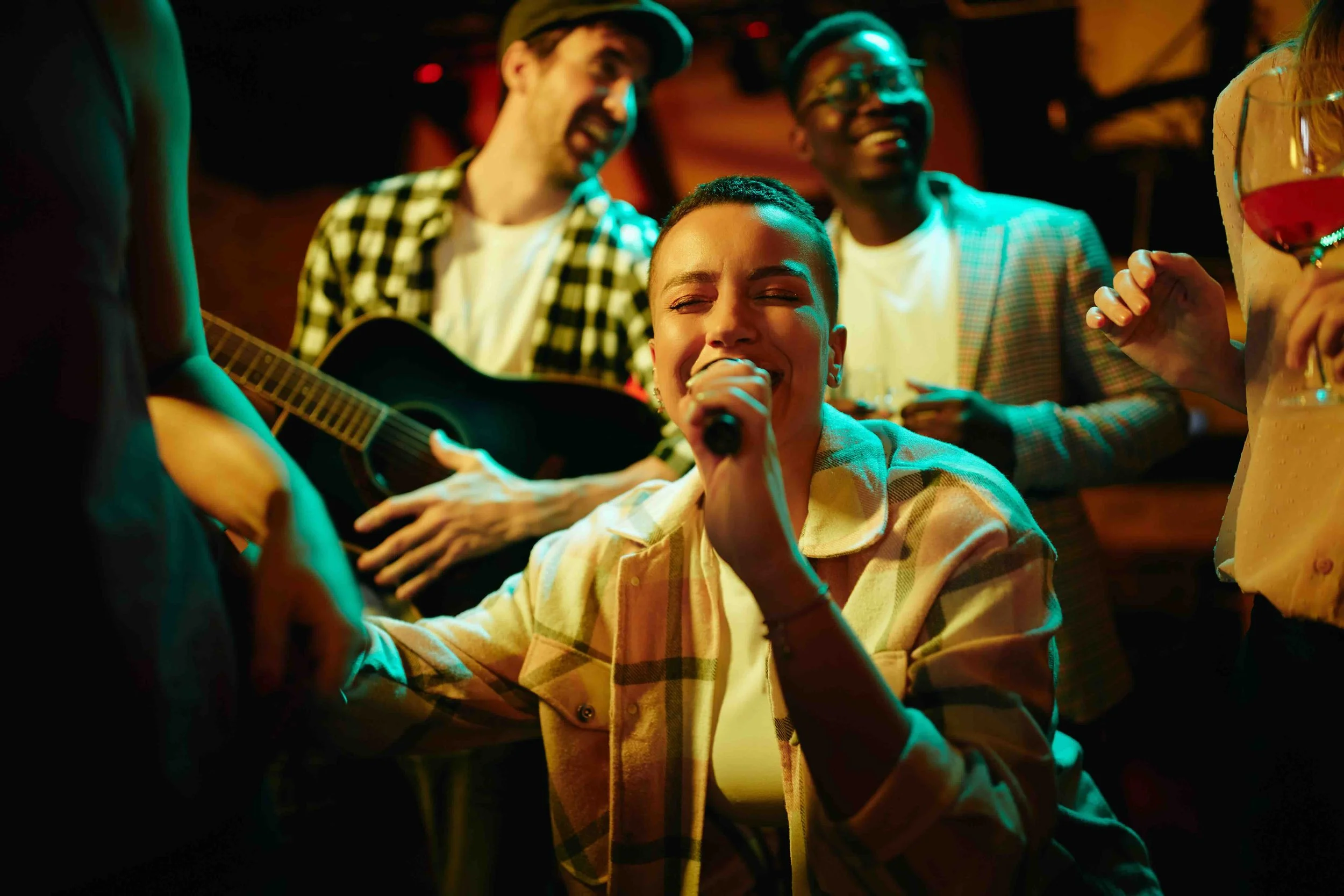
Photo by Drazen | Adobe Stock
sing your song
create their own videos
share performances
introduce your music to new audiences
These are the same factors that make trends and challenges work so well online.
People are not only consuming content—they are becoming part of it.
Karaoke content works especially well for:
catchy choruses
emotional ballads
songs with memorable lyrics
community-driven artists
It also creates an opportunity to strengthen fan relationships.
You can repost fan performances, react to covers, and highlight supporters who engage with your music.
A fan who participates in your music becomes much more invested than someone who simply presses play.
Common Music Promotion Mistakes That Keep Artists Invisible
Creating content is important—but how you approach promotion matters just as much.
Many talented musicians struggle to grow because they make a few common mistakes.
1. Only Promoting When They Release Music
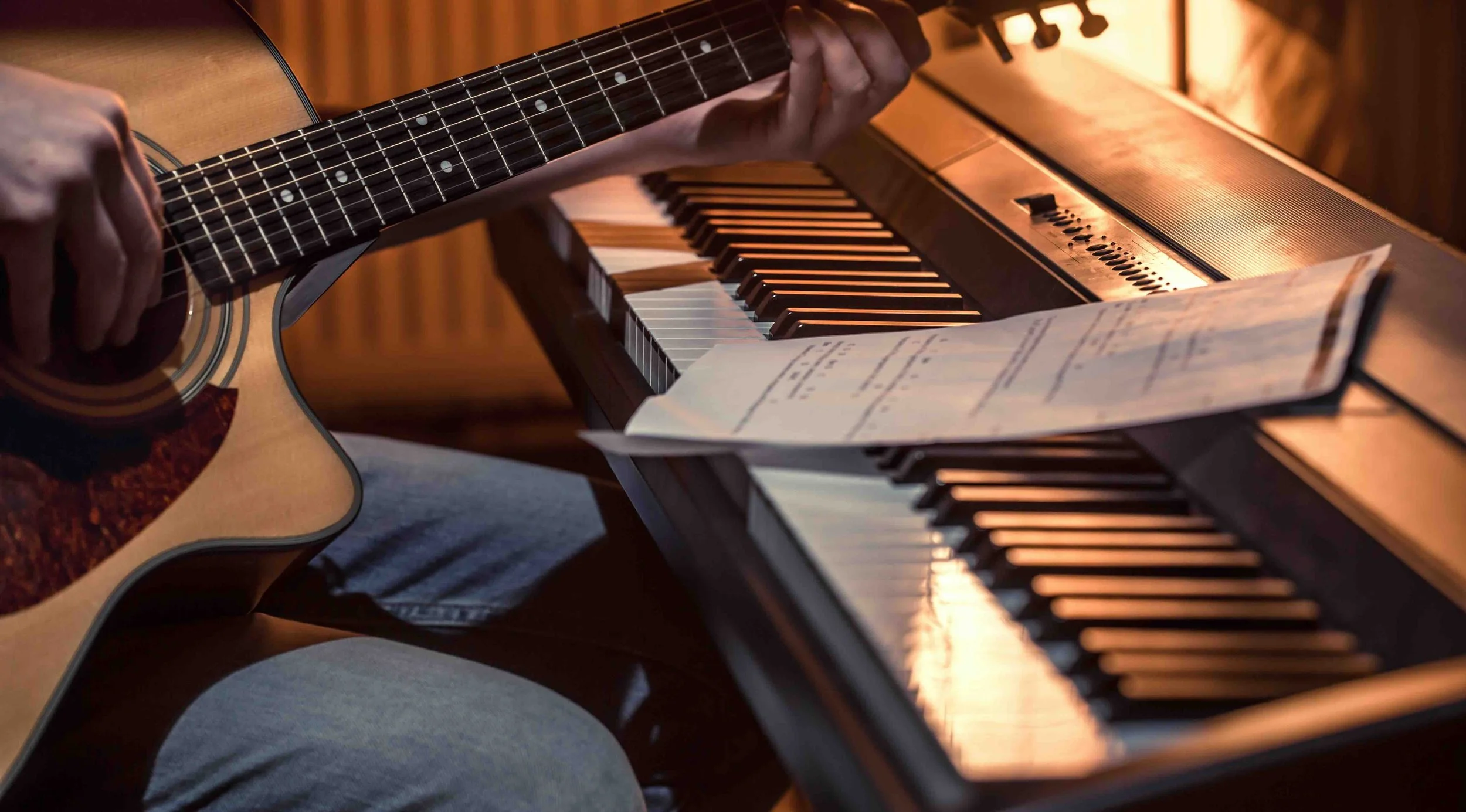
Photo by puhimec | Adobe Stock
A song should not disappear after release week.
Many artists spend months creating a project and then promote it for only a few days.
The reality is that most listeners will not discover your song immediately.
A single release can become weeks or months of content:
announcement posts
teasers
studio footage
music videos
interviews
performances
fan reactions
lyric content
behind-the-scenes moments
The release is the beginning of promotion—not the end.
2. Waiting Until Everything Is Perfect
A preoccupation with perfection can prevent artists from creating consistently.
Many musicians delay posting because they believe they need:

Photo by Guys Who Shoot | Adobe Stock
better equipment
a larger audience
a professional studio
a perfect visual identity
But growth comes from showing up.
The artists who build audiences are often the ones who document their progress.
People enjoy watching evolution.
A fan who discovers you early has the opportunity to grow alongside you.
3. Focusing Only on the Music
Great music matters—but modern artists are competing in an attention economy.
People connect with stories.
They connect with personalities.
They connect with experiences.
The artists who build lasting careers understand that their music is part of a larger identity.
The question is not only:
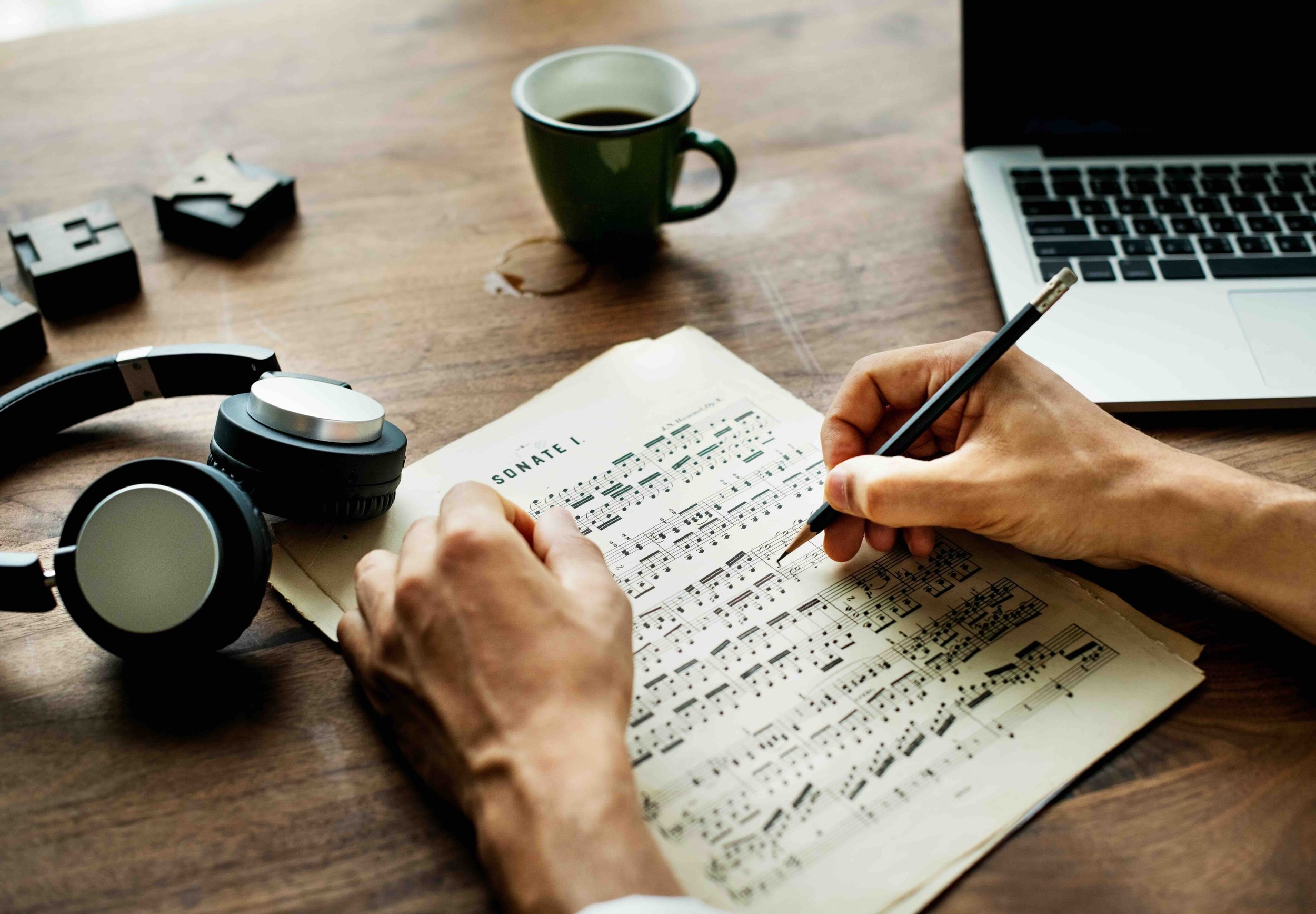
Photo by Rawpixel.com | Adobe Stock
"Is this song good?"
It is also:
"Why should someone care about this artist?"
4. Ignoring Their Visual Brand
Music is emotional, but discovery is often visual.
Before someone listens to your song, they may see:
your profile photo
your album artwork
your social media posts
your videos
your website
A consistent visual identity helps people remember you.
Your style does not need to be expensive—it needs to be intentional.
5. Not Building Relationships
The music industry has always been built on connections.
Today, those connections can start online.
Responding to comments, talking with followers, collaborating with other artists, and engaging with your community all create opportunities.
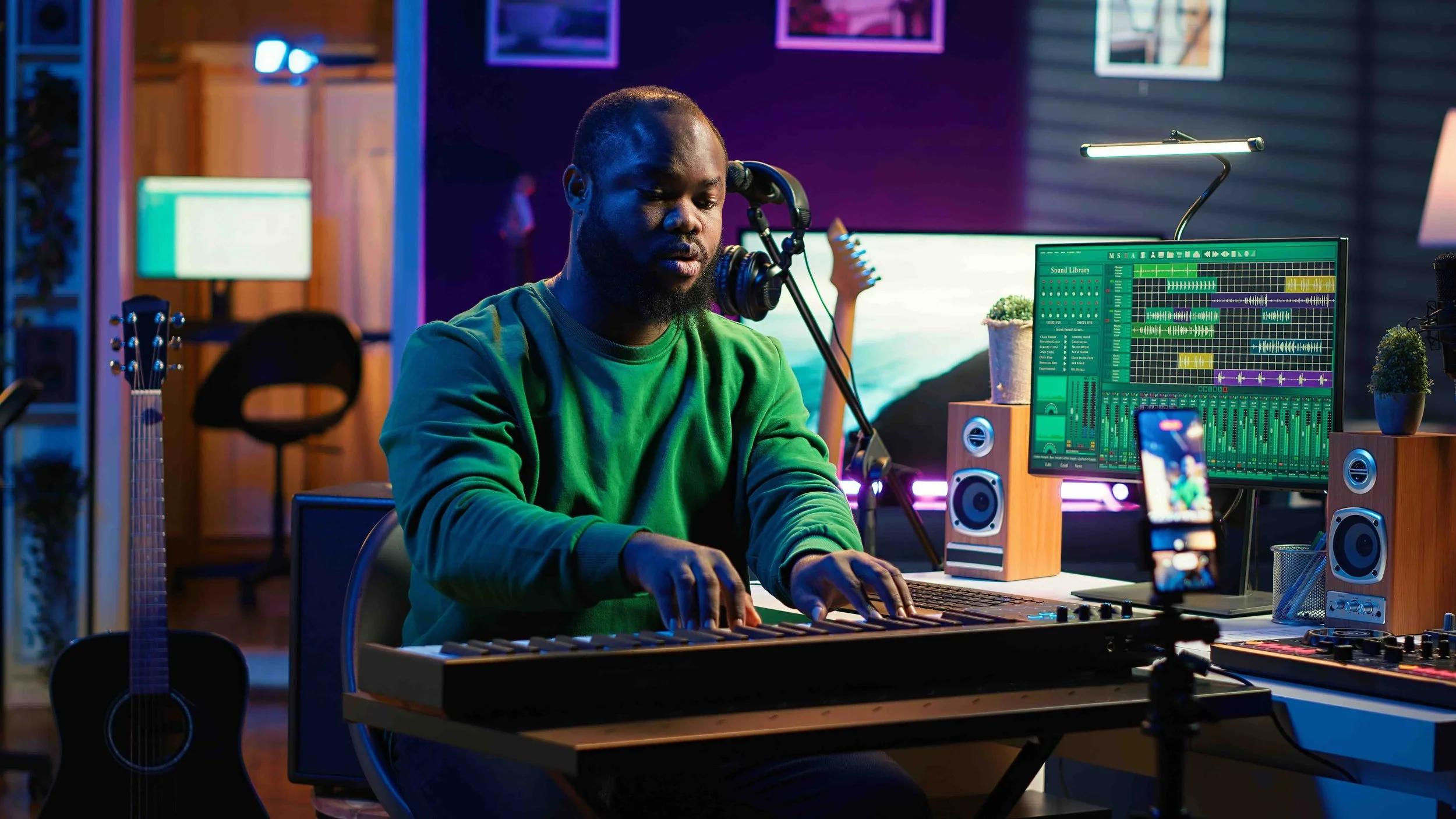
Photo by DC Studios | Adobe Stock
People support people.
The more authentic relationships you build, the stronger your foundation becomes.
The Only Way Fans Will Find You Is If They Know About You
Making music is only one part of building a career as an artist. The other part is creating opportunities for people to discover and connect with it.
There are more tools available to musicians today than ever before. Independent artists can create their own videos, build communities, share their stories, and reach listeners around the world without waiting for traditional approval.
But opportunity only creates results when you take action. Choose one strategy from this list and start there.
Create the music video. Post the behind-the-scenes footage. Share the performance. Reach out to your audience. Tell your story.
The biggest barrier for many artists is not a lack of talent but the fear of putting themselves out there. Your future fans cannot support what they never discover.

Photo by astrosystem | Adobe Stock
At Contagion Media, our mission is to make artists more important by helping musicians and creatives build visibility through storytelling, photography, video production, editorial features, and content marketing.
If you have the music but need help creating the visuals and media strategy to bring your vision to more people, our team is available to help you create professional content that represents your artistry.
Your music deserves to be heard. Now make sure people have a reason to listen.
Frequently Asked Questions About Promoting Music Online
How do independent musicians promote their music online?
Independent musicians can promote their music online through a combination of social media content, music videos, fan engagement, editorial features, performance videos, visual content, and consistent storytelling. The most successful artists usually combine multiple strategies instead of relying on one platform.
How much does it cost to promote a song?
The cost of promoting a song varies depending on the strategy. Artists can start with free methods like social media posting, fan engagement, and performance videos. More professional options like music videos, photography, and editorial campaigns can range from hundreds to thousands of dollars depending on production quality.
How often should musicians post on social media?
There is no single formula, but consistent posting is important. Many independent artists benefit from posting daily or several times per week. The focus should be creating valuable content rather than only promoting releases.
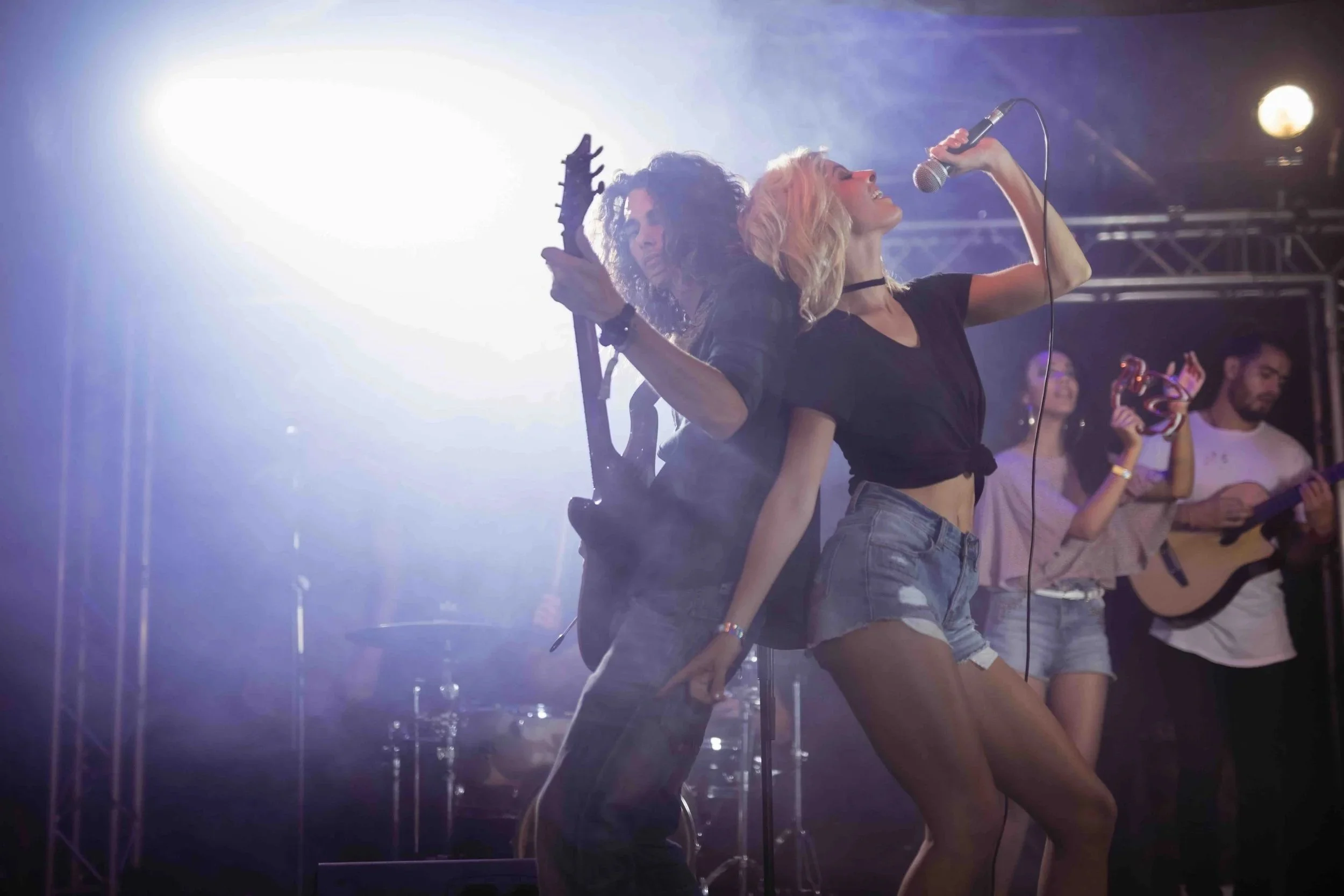
Photo by WavebreakMediaMicro | Adobe Stock
Do musicians need a record label to succeed?
A record label is no longer the only path to building a music career. Independent musicians now have access to distribution platforms, social media, content tools, and direct fan relationships that were previously unavailable.
However, professional support in areas like branding, marketing, content creation, and strategy can help artists grow faster.
What type of content should musicians post?
Musicians should post a variety of content, including:
New music announcements
Studio footage
Performance clips
Behind-the-scenes videos
Personal stories
Fan interactions
Music videos
Photoshoots
Creative process content
The best content gives fans a reason to connect with both the music and the person creating it.
Edited by Natalie Wheeler on July 25, 2026