
How to Start a Band: A Step-by-Step Guide to Forming a Music Group
By KBR
Starting a band can begin with something as simple as a conversation: “We should start a band.”
Turning that idea into an actual music project is another story.
You need the right people, a shared creative direction, songs, rehearsals, a name, an identity, and eventually an audience. Depending on your goals, you may also need contracts, professional recordings, photography, a website, marketing, live performances, and a release strategy.

Photo by alfa27 | Adobe Stock
It sounds like a lot because it is. But like most ambitious creative projects, it becomes much more manageable when you break it into stages.
Music groups have also had an extraordinary cultural impact. The Beatles, The Jackson 5, ABBA, Fleetwood Mac, Destiny's Child, Nirvana, TLC, and countless others became more than collections of musicians. Their sounds, personalities, imagery, and stories became part of popular culture.
That level of success is not something anyone can guarantee. But every one of those groups had to start somewhere.
Whether you want to form a rock band, girl group, boy band, hip-hop group, or another type of music ensemble, the process below can help you turn an idea into something real. You can follow it with almost no budget or scale it into a professional entertainment project. The fundamentals remain surprisingly similar.
1. Develop Your Own Skills and Identity First
Before recruiting anyone else, make sure you understand what you bring to the project.
Your technical ability does not have to be extraordinary, but it should be dependable. If you are a vocalist, work on your voice. If you play an instrument, become comfortable performing it. If you write, produce, dance, or arrange music, develop those skills enough that you can contribute consistently.
The old idea that a group is only as strong as its weakest member is not entirely wrong. Everyone does not need to have the same skill set, but everyone should be capable of meeting the standard the group is trying to establish.
Just as importantly, know yourself as an artist before trying to define a group.
What kind of music do you want to make? What artists influence you? What do you want your performances to feel like? Are you interested in commercial pop, alternative music, R&B, rock, hip-hop, electronic music, or something harder to categorize?
You do not need a perfectly developed artistic statement yet. You simply need enough self-awareness to know what you are bringing into the collaboration.

Photo by Drobot Dean | Adobe Stock
This will make finding compatible members much easier.
2. Define the Group Before You Recruit
Before you start posting audition notices, develop a rough vision for the group.
Decide what type of group you are building, approximately how many members you want, what roles are needed, and what kind of music you hope to create. Think about whether the group will primarily perform original material, covers, or a combination of both.
Then consider the question that can save you months of confusion:
Why should this group exist?
You do not need a completely original genre or a gimmick. Your difference might come from your sound, performance style, fashion, storytelling, or the combination of influences and personality each member brings.
For example, a vocal group might distinguish itself through choreography and a highly visual identity, while an instrumental band might build its identity around an unusual sound or live performance experience.
The goal is not to have everything figured out. It is to have enough direction to recognize people who belong in the project.

Photo by qunica.com | Adobe Stock
3. Find Potential Members
Once you know what you are looking for, start meeting people.
Social media can be useful for recruiting, but do not overlook local opportunities. Open mics, concerts, community events, schools, rehearsal spaces, creative organizations, and music networking events can all introduce you to potential collaborators.
Be specific when you put out a call.
Instead of simply saying that you are “looking for musicians,” explain the genre, roles, expectations, location, and long-term goals. Someone who knows you are building an original pop group with plans to record and perform is much more likely to self-select into the right opportunity.
You can also approach musicians directly if you already know people whose work fits your vision.
Talent matters, but it should not be your only filter. Reliability, communication, personality, work ethic, and creative compatibility can matter more to a group’s longevity than technical ability alone.
4. Audition and Test the Chemistry
A good résumé does not guarantee chemistry. That is why it is worth auditioning, meeting, rehearsing with, or experimenting with potential members before making any permanent decisions.
This can be as casual as inviting people to a rehearsal or as structured as holding formal auditions. Large entertainment companies sometimes take the concept much further. Shows such as Pop Star Academy: KATSEYE demonstrate how performers can be evaluated and developed specifically for group projects.
You do not need a major label or television production to borrow the basic idea.
Have potential members perform together. Try a cover. Write something new. Record a rehearsal. See how everyone communicates when something does not go according to plan.
You are evaluating more than individual talent. You are looking for chemistry.
Someone might be an exceptional vocalist but completely wrong for the group's personality. Another person might initially seem less obvious but bring exactly the energy, songwriting ability, stage presence, or perspective the project needs.
Give the group enough time to discover which is which.

Photo by DragonImages | Adobe Stock
5. Agree on the Business Before Money Enters the Picture
This is one of the least exciting parts of forming a band and one of the most important.
Before the group starts making money, discuss what happens when it does.
Who owns the band name? Who owns the songs and recordings? How are songwriting credits divided? Who pays for studio time? How will performance income be split? Who owns equipment purchased for the group? Who can make major decisions? What happens if a member leaves?
These questions can feel unnecessary when everyone is excited about the project. They become much less comfortable after someone has invested money, written a successful song, or attracted a large audience.
Put agreements in writing. For serious projects, consider working with an entertainment attorney who can help establish an appropriate business and rights structure.
A clear agreement is not a sign that you do not trust one another. It is a way to make sure everyone understands the relationship before the stakes become higher.
6. Build the Music Before You Build the Hype
Once the members are settled, spend time becoming a cohesive group.
Rehearse. Write. Arrange. Record demos. Play covers if they help you develop your performance. Most importantly, start building original material if creating original music is part of your goal.
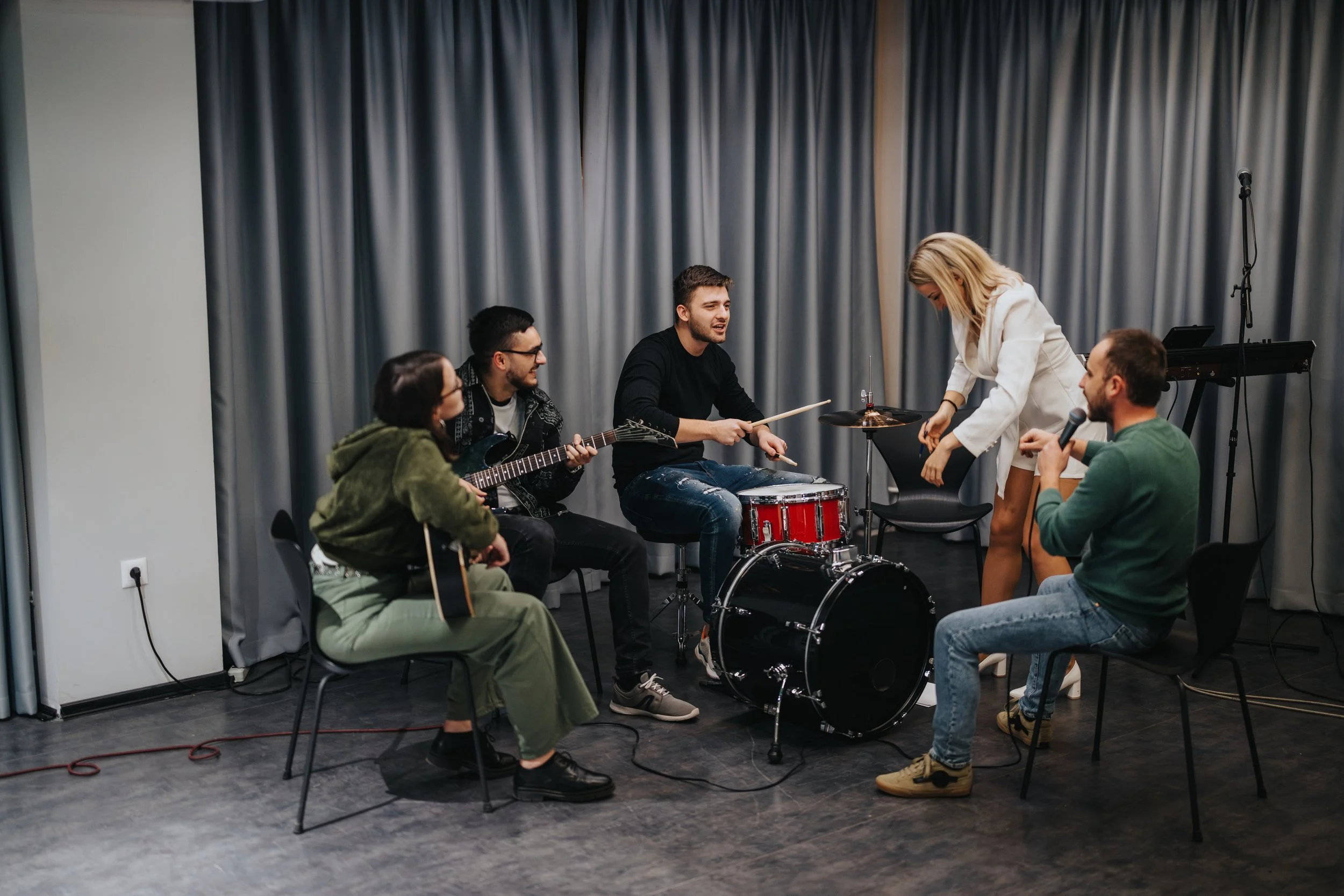
Photo by qunica.com | Adobe Stock
This is where chemistry becomes clear.
You may discover that certain members work better together on specific songs. You may change arrangements, shift roles, or completely rethink the group's sound.
Let the process do that.
There is also a practical reason to develop music before going heavily into promotion: you need something worth promoting.
A growing catalog gives you material for future releases, performances, videos, interviews, social content, and other opportunities. You do not need an entire album immediately, but having several strong songs gives the project much more room to grow.
7. Define the Group's Brand
At this point, you have musicians. Now start building the identity people will recognize.
Branding is often treated as something that happens after the music becomes successful. In reality, your visual identity can help determine whether people remember you in the first place. Start with the basics: name, photography, colors, typography, wardrobe, aesthetic, imagery, and overall personality.
Think about groups such as ABBA, The Spice Girls or BTS. Their identities were not limited to their recordings. Their styling, personalities, photography, performances, and visual worlds became part of how audiences understood them.
Your version does not need to be expensive.
A small independent group can create a strong identity with thoughtful styling and a well-planned photoshoot. A larger group might eventually invest in elaborate campaigns, music videos, editorial photography, and creative direction.
The budget can change. The need for consistency does not.
You can also think beyond the basic visual identity. What does the group call its fans? Are there recurring symbols or visual elements? What kind of personality should your social channels have? What should someone feel when they encounter the group for the first time?
Those details can eventually turn an audience into a community.
8. Establish Your Digital Presence
Once the identity is taking shape, create a central place where people can find the group.

Photo by Seventyfour | Adobe Stock
A website can house your biography, music, videos, upcoming performances, press information, contact details, and official links. Social media can then drive people toward that larger ecosystem.
Choose platforms based on where your audience actually spends time rather than trying to maintain every platform available.
Most importantly, make everything recognizable as the same project. Your profile photos, usernames, colors, graphics, biographies, and links should feel connected.
Your digital footprint is essentially the group's storefront. Make it easy for someone who discovers you through one song or video to understand who you are and find more.
9. Record and Finish Your Music Properly
When the songs are ready, move into professional recording.
The exact process will depend on your budget and goals, but it typically involves recording, editing, mixing, and mastering. You do not need a massive studio budget to make a strong first release. You do need to understand what your music requires and invest where it matters most.
A great song with poor production can struggle to make the impression it deserves. At the same time, expensive equipment cannot fix a weak song. Focus on the fundamentals first: songwriting, performance, arrangement, recording quality, and a mix that translates well across headphones, phones, cars, speakers, and other listening environments.
10. Plan the Release as a Campaign
Do not wait until the song is released to start thinking about promotion. A single can become much more valuable when it is treated as the center of a larger campaign. You can build a story around the music. Consider creating cover art, professional photographs, short-form videos, behind the scenes footage, interviews, performance clips, lyric content, teasers, and other assets before the release date.

Photo by DC Studio | Adobe Stock
Why was the song written? What inspired it? What happened during recording? What does it mean to the members? What visual world represents it?
For an EP or album, the opportunities become even larger. You can develop a consistent campaign across multiple songs rather than treating each release as an isolated event. This is where photography, video, editorial content, design, and social media strategy begin working together.
11. Build a Marketing System
Once your assets exist, determine how you are going to use them.
Show the personalities behind the music. Share rehearsals and studio moments. Create performance clips. Tell stories about the songs. Introduce individual members. Share visual content. Announce performances. Collaborate with other creatives. Give fans reasons to participate.
Content marketing is especially valuable for emerging groups because the process itself produces stories. The recording session becomes content. The photoshoot becomes content. The rehearsal becomes content. The first performance becomes content. The release becomes content.
Instead of constantly asking, “What should we post?” start asking, “What are we doing that is worth documenting?” That shift can completely change how a group approaches marketing.
12. Start Performing and Growing the Audience
Once the group is ready, get in front of people. Look for local venues, showcases, festivals, community events, opening slots, and other performance opportunities that fit your genre and current level.
Early performances are valuable even when the audience is small. You are learning how the group functions under pressure, which songs connect with people, what your stage presence needs, and what your audience actually responds to.
You are also creating relationships. The venue owner you meet at your first show could remember you later. Another artist could become a collaborator. Someone in the audience could become a dedicated fan.

Photo by Suriyo | Adobe Stock
A career is often built through many of these small connections rather than one dramatic breakthrough.
13. Keep Developing the Project
Once the group officially exists, the real work begins.
Continue writing and releasing music. Keep improving the live show. Review your marketing results. Refresh your visual identity when necessary. Experiment with content. Collaborate with other artists. Look for better performance opportunities.
Most importantly, stay consistent.
A group rarely becomes memorable because of one song, one photoshoot, or one viral video. Those moments can help, but longevity comes from continuing to create and giving people a reason to keep paying attention.
The Beatles did not become The Beatles because of one performance. BTS did not build a global audience through one release. The groups that endure continue developing their music, identity, audience, and connection to their culture.
The Hardest Part Is Getting Everyone to Move in the Same Direction
Starting a band is difficult because you are not just building a music project. You are coordinating several people with different personalities, schedules, goals, creative opinions, financial situations, and ambitions. That is what makes successful groups so fascinating.
When the chemistry works, the result can feel bigger than any individual member. The audience hears the music, but they also see the relationships, personalities, performances, fashion, stories, and culture surrounding the group. That combination is part of why certain music groups remain recognizable decades after their biggest releases.
There is no formula that guarantees that level of success. There are simply better and worse ways to prepare for the opportunity.

Photo by rawpixel.com | Contagion Media
Your First Step Is Smaller Than You Think
If you have been thinking about starting a band or music group, you do not need to have the entire career mapped out today.
Start by becoming better at what you do. Define what you want to create. Find people who share that vision. Test the chemistry. Establish the business structure. Make the music. Build the identity. Create the visuals. Develop the audience.
Then do it again, better.
The process can be demanding, but that difficulty is part of what makes a successful group meaningful. Bringing several people together around one creative vision takes talent, discipline, patience, communication, and a tremendous amount of work.
And if the project eventually connects with an audience, the reward can be much bigger than simply having a collection of songs.
You may have created something people remember.
Need Help Building the World Around Your Music?
Creating music is only one part of building a successful artist project. The way that music is photographed, presented, marketed, and turned into a recognizable brand can have just as much influence on how audiences experience it.
That is where Contagion Media comes in.
Our mission is simple: make artists more important.
We specialize in content marketing and creative media for artists, including photography, video, editorial storytelling, visual campaigns, and other content designed to help creative projects build a stronger presence.
If you are launching a new band, developing a girl group or boy band, preparing an EP or album rollout, building a visual identity, or developing an artist from the ground up, we can help create the content and strategy that surrounds the music.
You do not have to wait until your group is famous to start your brand professionally.
Build the music. Build the brand. Build the audience. Then give them something worth remembering.
Edited by Natalie Wheeler on October 7, 2026