
13 Famous Paintings and Their Meaning
Art is more than beauty on canvas — it’s a dialogue between artist and observer, a bridge through time that connects cultures, ideas, and feelings. From Renaissance classics to modern icons, some paintings transcend their era and become symbols of universal experience. In this guide, we explore 13 famous paintings and their meanings, unraveling the stories, symbolism, and emotional depth behind each masterpiece.
Each work on this list is more than an image — it’s a cultural landmark that continues to shape creative thinking, inspire artists, and influence generations of visual storytelling. Whether you’re creating content, curating visuals, or simply diving deeper into art history, these insights are designed to bring every masterpiece into sharper focus.
1. Mona Lisa – Leonardo da Vinci (c. 1503–1506)
The Mona Lisa embodies the elusive complexity of human emotion. Her faint smile suggests calm confidence, yet her gaze hints at secrets we can’t fully access.. The landscape behind her — twisting rivers and dreamlike mountains — mirrors the psychological depth Da Vinci infused into her expression. Ultimately, the painting’s meaning lies in its deliberate ambiguity: the human soul is layered, unreadable, and eternally fascinating.
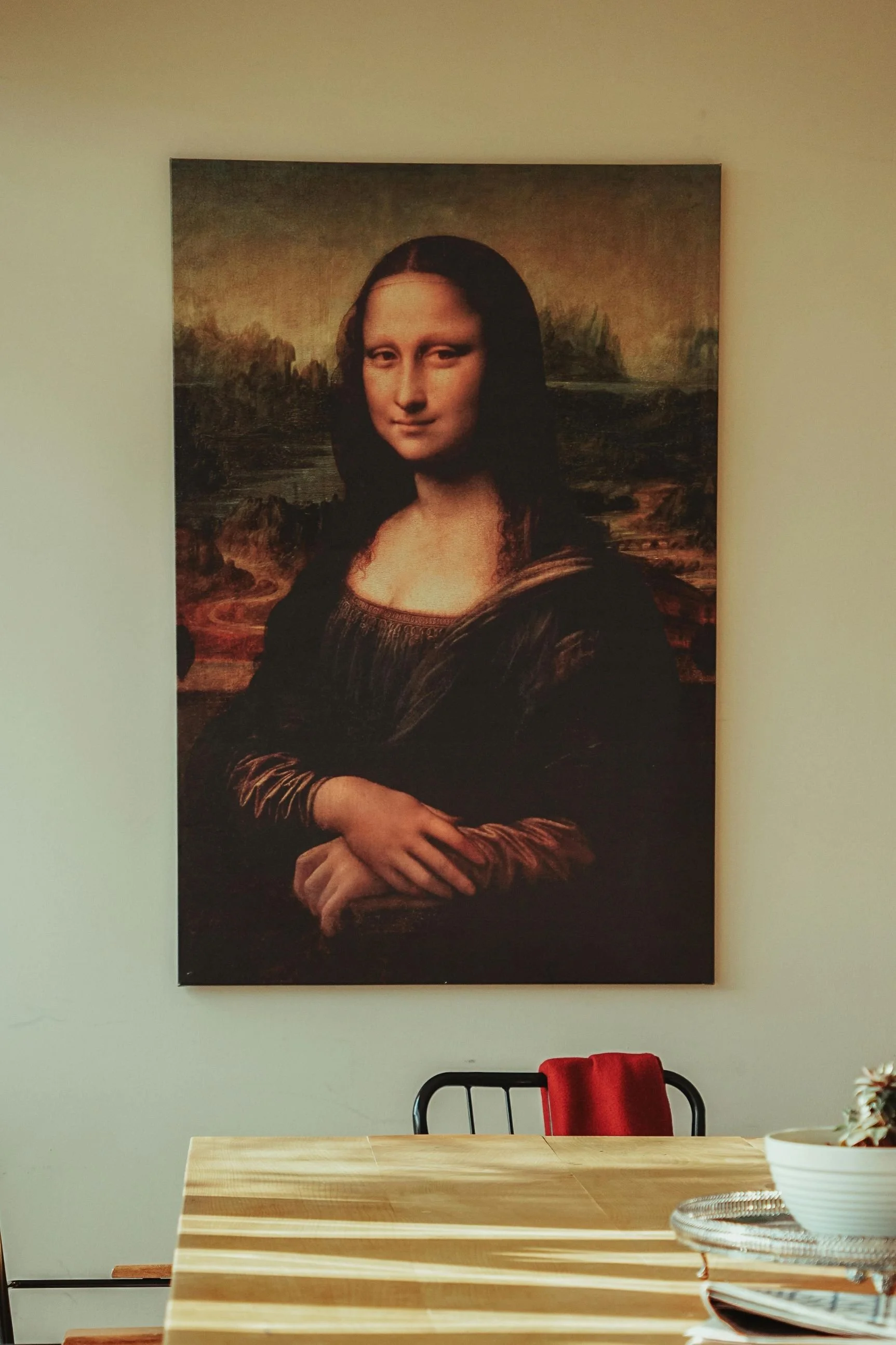
Mona Lisa by Leonardo da Vinci
2. The Starry Night – Vincent van Gogh (1889)
The Starry Night channels emotional chaos into celestial motion, portraying an artist fighting through darkness and reaching, however desperately, for light. The swirling sky pulses with energy, symbolizing turbulent thoughts transforming into something luminous and meaningful. Below it, the quiet village represents the peace Van Gogh longed for but rarely experienced. The painting’s power lies in this contrast — chaos versus calm, despair versus hope — revealing Van Gogh’s enduring belief that beauty can emerge even from suffering.
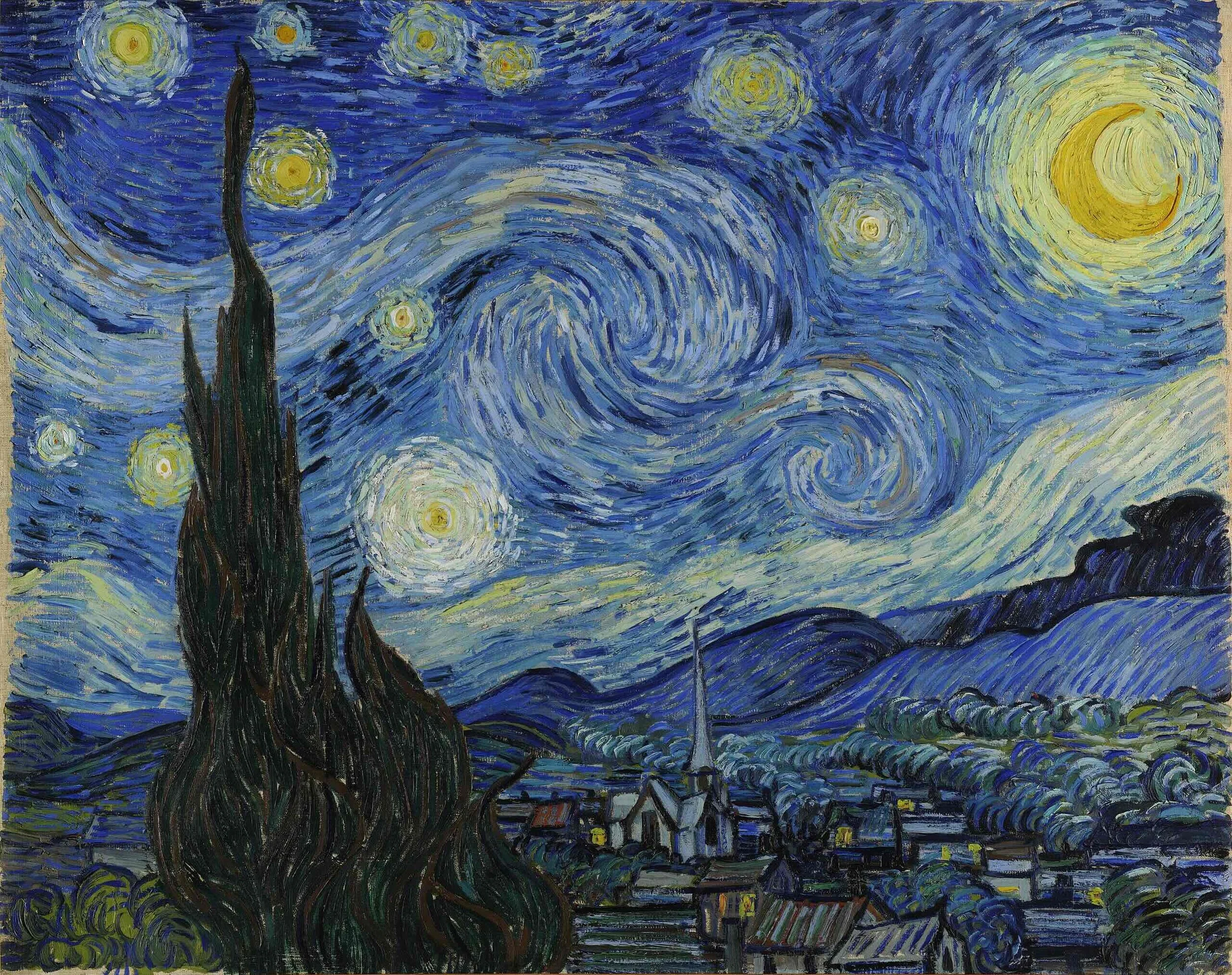
The Starry Night by Vincent van Gogh
3. The Last Supper – Leonardo da Vinci (1495–1498)
In The Last Supper, Da Vinci captures the exact moment Jesus reveals a coming betrayal, freezing raw human emotion in time. Each disciple reacts differently — shock, confusion, denial — giving the scene a surprisingly modern psychological depth. The strong perspective lines draw the eye toward Jesus, symbolizing calm acceptance amid turmoil. The deliberate empty space around him intensifies this effect, creating a visual and emotional void that emphasizes isolation, inevitability, and the growing distance between him and those he loves. Ultimately, the painting explores trust, human frailty, and the emotional complexity of relationships.
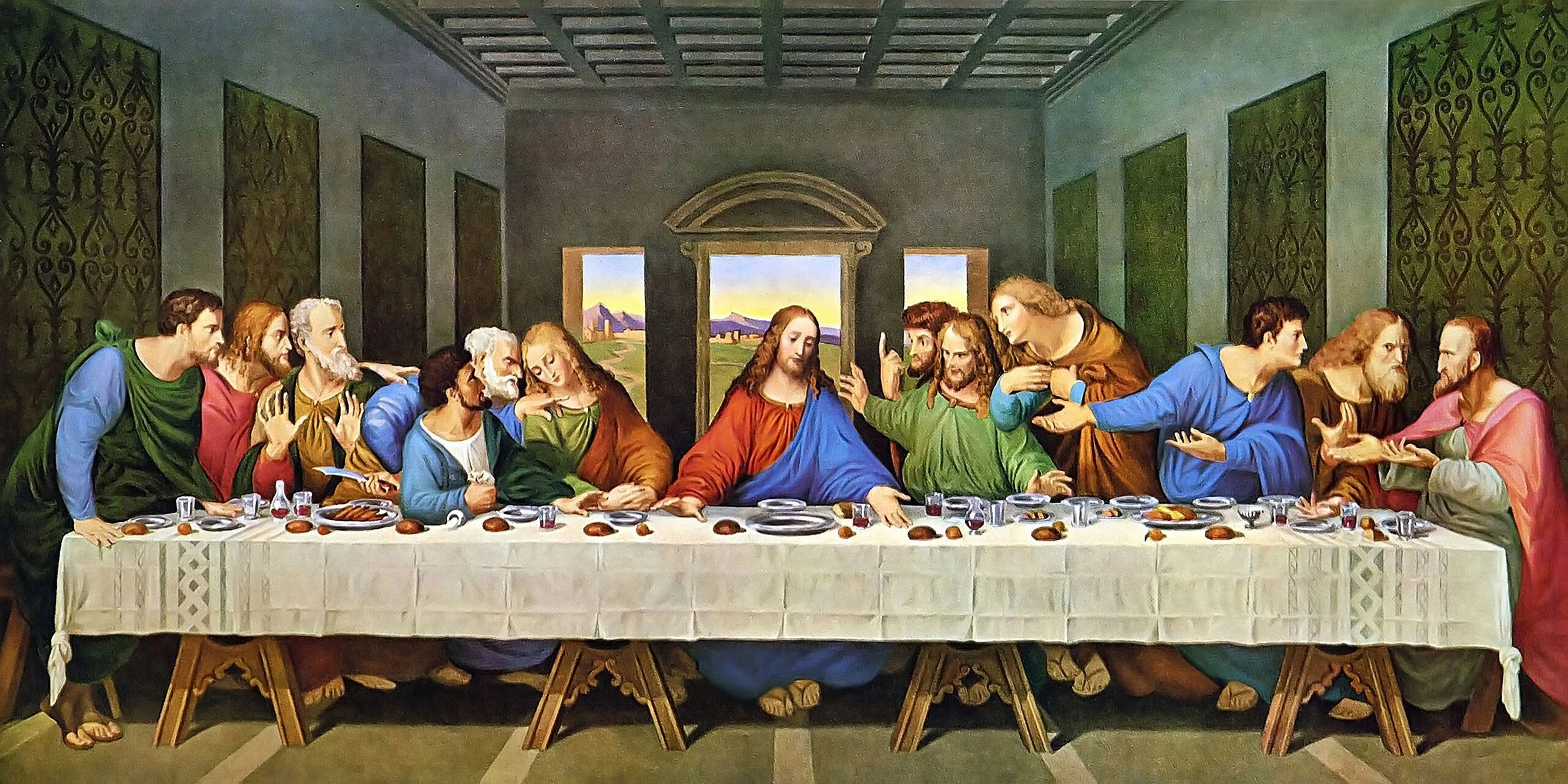
The Last Supper by Leonardo da Vinci
4. Guernica – Pablo Picasso (1937)
Guernica is a visual outcry against war’s brutality. Picasso fractures bodies and space into sharp, chaotic forms that mirror the destruction inflicted on civilians during the bombing of Guernica. The monochrome palette heightens the bleakness. Its meaning extends beyond a single event: it represents the universal suffering of the innocent and the role of art in bearing witness when words fall short.
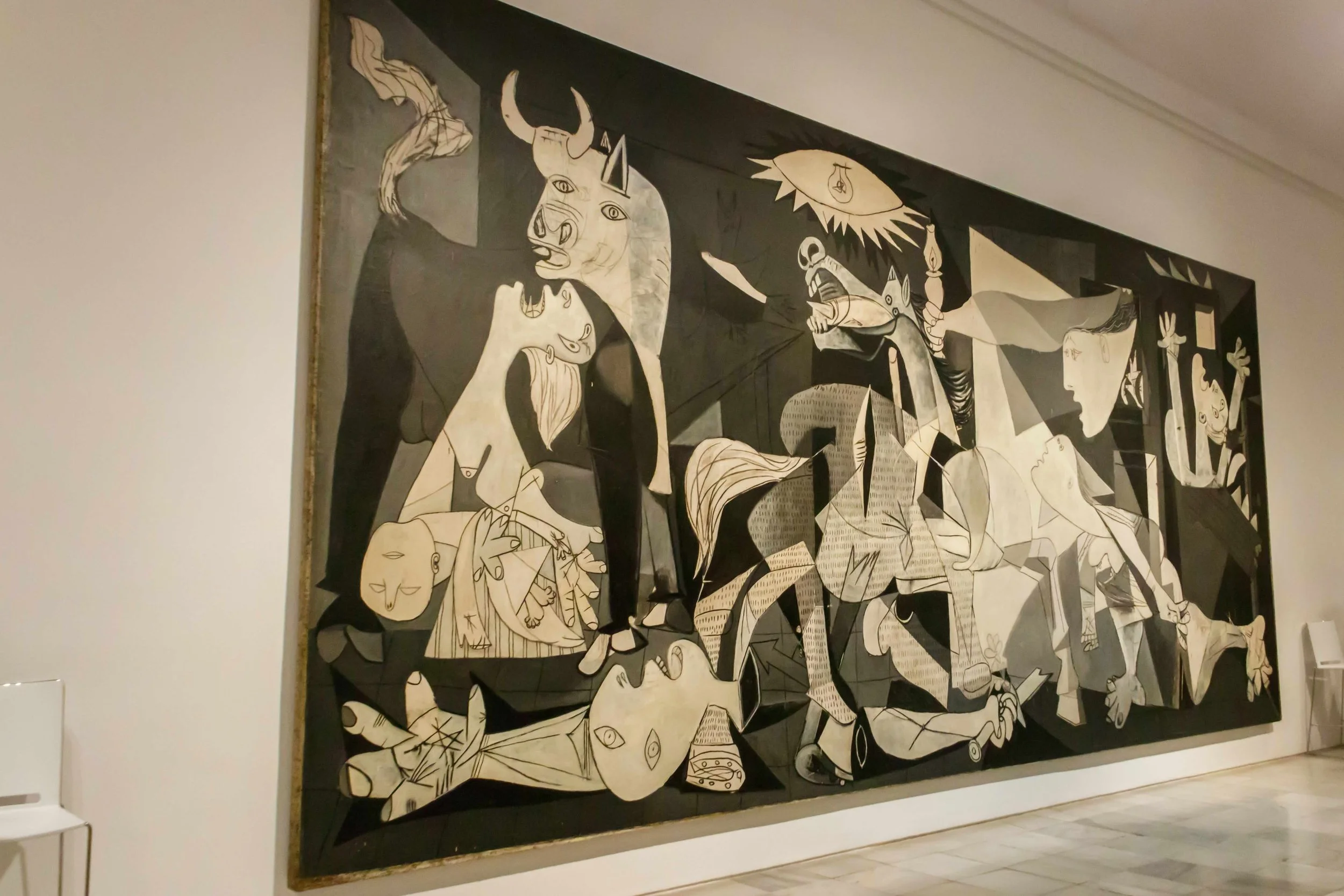
Guernica by Pablo Picasso, Photo by olyasolodenko | Adobe Stock
5. The Scream – Edvard Munch (1893)
Munch’s anguished figure in The Scream captures the overwhelming intensity of anxiety and existential fear. The distorted, rippling landscape amplifies this emotional collapse, turning the world itself into an unstable, echoing chamber of inner turmoil. Many interpret Munch’s scene as a visual metaphor for modern overstimulation, emotional overload, and the invisible pressures that shape us. Its meaning reaches beyond fear — it exposes a universal vulnerability we all carry but rarely voice, which is why the painting remains one of the most enduring symbols of psychological tension.
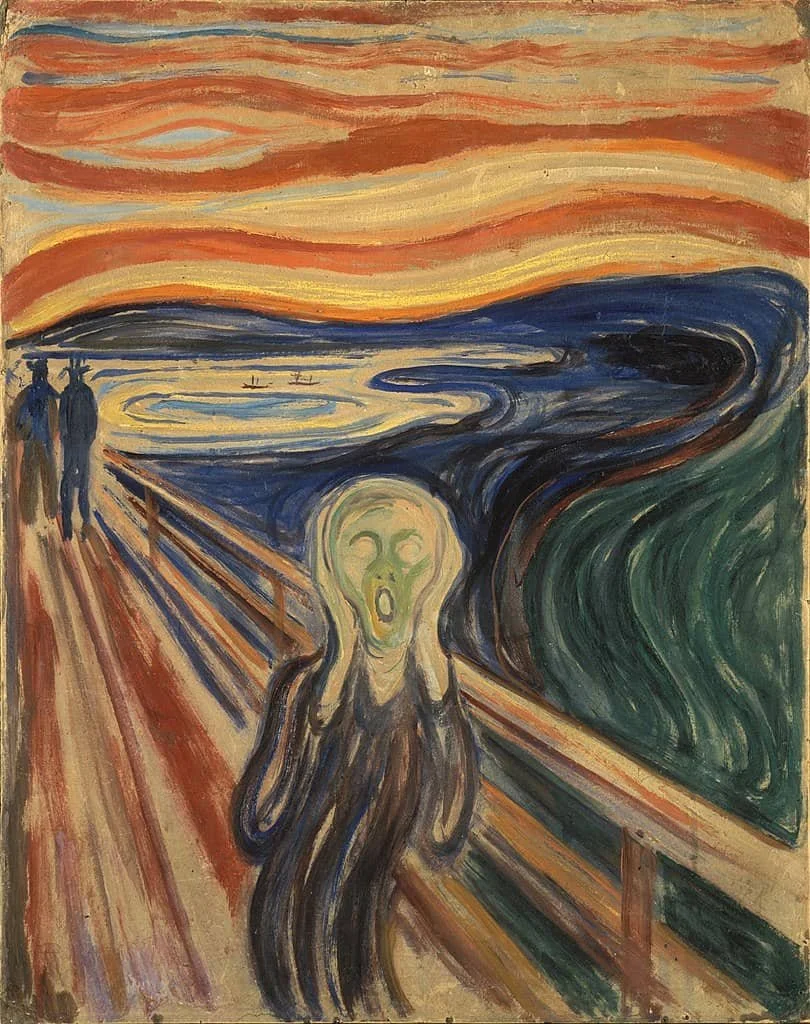
The Scream by Edvard Munch
6. The Birth of Venus – Sandro Botticelli (c. 1484–1486)
Venus rising from the sea represents the birth of beauty and divine love. Botticelli’s flowing lines and gentle color palette evoke harmony, suggesting that true beauty is soft, balanced, and poetic. Created during a pivotal moment in European history, The Birth of Venus symbolized a cultural shift as Renaissance artists rediscovered classical mythology and humanistic values. Its meaning centers on rebirth — not only of Venus, but of creativity, imagination, and the renewed celebration of humanity.
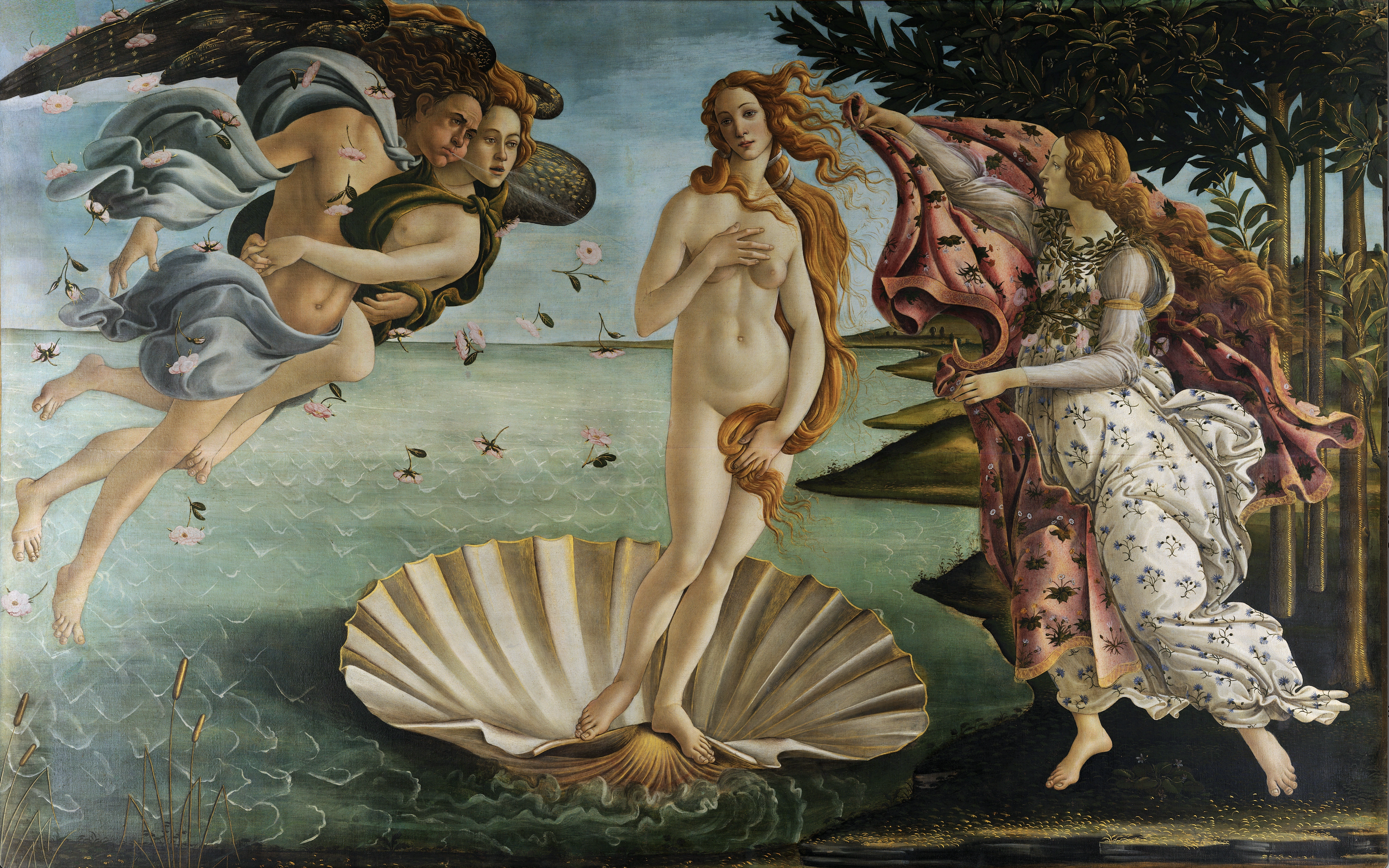
The Birth of Venus by Sandro Botticelli
7. Girl with a Pearl Earring – Johannes Vermeer (c. 1665)
Often called the “Mona Lisa of the North,” Vermeer’s portrait of Girl with a Pearl Earring captures a moment suspended between movement and stillness. The girl’s identity remains unfixed — she could be a servant, a muse, or simply someone turning toward the light — which adds to the painting’s mystery and universality. The luminous pearl symbolizes purity and quiet elegance, echoing the introspective calm that defines her expression. The meaning lies in her gaze: present, vulnerable, and deeply human, inviting viewers into a moment that feels both intimate and timeless.
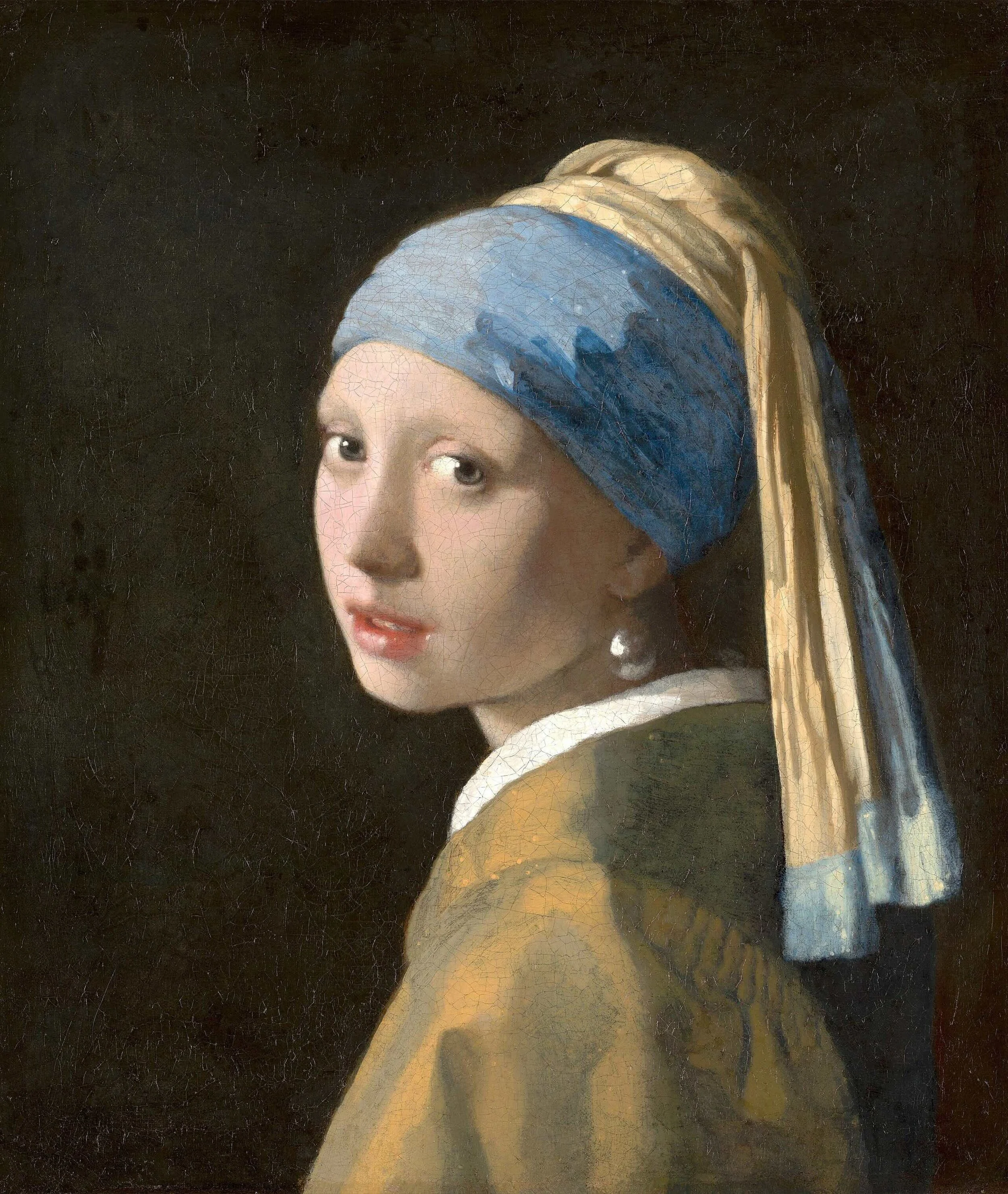
Girl with a Pearl Earring by Johannes Vermeer
8. The Creation of Adam – Michelangelo (c. 1512)
In Michelangelo’s The Creation of Adam, the nearly touching hands of God and Adam symbolize the fragile boundary between humanity and the divine. God reaches with intention and energy while Adam extends his hand passively, waiting to receive life — a powerful metaphor for existence being gifted from a higher source. The small space between their fingertips represents human potential: creativity, consciousness, and the spark that makes us uniquely alive. Its meaning reaches far beyond religion, touching philosophy, psychology, and our timeless desire to understand what connects us to something greater.
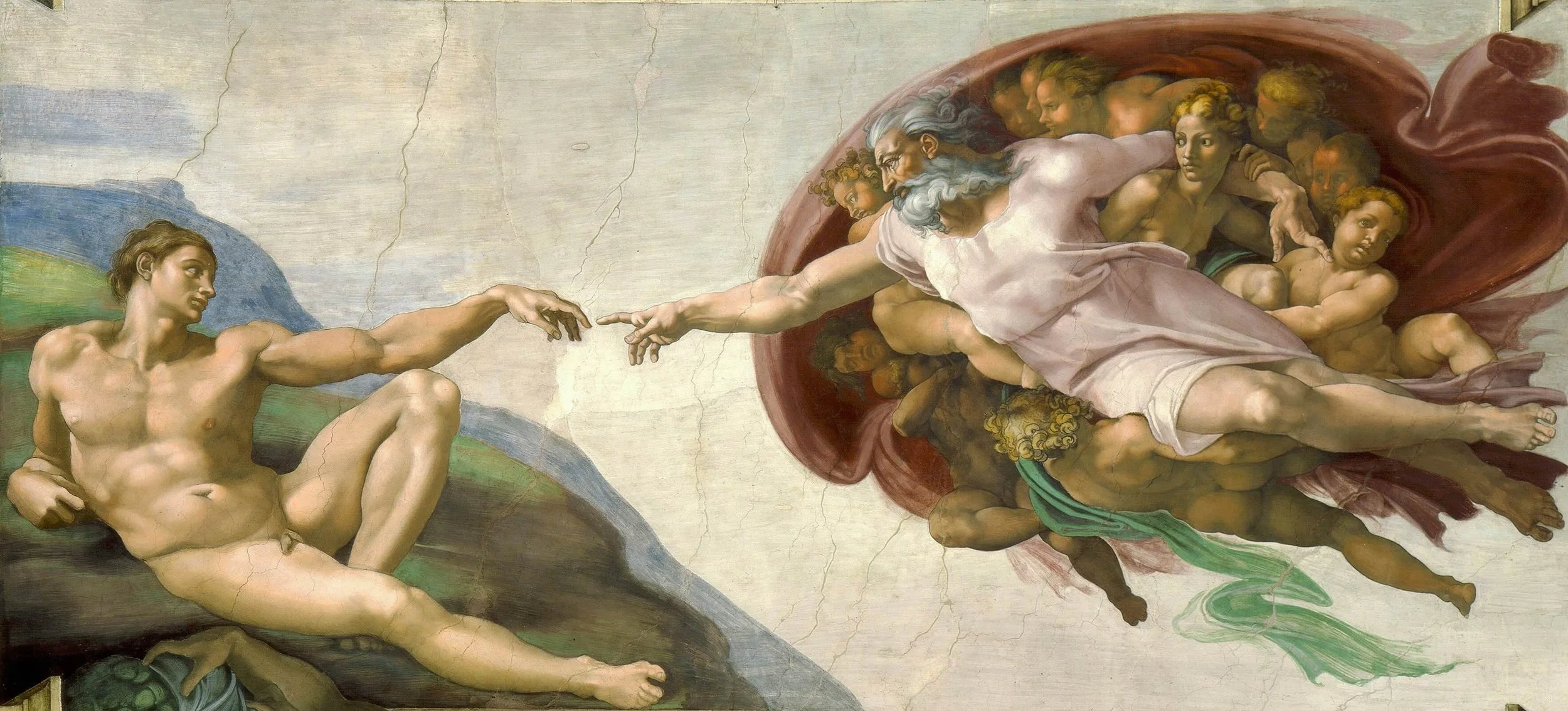
The Creation of Adam by Michaelangelo
9. The Kiss – Gustav Klimt (1907–1908)
Klimt’s The Kiss elevates intimacy to something sacred through gold leaf, pattern, and symbolism. The lovers appear wrapped in a radiant, heavenly aura, merging physical affection with spiritual connection. The contrast between their elaborate robes and the soft meadow beneath them suggests that passion grounds us even as it elevates us. The painting celebrates union — the moment when two beings dissolve into shared emotion.
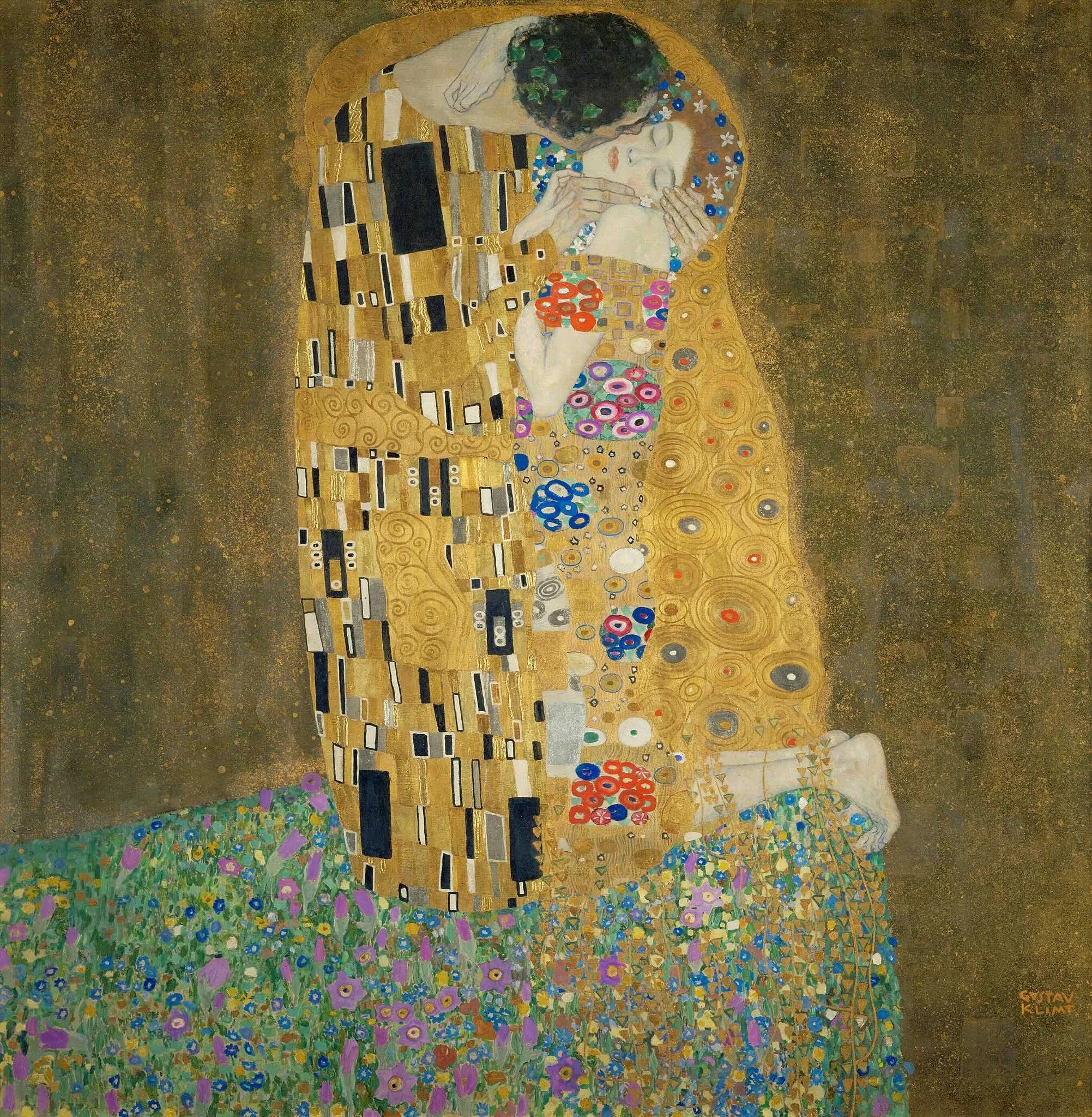
The Kiss by Gustav Klimt
10. American Gothic – Grant Wood (1930)
The iconic figures in Wood’s American Gothic embody both strength and tension in early 20th-century America. Their expressions can be read as pride, skepticism, or quiet disapproval, making the painting’s meaning intentionally ambiguous. The rigid posture and iconic farmhouse backdrop symbolize resilience while also highlighting the pressure of maintaining tradition amid social change. Ultimately, the work reflects the duality of American identity — steadfast yet conflicted, hardworking yet wary of the future.
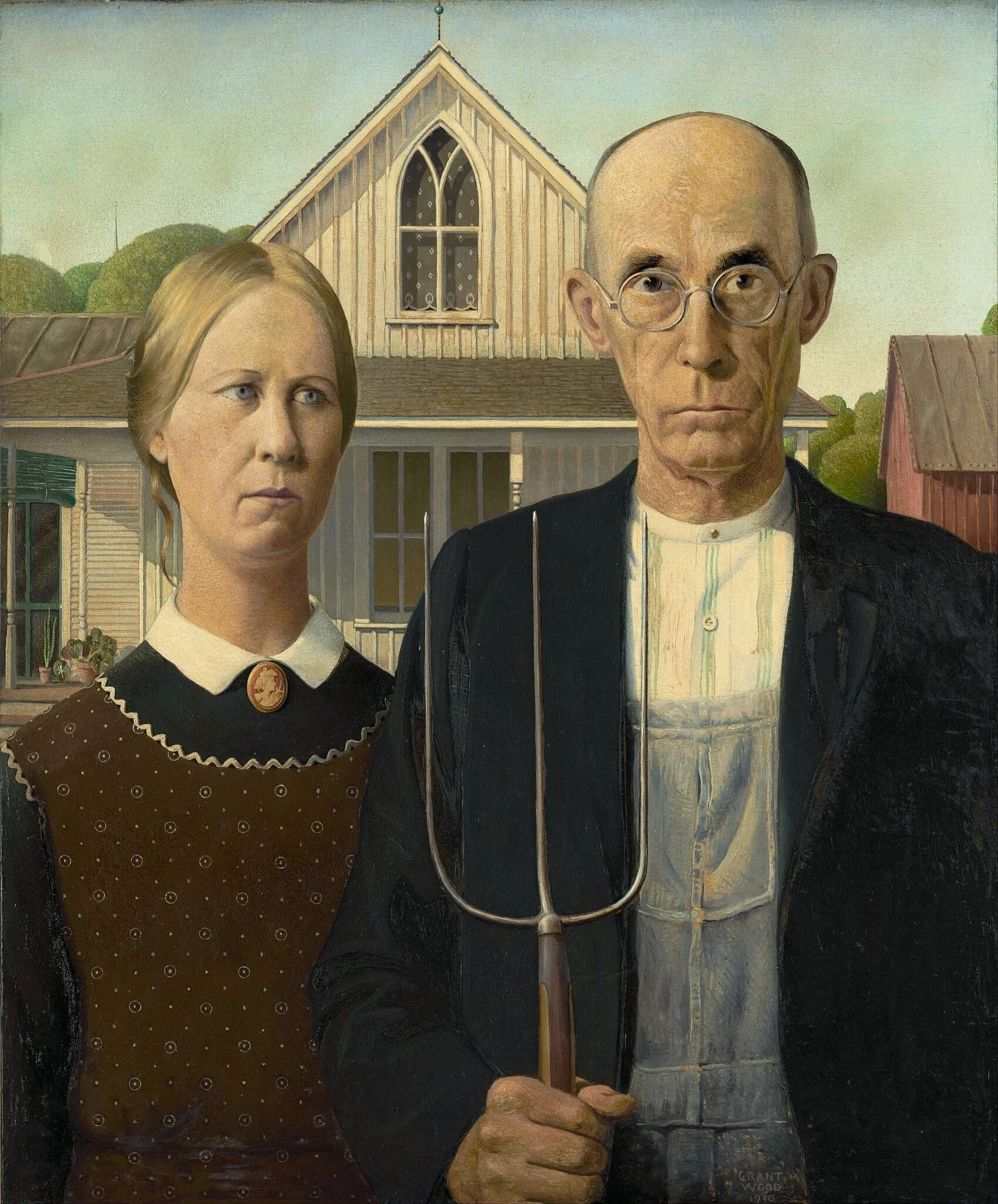
American Gothic by Grant Wood
11. Water Lilies – Claude Monet (1916–1926)
Monet’s Water Lilies dissolve form into color, inviting viewers to experience nature as a shifting meditation rather than a literal scene. Instead of depicting the pond directly, he transforms it into luminous fields of color and light. The tranquil water surface evokes peace, while the layered brushwork hints at emotional depth beneath calm exteriors. Painted during personal hardship and the challenges of diminishing eyesight, the series becomes an act of spiritual refuge. Its meaning centers on perception and transformation: beauty is never fixed, but constantly reshaped by light, time, and emotion.
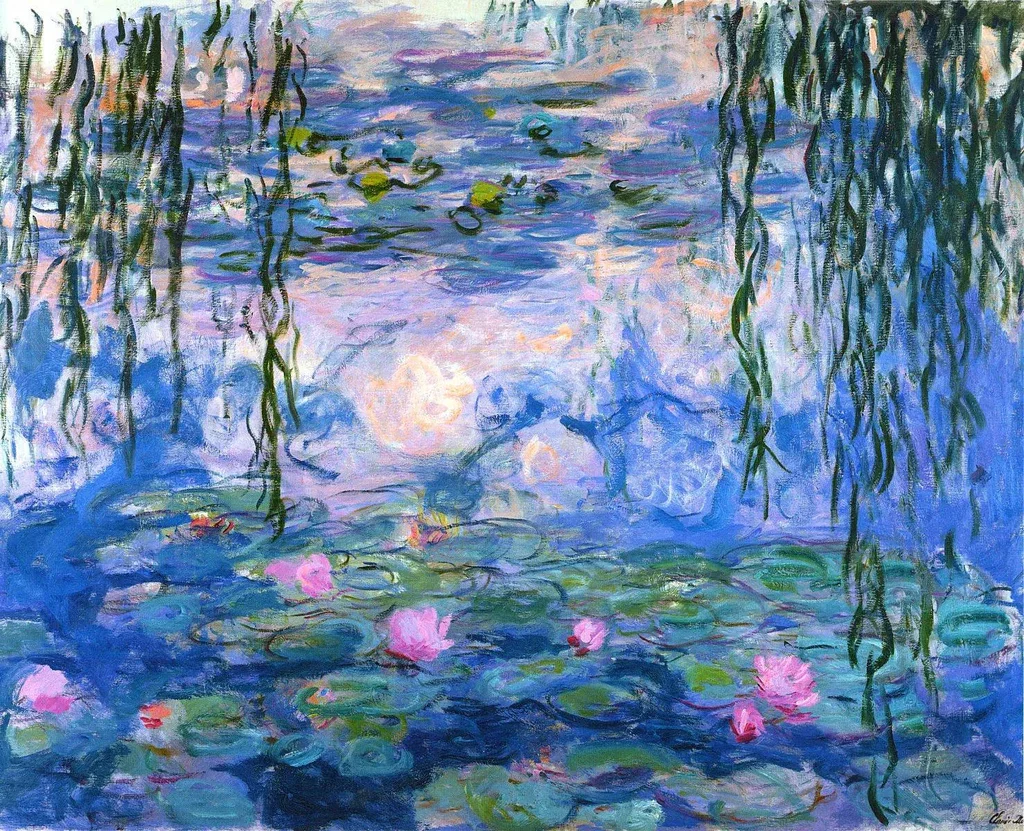
Water Lillies by Claude Monet
12. Liberty Leading the People – Eugène Delacroix (1830)
Delacroix’s Liberty Leading the People depicts personified Liberty striding over barricades and bodies, lifting the French flag as a symbol of collective struggle and hope. Both a real woman and a symbolic force, she rallies citizens during the July Revolution. The painting blends realism and allegory, portraying revolution as both a literal battle and a broader human fight for dignity. Liberty’s bare chest references classical goddesses, suggesting that courage is both divine and human. Its meaning champions unity — the extraordinary power ordinary people can summon when fighting for freedom.
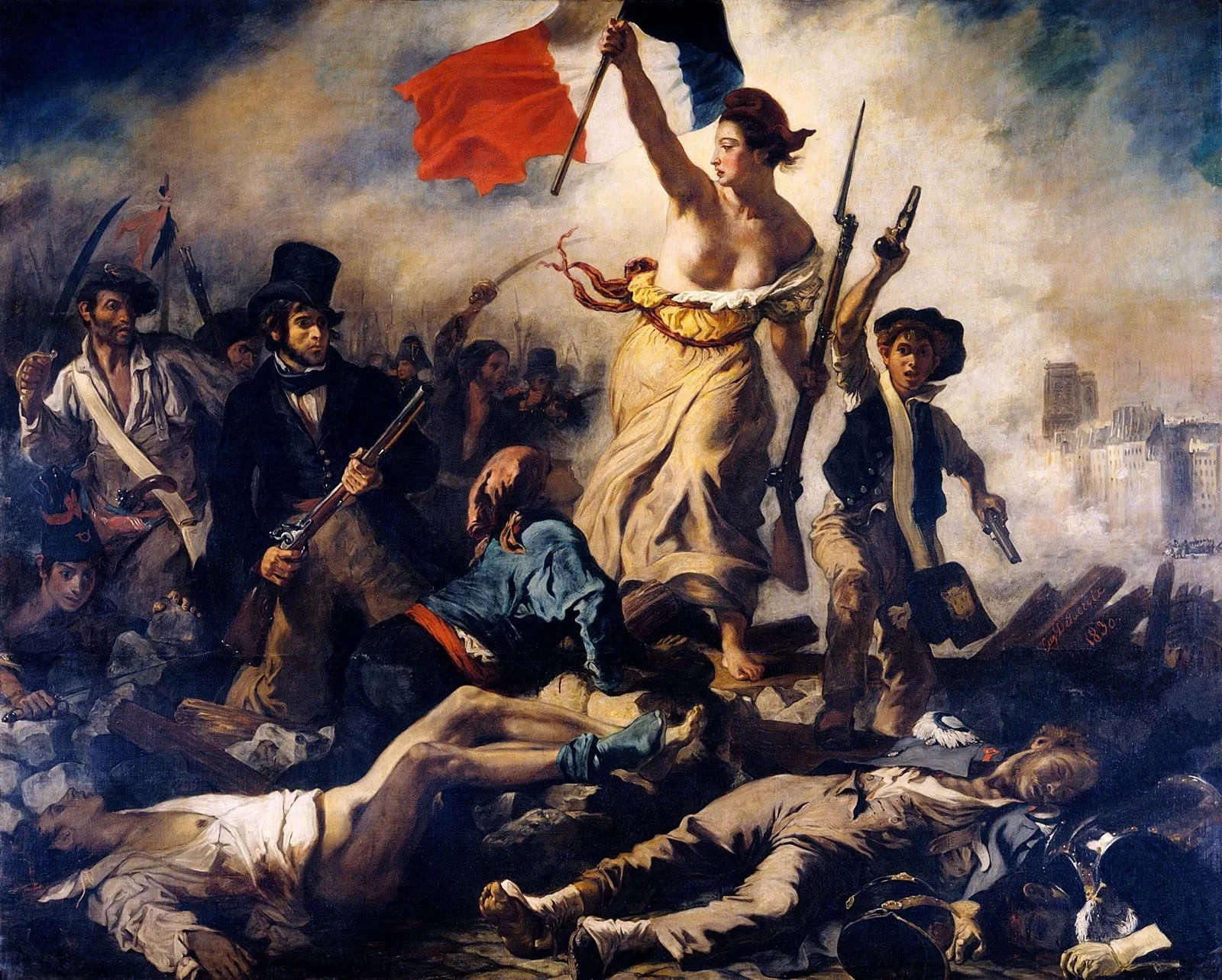
Liberty Leading the People by Eugène Delacroix
13. Nighthawks – Edward Hopper (1942)
Hopper’s Nighthawks depicts a quiet diner scene that embodies the solitude of modern life, even in shared public spaces. The figures appear close but disconnected, each lost in private thought despite their physical proximity. The harsh fluorescent lighting heightens the sense of detachment. Its meaning lies in the stillness — a contemplation of solitude, routine, and the private lives that unfold beneath the surface of modern society.
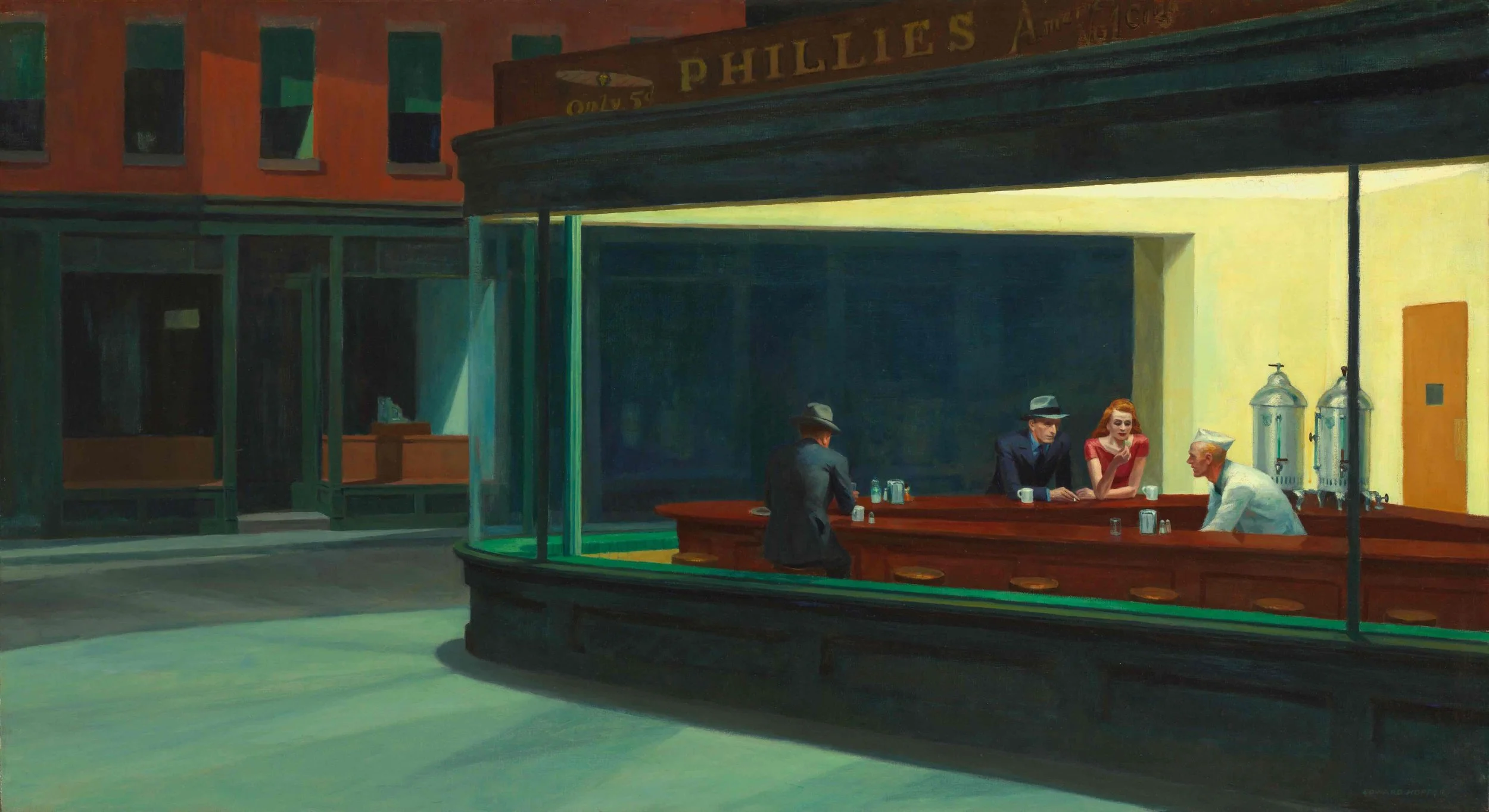
Nighthawks by Edward Hopper
Great paintings are portals — into culture, psychology, history, and the shared emotional fabric of humanity. From Renaissance wonder to modern protest, each artwork on this list invites reflection and connection. They endure not simply because they are famous, but because they speak to timeless truths about what it means to be human.
For creative brands and storytellers, these masterpieces offer more than visual inspiration — they’re narrative engines that deepen engagement and spark meaningful conversation. Whether used in campaigns, thought pieces, or visual storytelling, these paintings bridge past and present in ways that resonate long after the image fades.
Edited by Natalie Wheeler on December 12, 2025