
Interview with Fashion Designer Rowdy from Rowdy Kids
By Kevin Fides
Before Rowdy Kids became a streetwear brand, it was a collection of impressions: Elroy Jetson’s futuristic world, the animated stories of childhood, professional wrestling, Chicago fashion, and the moment a thirteen-year-old boy entered a Black-owned boutique and saw a possible version of his future. Years later, those memories have become the material through which Rowdy tells a larger story, one grounded in Black experience, youthful imagination, and the belief that legacy should extend beyond its creator.
One of his earliest inspirations was The Jetsons. Elroy, the curious son always surrounded by the future, helped inspire Rowdy, the character at the center of the brand. But that thread soon opens into something larger. “It’s beyond just The Jetsons,” he says. “It’s the Black experience, period.” And from there, the clothes begin to feel less like a collection of references and more like a collection of memories. Cartoons, wrestling, basketball, Chicago, and moments in Black culture that might be familiar to us without always being treated as important. He takes those moments and puts them somewhere they can be seen again. Not exactly as they were, but as he remembers and understands them now.
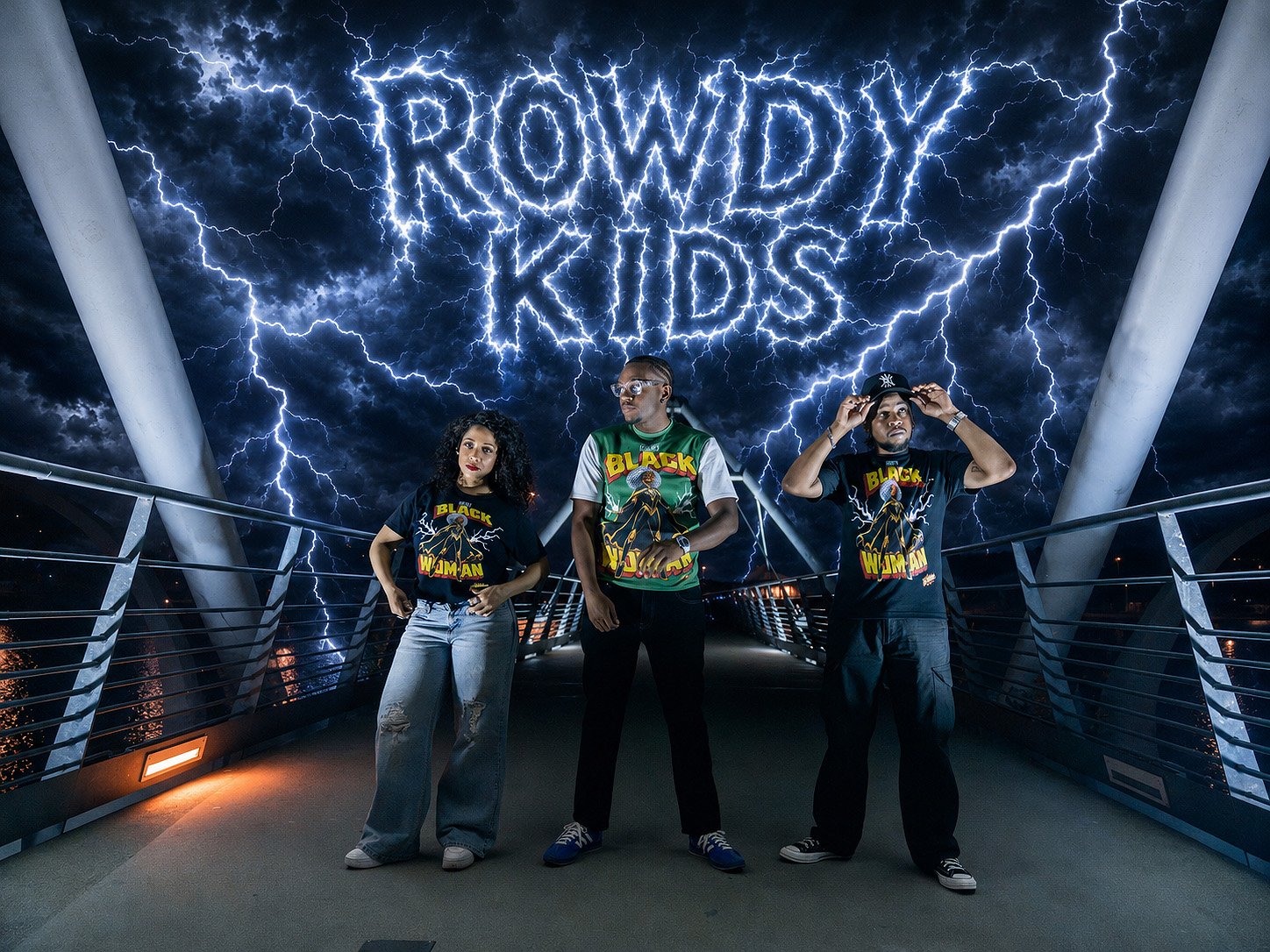
Photography by @a_cavale.
There is something of the comic book in Rowdy’s work, not only in its appearance, but in the way it tells a story. The colors are bold, the characters are clear, and even a single image can hold an entire moment. The designs do not ask us to separate what we see from what it means. Image and story arrive together.
For Rowdy, that comic and cartoon influence happened naturally. He grew up watching anime and cartoons, so their way of speaking through images found its way into his own. He remembers brands like A Bathing Ape and Billionaire Boys Club doing something similar. The art was not separate from the clothing. It gave the clothing a world to live in.
His own way into that world began in Chicago. He was around thirteen when his father took him to Leaders, a Black-owned boutique filled with pieces he could not find in a regular clothing store. The clothes caught his attention, but so did the man who owned the place. Seeing the owner showed him that this was something a Black man could build. A path appeared in front of him because he had seen somebody else standing in it.
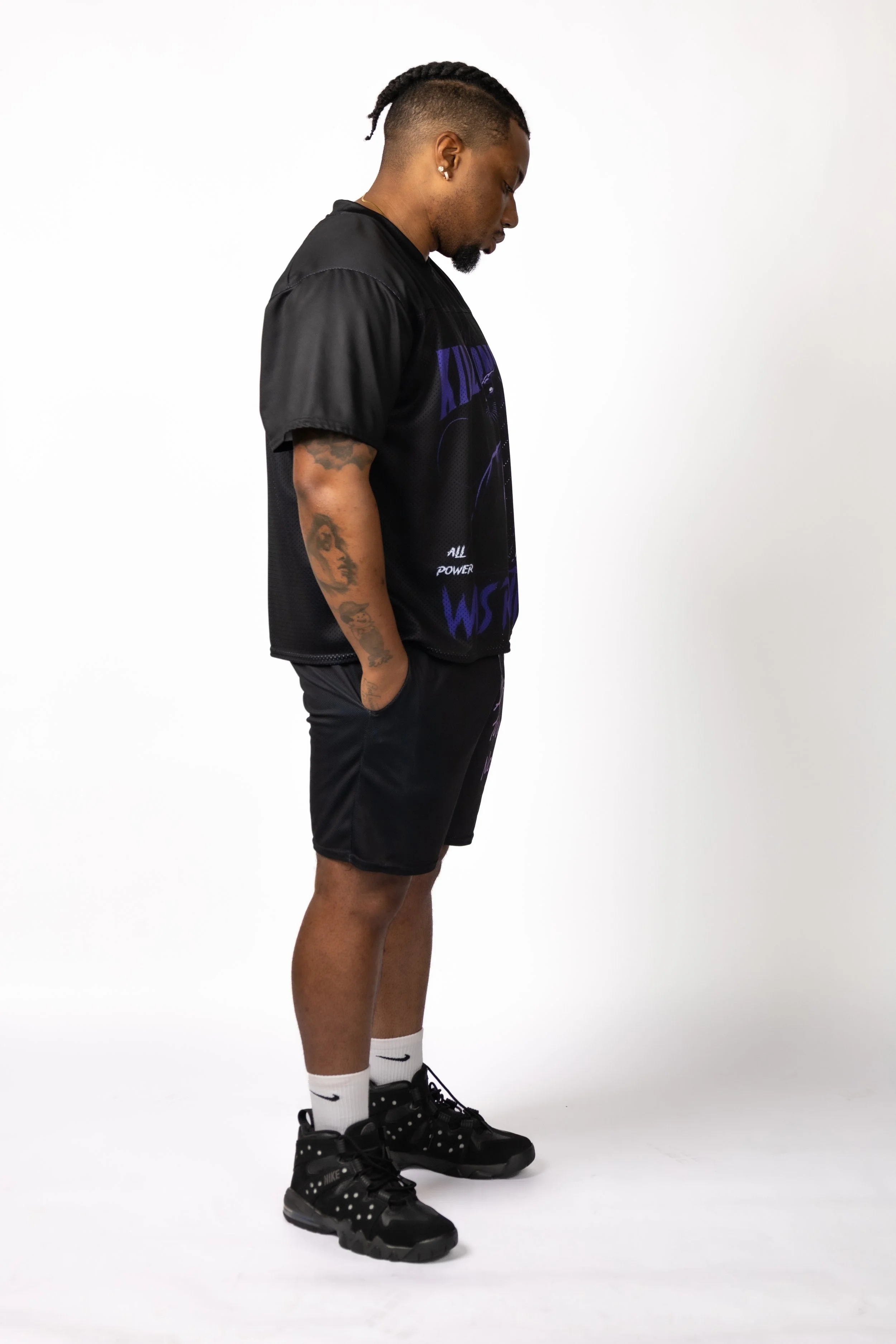
Photo of Rowdy by EJ Mañón | Contagion Media
Inspiration often begins before we have the words for it. We see something. It stays with us. Years pass, other experiences gather around it, and one day we realize we have been carrying the image all along. Maybe creation is partly that: giving a new shape to what has been quietly shaping us.
You can see it in the way Rowdy moves through his interests. A Hulk Hogan shirt can trace its roots back to a legendary Booker T moment in WCW. Rey Mysterio becomes the beginning of an idea for a mask. Dillon Brooks sitting courtside at a Suns elimination game carries the right attitude for a Villain tee. Wrestling, basketball, cartoons, and Black culture all meet because they have already met within him.
“I try to live my raps,” he says. What he creates is close to what he actually enjoys. There is no need to manufacture a personality for the work because the personality is already there. He still watches wrestling. He still cares about the things that excited him when he was younger. Rather than outgrowing them, he lets them grow with him.
That youthful part of himself plays the biggest role in what he does. “That’s where the paintbrush comes from, for me,” he says. Without that part of himself, he doesn't think Rowdy Kids would exist. His childhood gives him somewhere to begin, but he does not simply repeat it. He brings what he loved in the nineties into the time he is living in now. The image returns carrying different experiences, different meanings, and his own hand in it. “History doesn’t repeat; it rhymes,” he says.
Maybe that is the simplest way to understand the clothes: Rowdy is listening for the rhyme. The past is still audible, but the rhythm has changed. Something once watched on television becomes something worn on the streets of Phoenix. A joke, a character, or an overlooked Black moment becomes a small way of saying: I remember this too.
The work does not happen alone. Rowdy has two graphic designers, a cameraman, a manager, and people throughout the community who model and collaborate with him. He returns to the proverb: if you want to go fast, go alone; if you want to go far, go together.
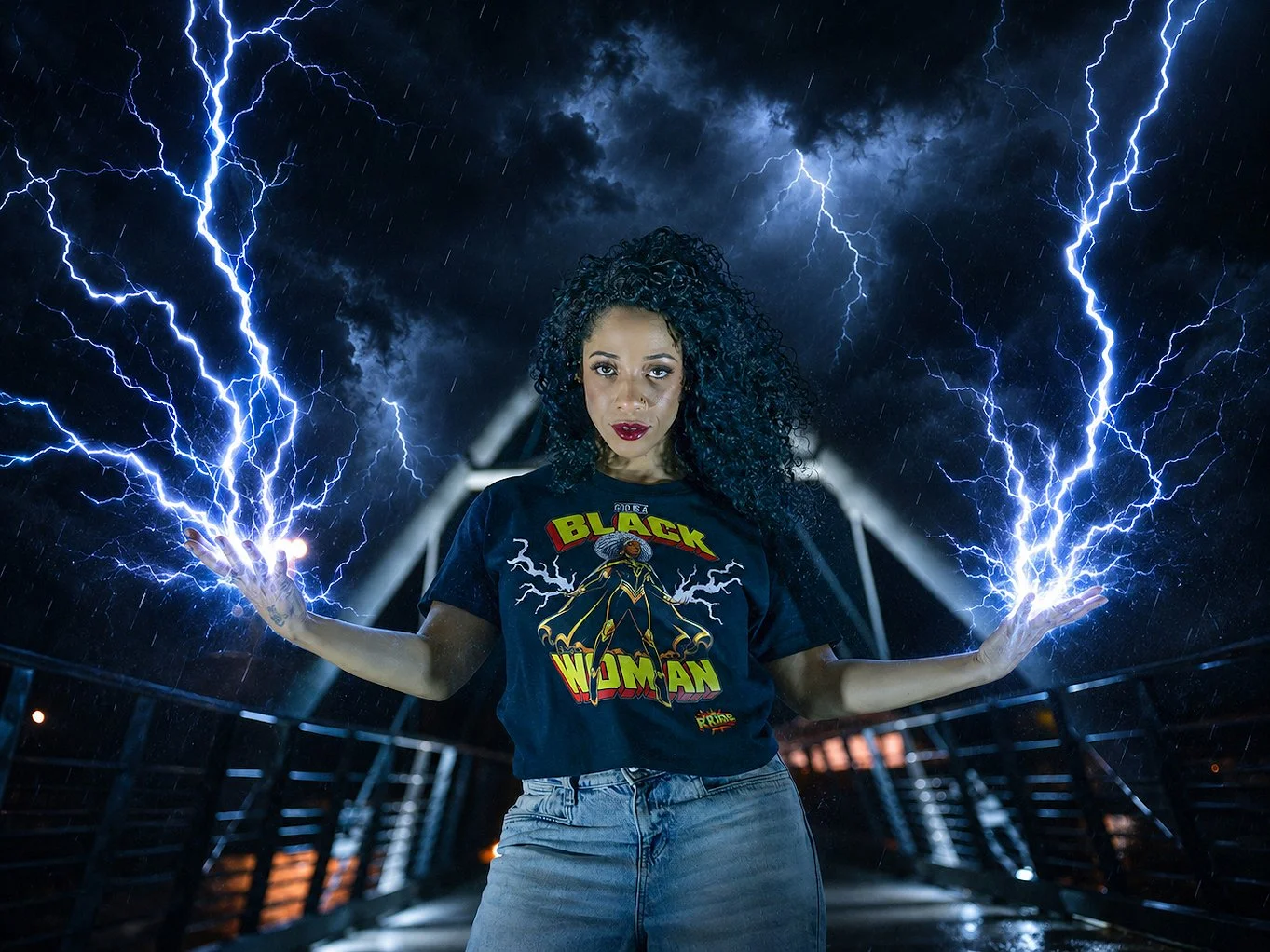
Photography by @a_cavale.
An idea can only travel so far inside one person. Collaboration asks us to loosen our grip just enough for another imagination to enter. The original idea does not disappear. It becomes capable of reaching somewhere it may not have reached alone.
Rowdy wants his name to become a part of streetwear history. He wants people to look back on an era and recognize that he helped shape it.. But when he speaks about what lies underneath that ambition, he keeps returning to other people. He wants to help the next generation find its way. “Legacy extends beyond me,” he says. “It’s supposed to be bigger than me.”
There is a circle in that. At thirteen, he saw a Black man running a boutique and understood that another life was possible. Now he wants somebody else to see Rowdy Kids and feel something open within them. The inspiration he received does not stop with him. It passes through him, changes form, and continues.
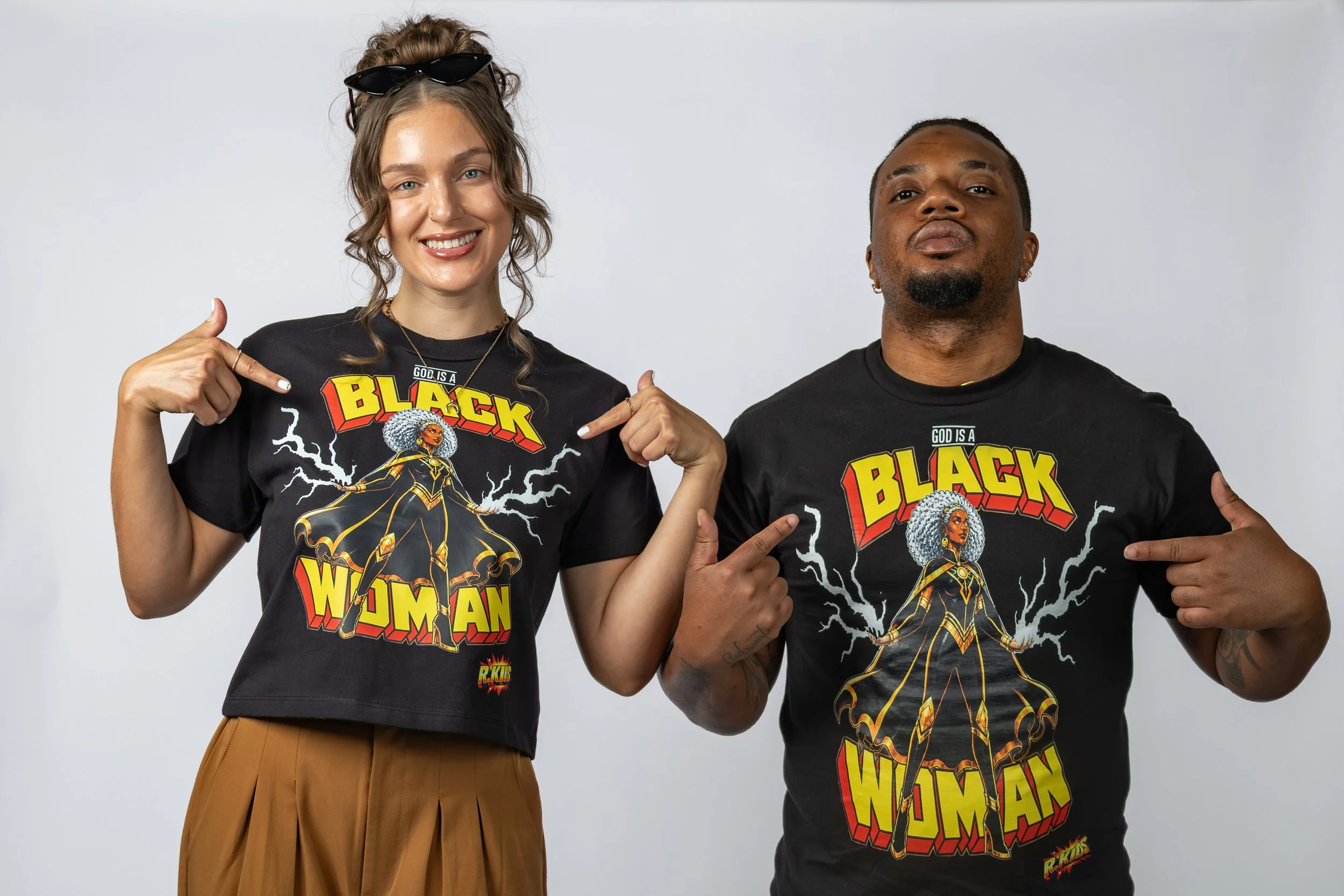
Photo of Rowdy & Maddie by EJ Mañón | Contagion Media
He says he likes when people tell him, “You inspired me,” and briefly wonders whether that is selfish. Maybe it is simply human to want to know that something we made reached beyond us. Inspiration may be one of the clearest signs that it did. The work entered somebody else’s imagination and began a life there. He laughs that Rowdy Kids may not become the biggest brand of all time, but it could still become “your favorite’s favorite.” There is something honest in that. Influence is not always the loudest thing in the room.
His ideas seem to arrive faster than he can contain them. He talks about flooding the market because there is always something else he wants to make. A drop may be planned for the end of July, and then a thought could arrive tonight and change what next month looks like. That restlessness does not feel careless. It feels like a mind trying to keep pace with itself.
Through all of it, he returns to community, collaboration, and the stories that are present even when people overlook them. His work holds Blackness in many places at once: in the past and the imagined future, in humor and history, in childhood and adulthood. Maybe culture survives this way, not by remaining untouched, but by allowing each of us to touch it, interpret it, and carry it forward in a shape marked by our own lives.
“My mission is to tell the Black story, but make it fashionable.”
Want to see more of the journey? Shop Rowdy Kids at buyrowdykids.com or follow Rowdy on IG @buyrowdykids.
Edited by Natalie Wheeler on August 8, 2026