10 Painters Redefining Contemporary Art in Arizona
By Natalie Wheeler
Sunsets, saguaros, and turquoise gift-shop aesthetics. The desert becomes reduced in much of what we see in Arizona art. But many of our most interesting painters in Arizona right now are pushing against that flattened version of the Southwest entirely. Their work incorporates mythology, identity, surrealism, cultural memory, environmental anxiety, and personal reinvention. Here are ten Arizona artists who are doing just that:
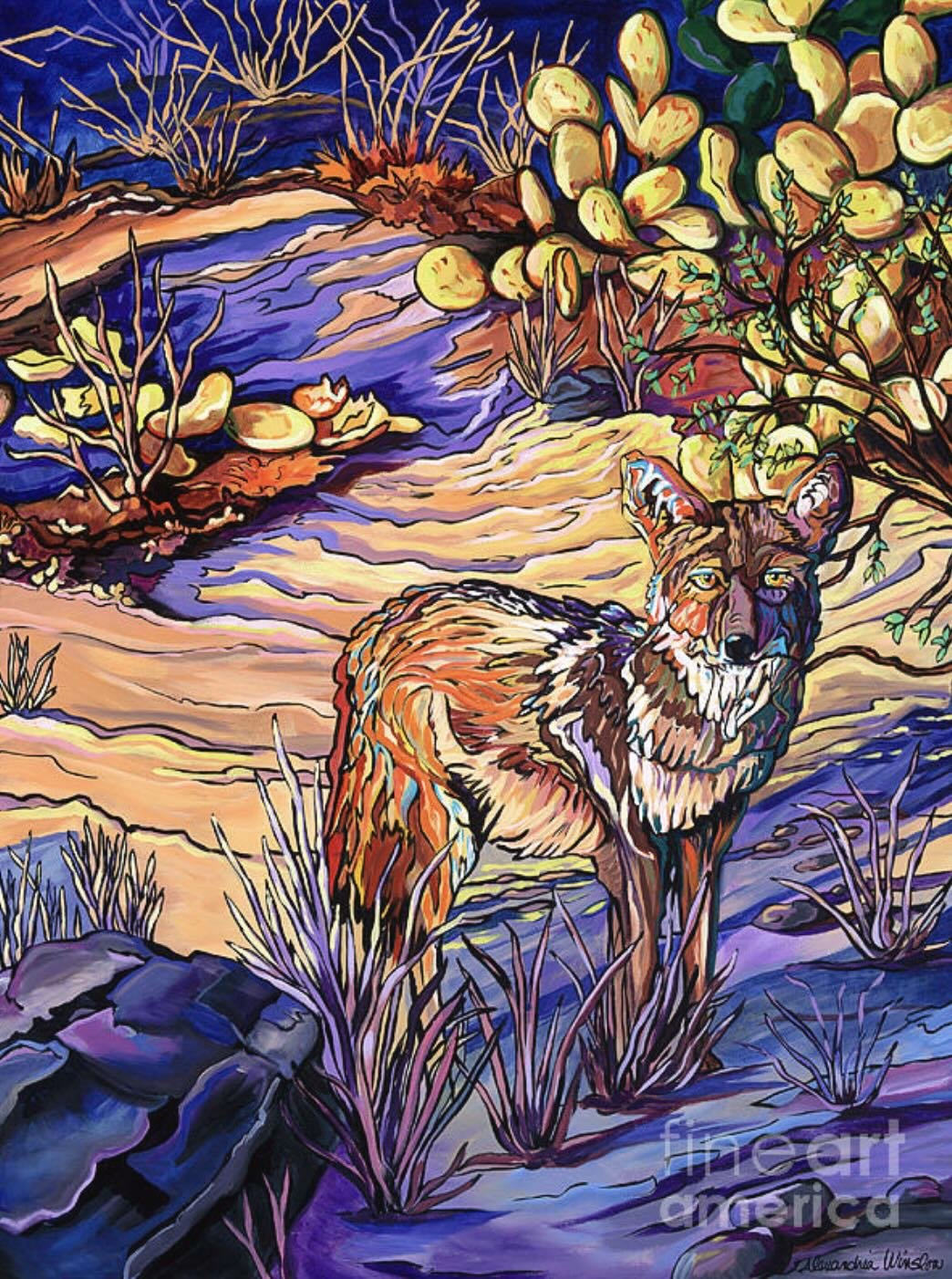
Coyote Camouflage by Alexandria Winslow
Desert Mythology
Alexandria Winslow
Based in Southern Arizona, Alexandria Winslow paints the Sonoran Desert with a dreamlike and familiar intensity. Her landscapes are saturated with color and movement, turning recognizable desert scenery into mythic dreamscapes. Viewing her work feels emotional, symbolic, and alive with memory, heat, and atmosphere.
Winslow’s connection to creativity started early, raised in a family shaped by both artistic expression and invention. After years spent working across different creative industries, she eventually returned to painting full time, bringing that same sense of experimentation into her work. Her contemporary desert scenes bring more wonder rather than realism, capturing the surreal psychological pull the Arizona landscape can have on the people who live inside it.
Jim Waid
Tucson-based painter Jim Waid has spent decades creating fantastical abstract landscapes that focus on the microscopic and the cosmic. Working in layered acrylics, Waid builds life into his work through use of color and texture for desert terrain, cellular forms, plant life, and imagined ecosystems. Themes of growth, decay, transformation, and movement run throughout his work, giving his paintings a mythic sense of evolution.
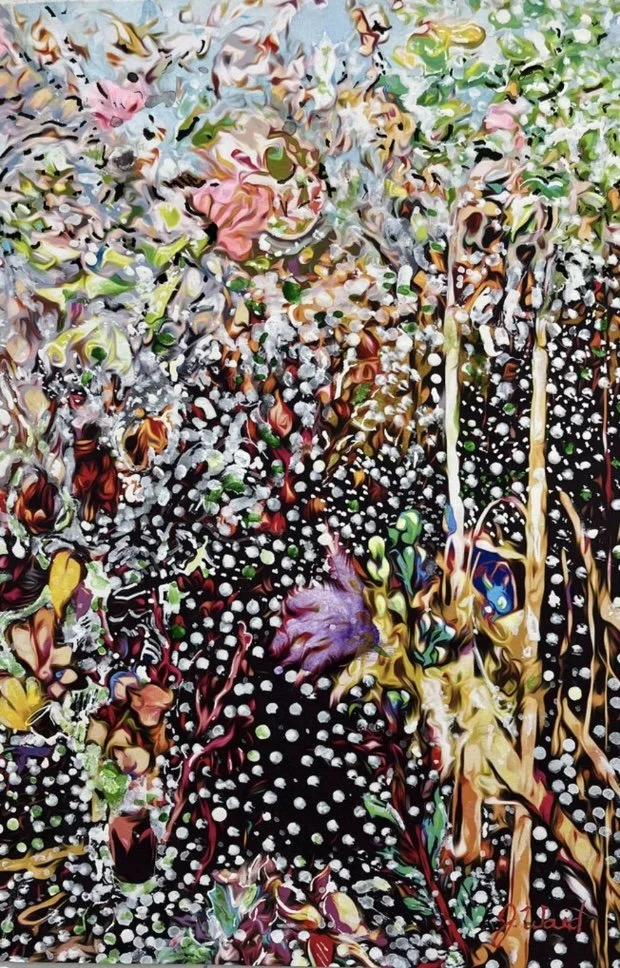
High Altitude (2025) by Jim Waid
Waid’s process involves building and scraping away multiple layers of paint, creating surfaces that feel organic and weathered, as though they have been unearthed rather than painted. In more recent years, he has also incorporated digital photography and manipulated photographic imagery into his practice, continuing to push the boundaries of contemporary desert abstraction in Arizona.
Indigenous and Cultural Narratives
Ishi Glinsky
Born in Tucson and of Tohono O’odham and German descent, Ishi Glinsky creates work that bridges Indigenous traditions with contemporary art practices. Working across painting, drawing, sculpture, and installations, Glinsky closely studies traditional craft practices and sacred customs connected to the Tohono O’odham Nation and other North American Indigenous cultures, often transforming them into large-scale contemporary works.
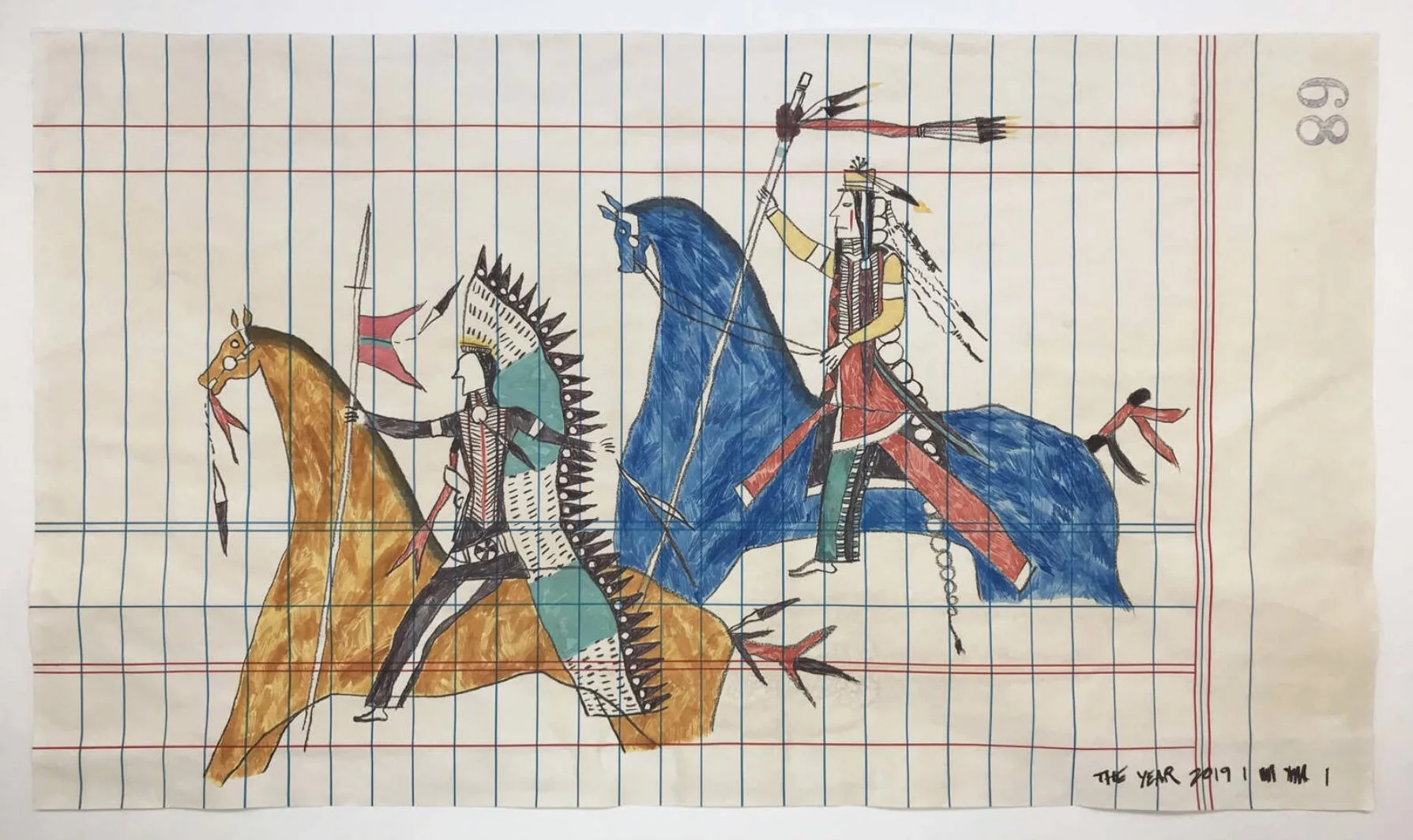
Howling Pack (2019) by IshIglinnksky
His work frequently explores visibility, survival, commodification, and cultural transformation within contemporary Indigenous identity. Through shifts in scale, material, and presentation, Glinsky creates monumental works that honor Indigenous stories and practices while also confronting the ways Native culture has been distorted and misunderstood. Rather than reproducing a fixed version of Southwestern art, his work pushes into ideas of Indigenous futurism, adaptation, and resilience.
Though now based in Los Angeles, Glinsky’s connection to Arizona remains an important part of his artistic foundation. His influence continues to shape conversations around contemporary Indigenous art coming out of the Southwest.
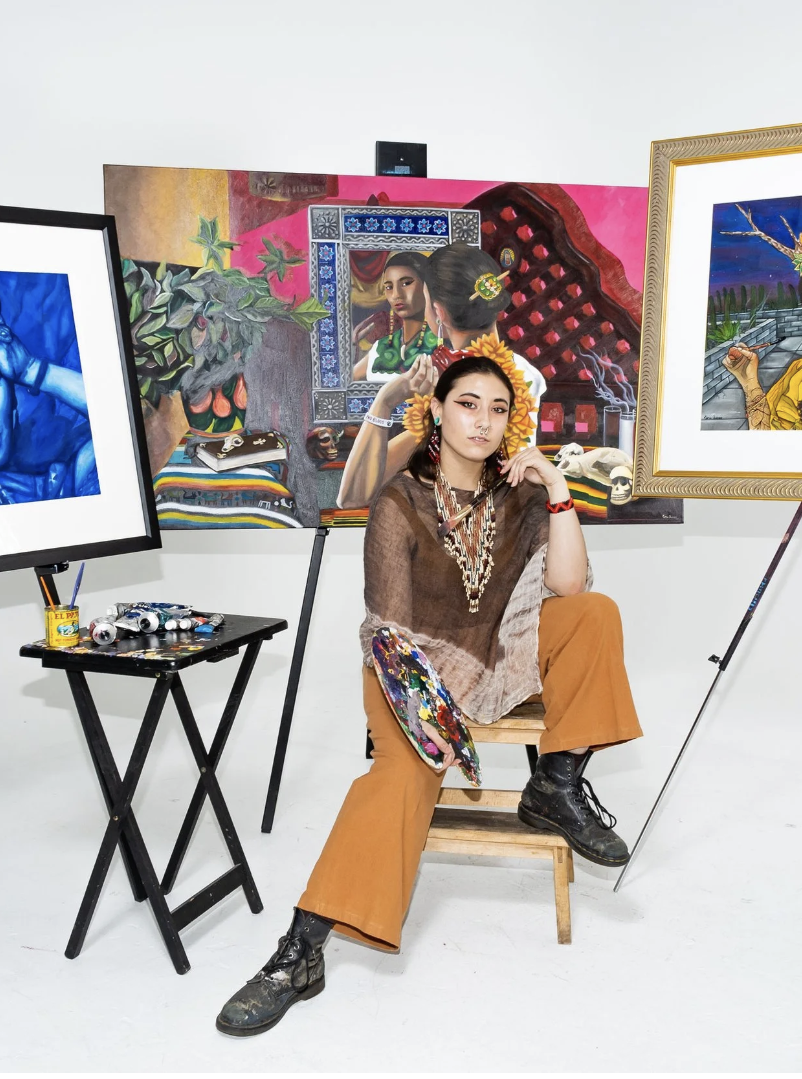
Photo of Cora Quiroz by Pics by Brown | Contagion Media
Cora Quiroz
Originally from Detroit, Michigan, Cora Quiroz (Oni Girl) is a Phoenix-based painter and muralist whose work explores identity, feminism, spirituality, and decolonization through the lens of her experience as a multiracial woman. She also works as a fire dancer, reflecting the multidisciplinary nature of her creative practice. Trained in painting at Arizona State University and in large-scale mural making under renowned muralist Ken Dushane (Phybr), she is represented by Contagion Media and has become an active presence in Arizona's contemporary arts community through collaborations with Roosevelt Row, Xico, and the Arizona Latino Arts and Cultural Center. Working across painting, spray paint, sculpture, and found natural materials, she continually expands her practice while drawing inspiration from artists such as Frida Kahlo. Through both her work and her goal of teaching at the university level, she hopes to help other artists develop the technical skills and creative confidence to express themselves.
Selina A. Scott
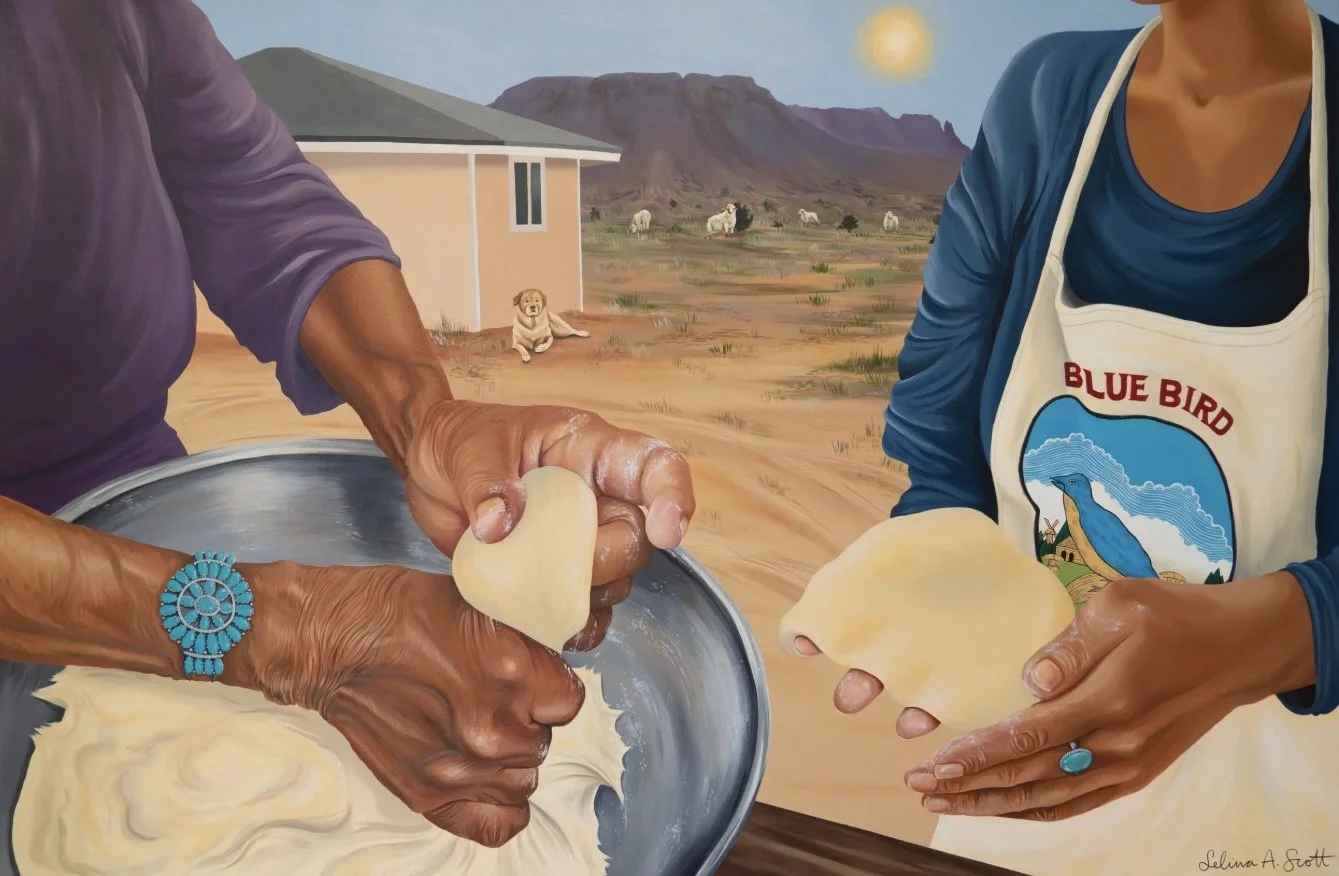
I knead my dough the way you showed me by Selina A. Scott
Selina Andréa Scott is a Diné (Navajo) and Latina painter based in Phoenix, Arizona. She earned her BFA in Drawing from Arizona State University in 2021, and her work is grounded in her Indigenous heritage, centering themes of identity, matriarchal lineage, connection to nature, and cultural pride. Working primarily in oil painting, alongside acrylic, graphite, and pastel, she expands her practice into digital illustration and three-dimensional work, all in service of amplifying contemporary Indigenous representation.
Her work has been exhibited across Arizona and beyond, including Xico, Cahokia, Sagrado Galleria, and the Heard Museum. In 2021, she was selected as one of 40 artists for the AXA Art Prize exhibition at the New York Academy of Art. More recently, she has shown work in Son de Allá, Son de Acá at the Chicano Park Museum in San Diego and presented her first solo exhibition, Feels Like Home (2024), at Cahokia in downtown Phoenix. She currently has work included in the Blue Bird Exhibition at the Heard Museum.
Contemporary Surrealism
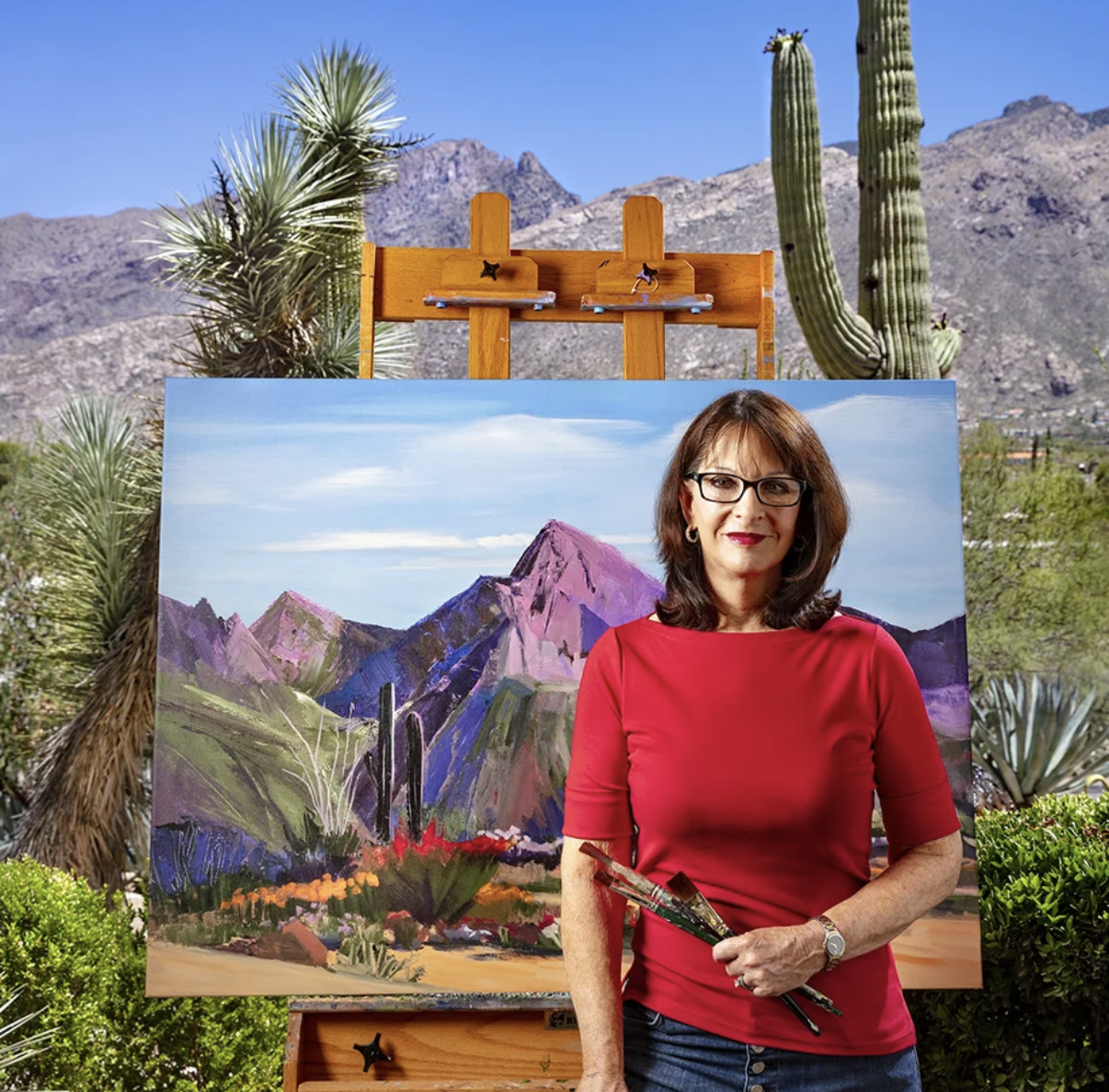
Photo of Diana Madaras
Diana Madaras
Diana Madaras is known for a brilliant, color-driven approach to painting that lies between realism and something more dreamlike. Her desert landscapes and Southwestern scenes often go beyond straightforward depiction, using saturated skies and heightened color to transform familiar Arizona vistas into emotional, almost memory-like interpretations of place. Working in watercolor and acrylic, she captures both the peaceful beauty and the dramatic intensity of everyday desert life, building a body of work that ranges from expressive landscapes to portraiture.
Based in Southern Arizona, Madaras has exhibited widely, including multiple solo exhibitions and placements in institutions such as the Tucson Museum of Art. Her work has also been commissioned for a range of projects, from resorts like Westin, Loews, and Miraval to editorial and institutional covers, including the University of Arizona Alumni Magazine. Beyond her studio practice, she has been deeply involved in community support, using her art to contribute to charitable causes throughout the region, reflecting a career shaped not only by visibility in the Southwest art world but also by sustained local engagement.
Leila Parnian
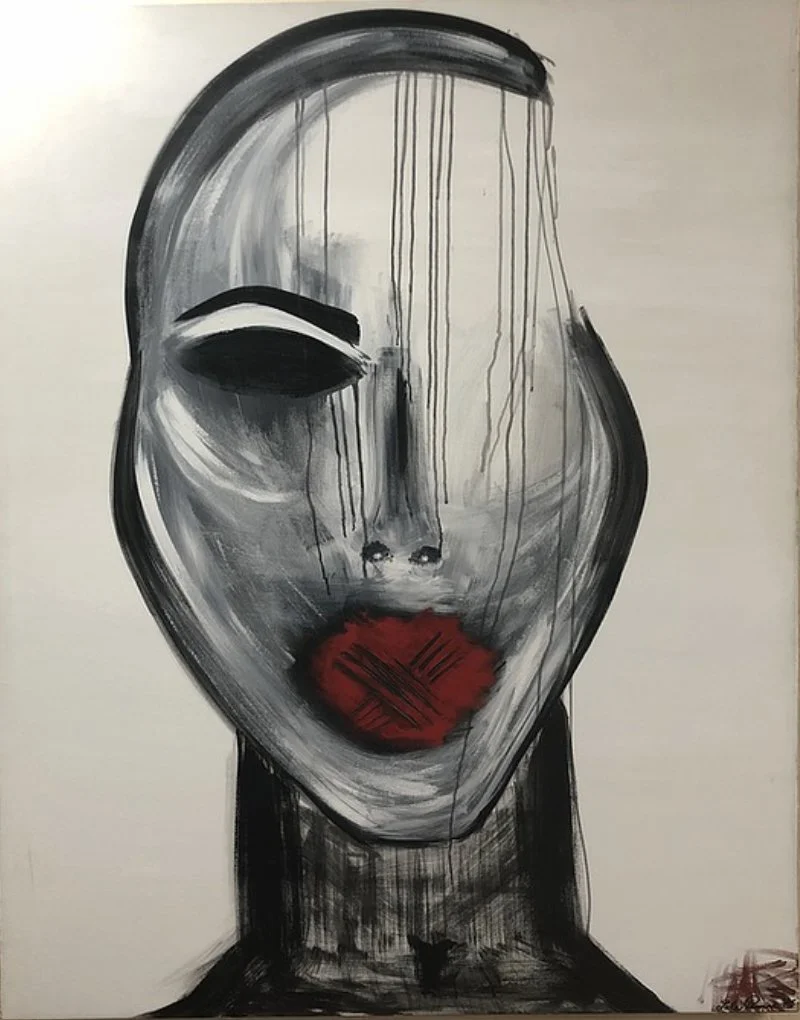
Stigma (2015) by Leila Parnian
Leila Parnian is a Phoenix-based artist whose work blends ornamentation, symbolism, and figuration into richly layered, often surreal compositions. Her paintings explore themes of femininity, transformation, mythology, and emotional interiority. They balance delicacy with psychological intensity, resulting in highly stylized, emotionally charged works that reveal more the longer you sit with them.
Born in Scottsdale to architect parents, Parnian studied Economics and later earned a Master’s in Urban Planning from Arizona State University before shifting paths after graduation. When the job market stalled in her field, she joined her family’s business, Parnian Furniture, where she eventually became Vice President. It was there that her art practice took on a public form, with her studio set inside the showroom, allowing visitors to watch her paint in real time.
Working without formal art training, she taught herself across mediums. From oil painting to large-scale spray-painted murals, she builds a practice based in experimentation and persistence. Today, she continues to paint while also leading creative workshops like TheraPour® and PartyPour®, further expanding her studio into a community space. Outside of art and business, she remains active in design work, enjoys piano and fitness, creates comedic social media content, and has a background as a three-time All-American racquetball player and collegiate national champion.
The New Figurative West
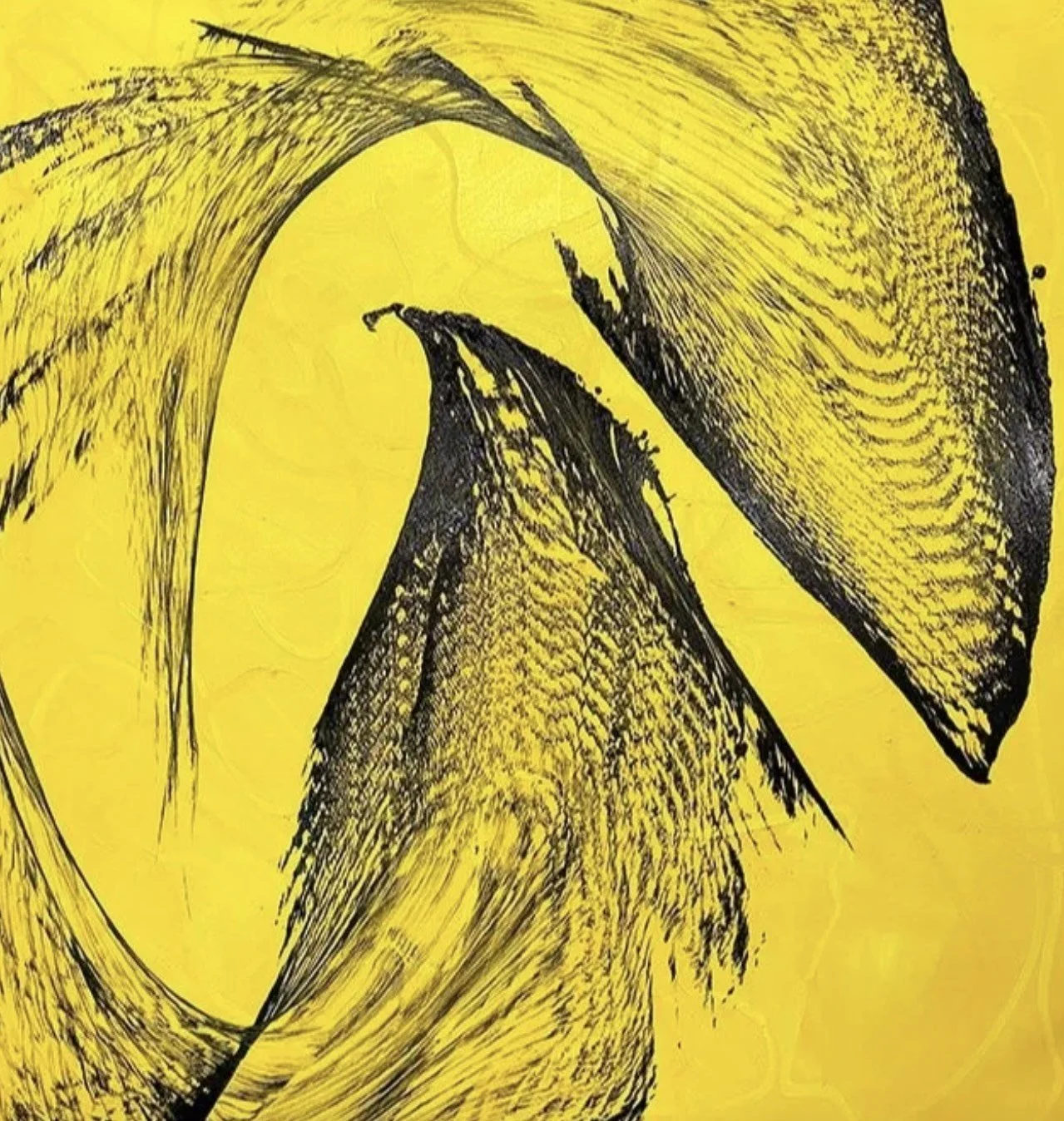
Flight of Shadows: String Painting as Gesture and Tension (2024) by Ritu Raj
Ritu Raj
Ritu Raj is a Phoenix-based artist representing a newer generation of Arizona painters working between abstraction, portraiture, digital aesthetics, and contemporary mixed media. His work balances organic movement with precision, reflecting a broader shift in contemporary painting that moves beyond geography and tradition toward experimentation and hybrid visual language.
Raj describes painting as something that begins before intention. “I paint not to mirror what is seen, but to give form to what is felt — the currents beneath the surface of thought, memory, and experience.” He does not enter the studio to express something already formed. He enters because something is already unfolding beneath thought and before language, and the canvas becomes the place where it becomes visible.
His practice moves between two bodies of work. Organic Movement uses thread, wet paint, gravity, and viscosity to allow material forces to shape the outcome. The marks carry physical processes within them and are not fully controlled. Abstract Inquiry is slower and more interior, built through sustained attention until the work indicates what it needs and he responds.
Across both approaches, Raj frames his practice as something shaped by accumulation rather than direct expression, informed by memory, systems thinking, and lived experience. The paintings are not meant to be solved. They are meant to be lived with over time, changing as the viewer changes.
Eric Fischl
Eric Fischl is an internationally recognized American painter and sculptor whose early artistic development is closely tied to Arizona, where he began his formal art education at Phoenix College after moving to the state in the late 1960s. Though his career spans major museums and collections worldwide, his time in Phoenix remains part of the foundation that connects his practice to the region’s broader cultural history.
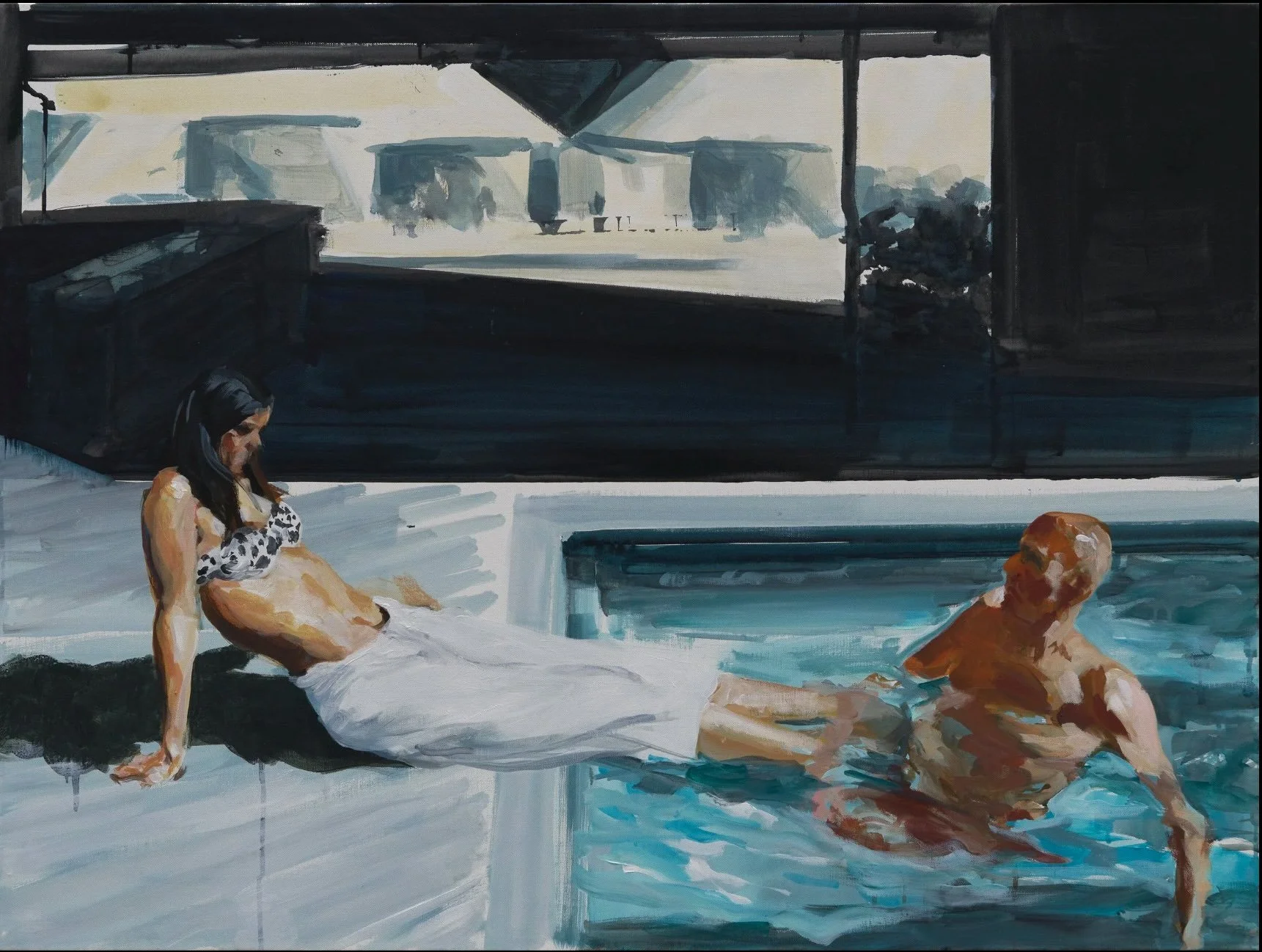
Footsies (2025) by Eric Fischl
Fischl is known for psychologically charged figurative painting that examines desire, vulnerability, and social tension with a particular focus on the hidden undercurrents of everyday life. His work often draws from suburban American environments, revealing the friction between surface appearance and private experience, and establishing him as a defining figure in late 20th and early 21st century figurative painting.
Beth Schwartz
Beth Ames Swartz is a painter and visual artist based in Paradise Valley, Arizona, whose work has been central to the development of abstract and spiritually driven painting in the Southwest. Her practice moves through abstraction and semi-abstraction, often weaving together symbols, language, and layered visual systems informed by philosophical inquiry, ritual, and cross-cultural spiritual traditions. Across her career, painting becomes a space for exploration rather than representation, shaped by ideas of transformation, perception, and healing.
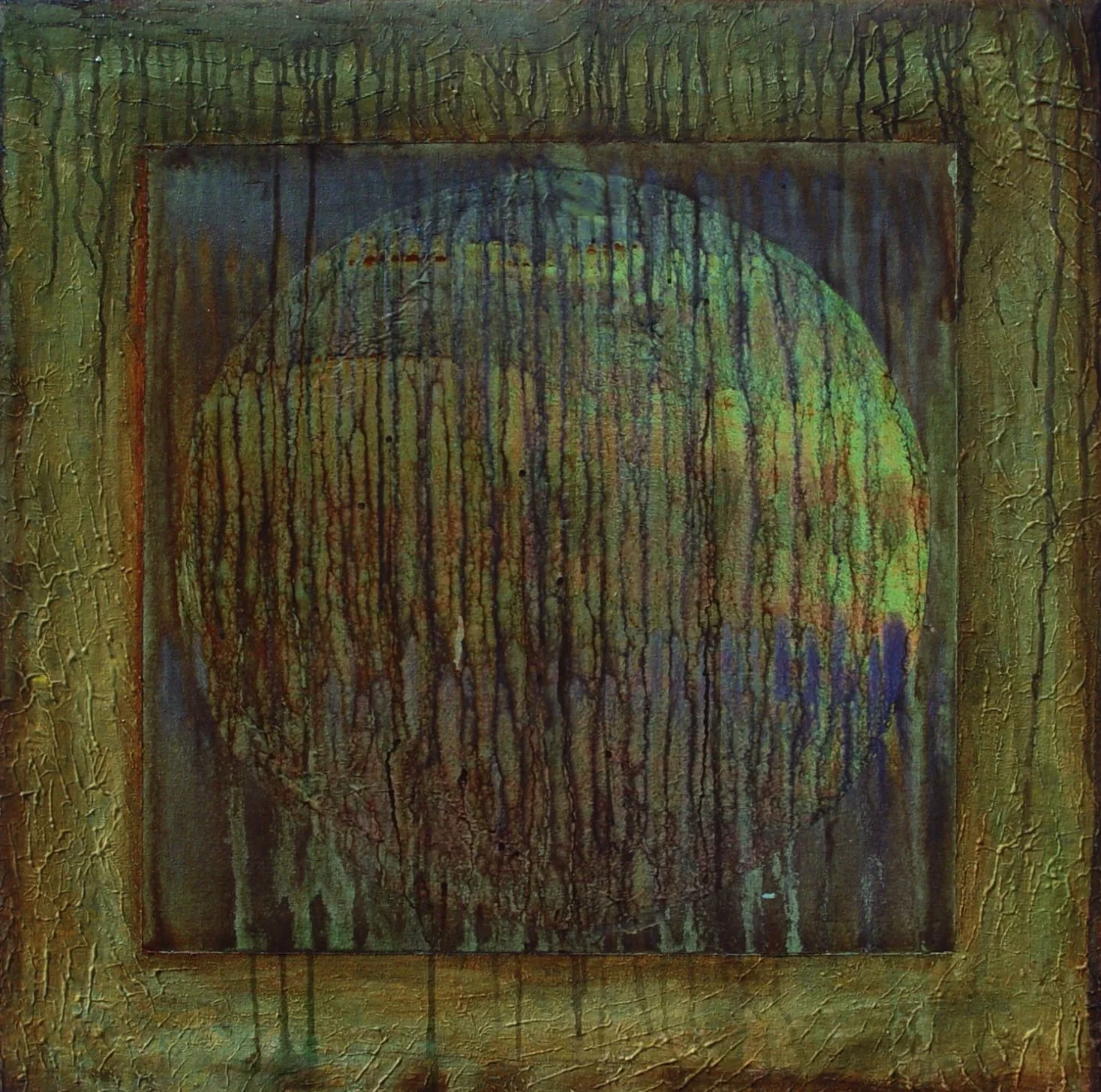
The Words of the Living are Wind in Dry grass by Beth Schwartz
Swartz moved to Arizona in 1959, a shift that initially felt unfamiliar against the stark desert landscape, but eventually became foundational to her work after her experiences in the Western landscape and the Colorado River deepened her connection to the place. From the late 1970s onward, her practice expanded into process-based and experiential projects that incorporated fire, pilgrimage, and participatory installation, including works informed by sacred sites, chakra systems, and meditative environments. Over time, her work continued to evolve through themes of ritual, ecology, memory, and what she describes as forms of spiritual and planetary healing, establishing her as a key figure in Arizona’s contemporary and conceptual art history.
Why Arizona Painting Matters Right Now
Arizona’s contemporary painters are working outside the traditional centers of the American art world, and that distance shows up in the work itself. Many artists are building practices that feel more experimental, personal, and tied to place, without relying on outside expectations of what Southwestern art should look like.
Across Phoenix, Tucson, Flagstaff, Bisbee, and smaller desert communities, painting here is taking on more varied forms than it is often assumed to have. The conversation around Arizona art is still expanding, but it is already well underway.
Published by KBR on July 9, 2026