
Stripping Away Everything: Diego Lozano's Self-Portraits of Vulnerability, Culture, and Change
By Natalie Wheeler
For more than a decade, artist Diego Lozano from Phoenix, Arizona, has used self-portraiture as a way of stripping things away.
Not just clothing, but assumptions. Expectations. Ideas about masculinity, culture, religion, politics, and the body itself.
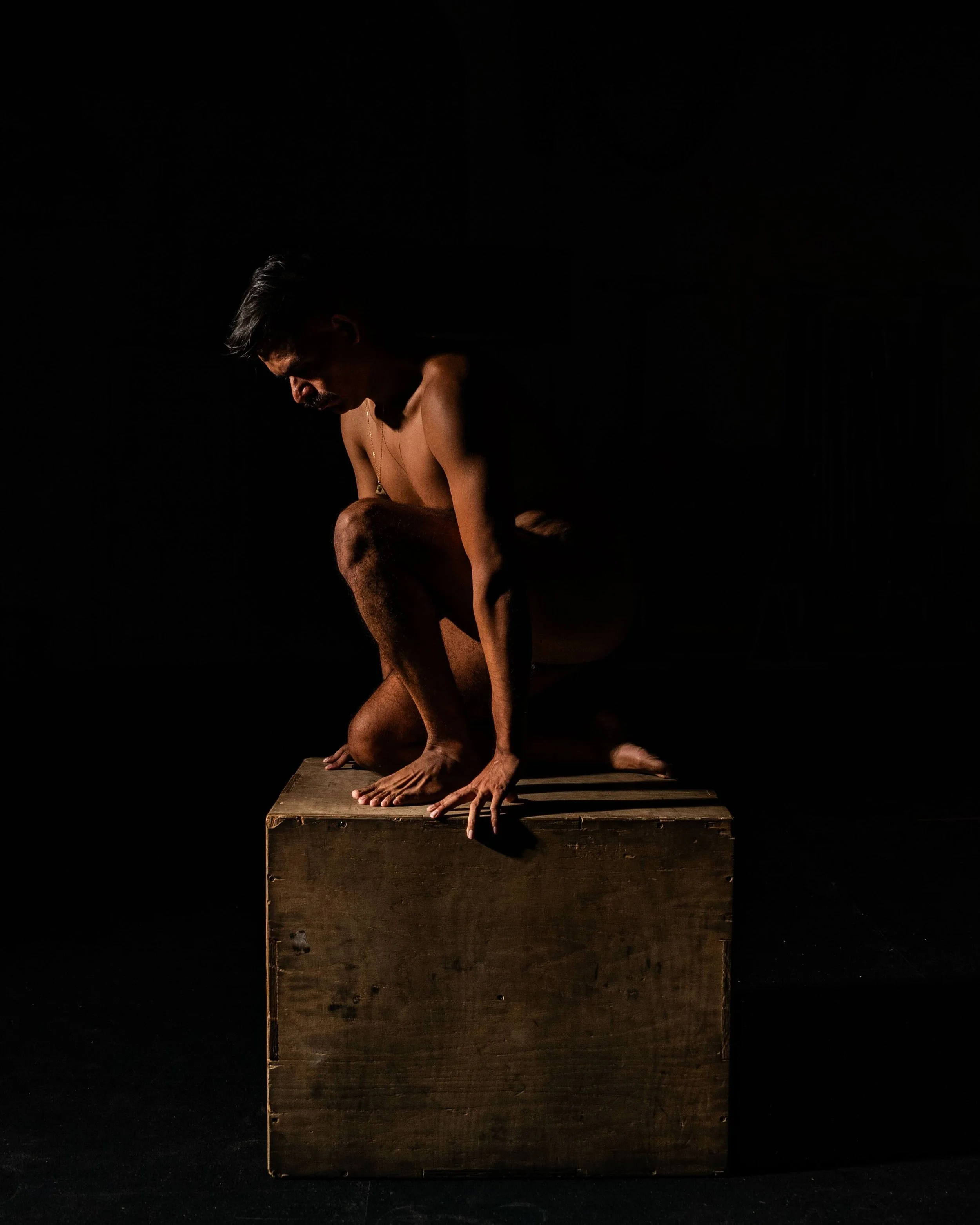
Self Portrait by Diego Lozano
Through a deeply personal practice that spans Arizona and Mexico, Lozano faces the camera on himself to explore what remains when those layers are taken away. The resulting images are ever so vulnerable, often nude, and will confront the complexities of identity, belonging, and personal transformation.
"I've always seen things through a different lens," Lozano shares. It is a simple statement, but one that feels central to both his life and his work.
Lozano began making self-portraits around 2011 or 2012. Even before photography became a serious artistic practice, he found himself drawn to the idea of seeing himself outside of a mirror. Growing up, he says he never viewed his body as something lesser, but photography offered a different way to understand it. Early exposure to nudity through art and popular culture also led him to question why the human body is so often treated as something shameful or hidden.
Later, after having his own space, he found the freedom to explore those questions more fully. Self-portraiture became a way to examine not only his physical body, but the experiences, beliefs, and contradictions it carries.
Today, Lozano sees the body as a record of everything we live through.
"The body displays all the good and all the bad," he says. For him, revealing those truths rather than concealing them can be an act of healing.
That idea has increasingly connected his artistic practice with his political work. Lozano has spent years investing time in immigrant rights organizing, including helping to lead the digital strategy, branding, photography, and visual identity for Arizona's Proposition 308 campaign, which has expanded access to in-state tuition for Dreamers.
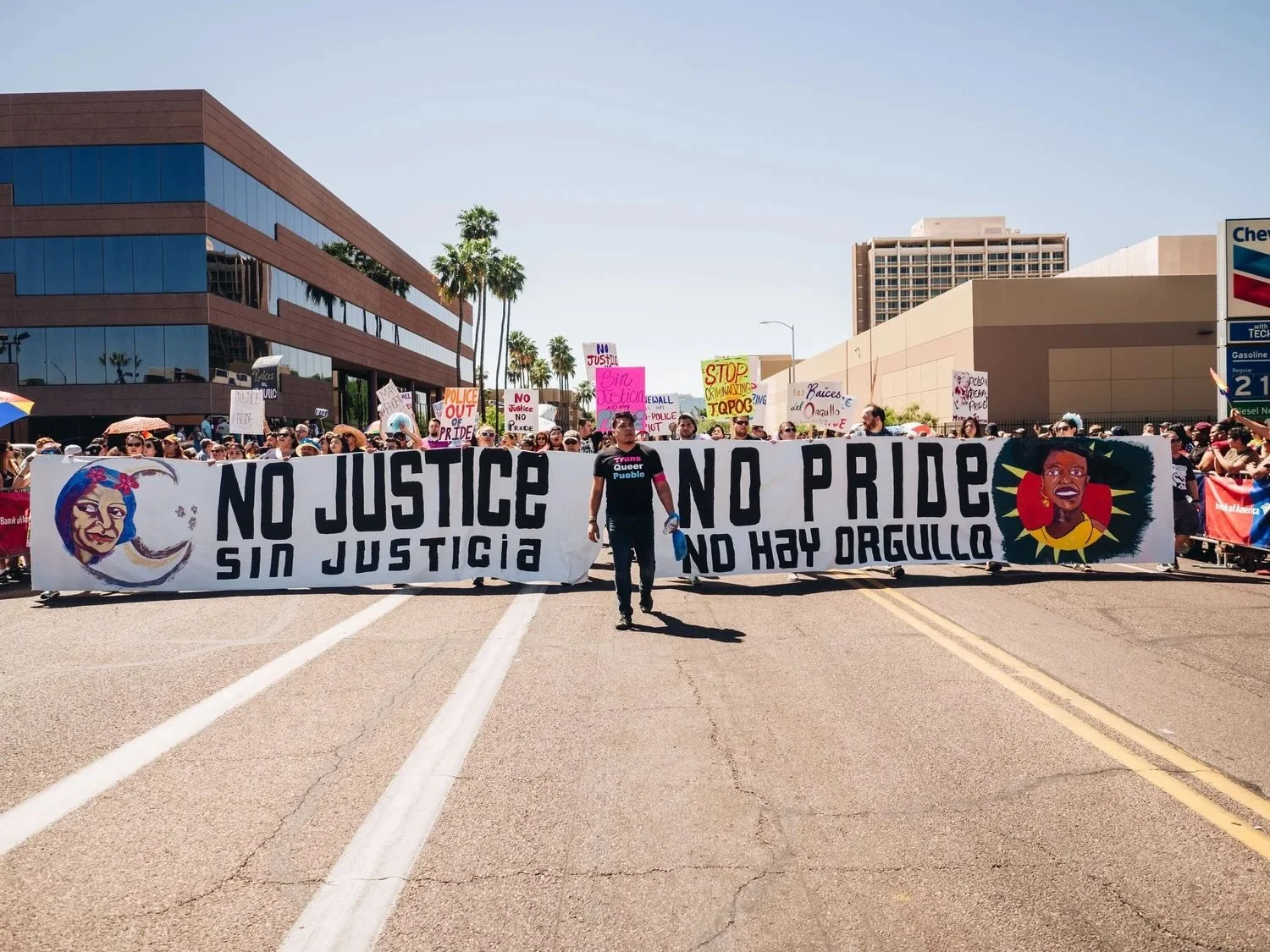
Photo by Diego Lozano
The campaign represented something deeply personal to Diego.
"It was one of the reasons I joined the immigrant rights movement back in 2011," he writes. "So that my friends could have access to in-state universities."
While activism and self-portraiture might appear unrelated on the surface, Lozano sees connections between the personal and political. He has become increasingly interested in the parallels between unhealed bodies and unhealed nations, particularly in a country still grappling with historical trauma and injustice. The same willingness to confront difficult truths that drives his political work also appears in his photography.
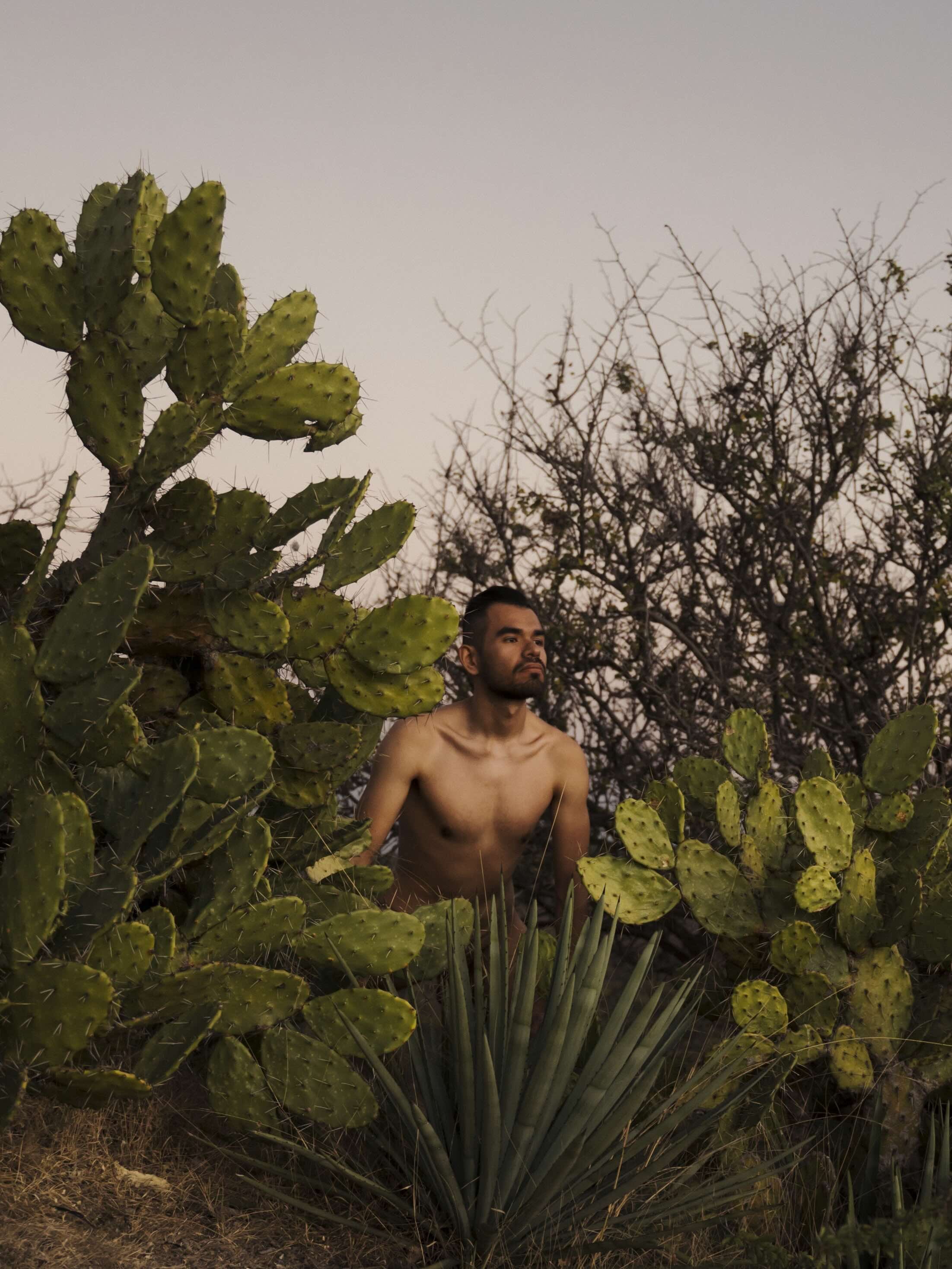
Self Portrait by Diego Lozano
Rather than presenting an idealized version of himself, he embraces vulnerability.
That vulnerability extends beyond emotional exposure. It often becomes physical as well.
Like many self-portrait artists, Lozano has endured his share of injuries while creating photographs. Desert heat, rough terrain, thorns, and long hikes have all left their marks.
One image created in Saguaro National Park required him to walk barefoot across scorching ground. After only a few minutes, the heat became unbearable and burned his feet. In another shoot in Morelos, Mexico, thorns became lodged deep in his foot.
Instead of removing evidence of those experiences, he often leaves them visible.
"Afterwards it just makes it more real," he says.
The body, after all, tells the truth and is transparent with you.
Some of Lozano's most meaningful photographs have been created in Mexico, where much of his mother's family still lives. One of his earliest outdoor nude self-portraits was made in Morelos using a small travel tripod. The experience proved transformative.
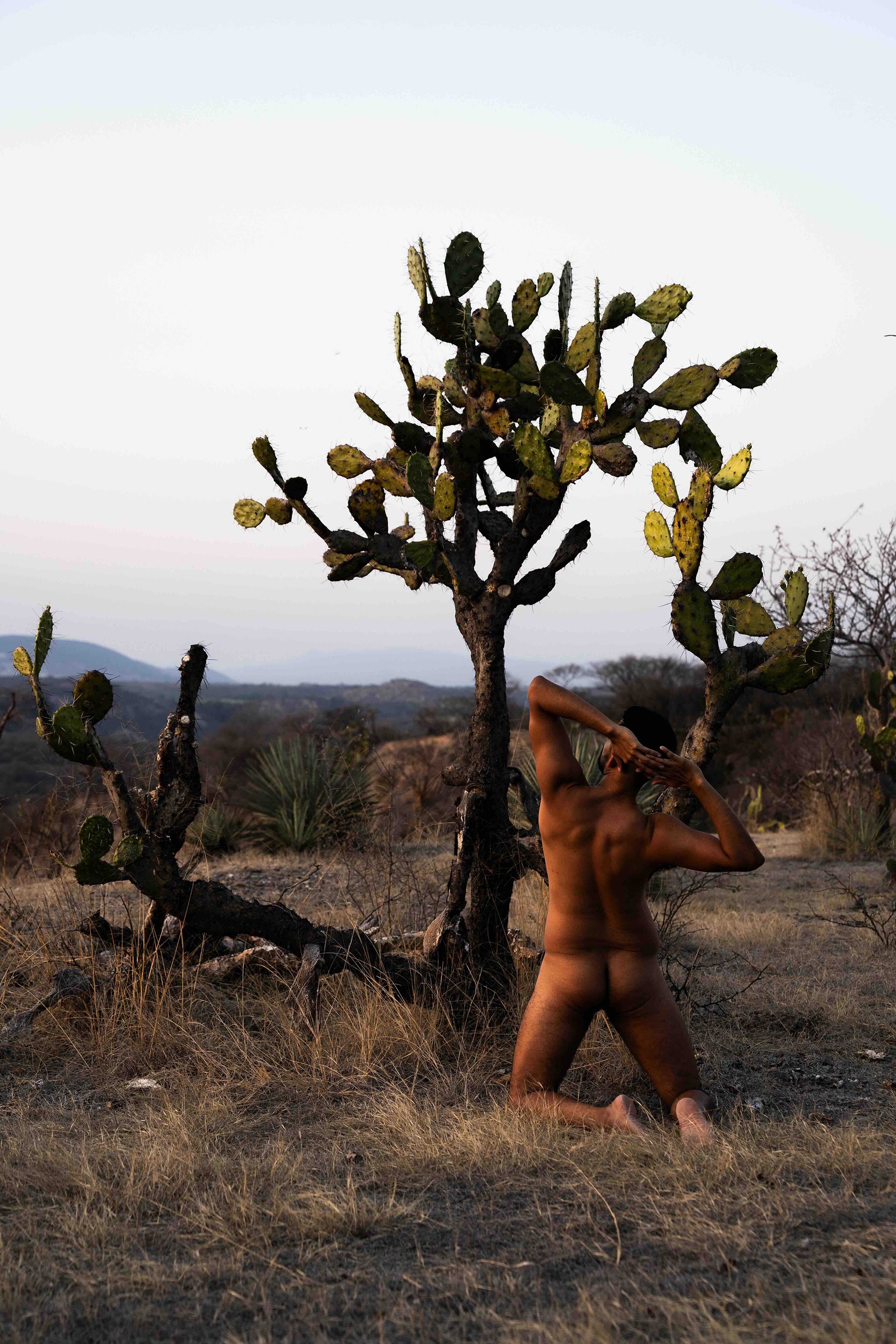
Self Portrait by Diego Lozano
Surrounded by nature and family history, he found a sense of freedom unlike anything he had experienced before.
"It was one of the most liberating experiences I've ever had," he says.
The image remains one of Diego’s favorites. Framed by nopales and native plants, it captures what he describes as the essence of being Mexican. For Lozano, these photographs are not simply portraits of a person. They are portraits of place, ancestry, and connection.
His images made in Arizona often speak to those same themes.
One particularly significant photograph emerged during the pandemic amid political unrest and personal uncertainty. Standing beside a towering cactus beneath shifting skies, Lozano found the landscape reflecting his own emotional state. Years later, he returned to the site and discovered the cactus had fallen.
"Even giants fall," he remembers thinking.
The moment became another photograph and another reminder that vulnerability is universal and everyone experiences the feeling. Nothing remains untouched by time, not even the strongest among us.
That exploration of vulnerability reached a new level with the publication of his recent book, Conócete al Hueso, a phrase that roughly translates to "know yourself to the bone."
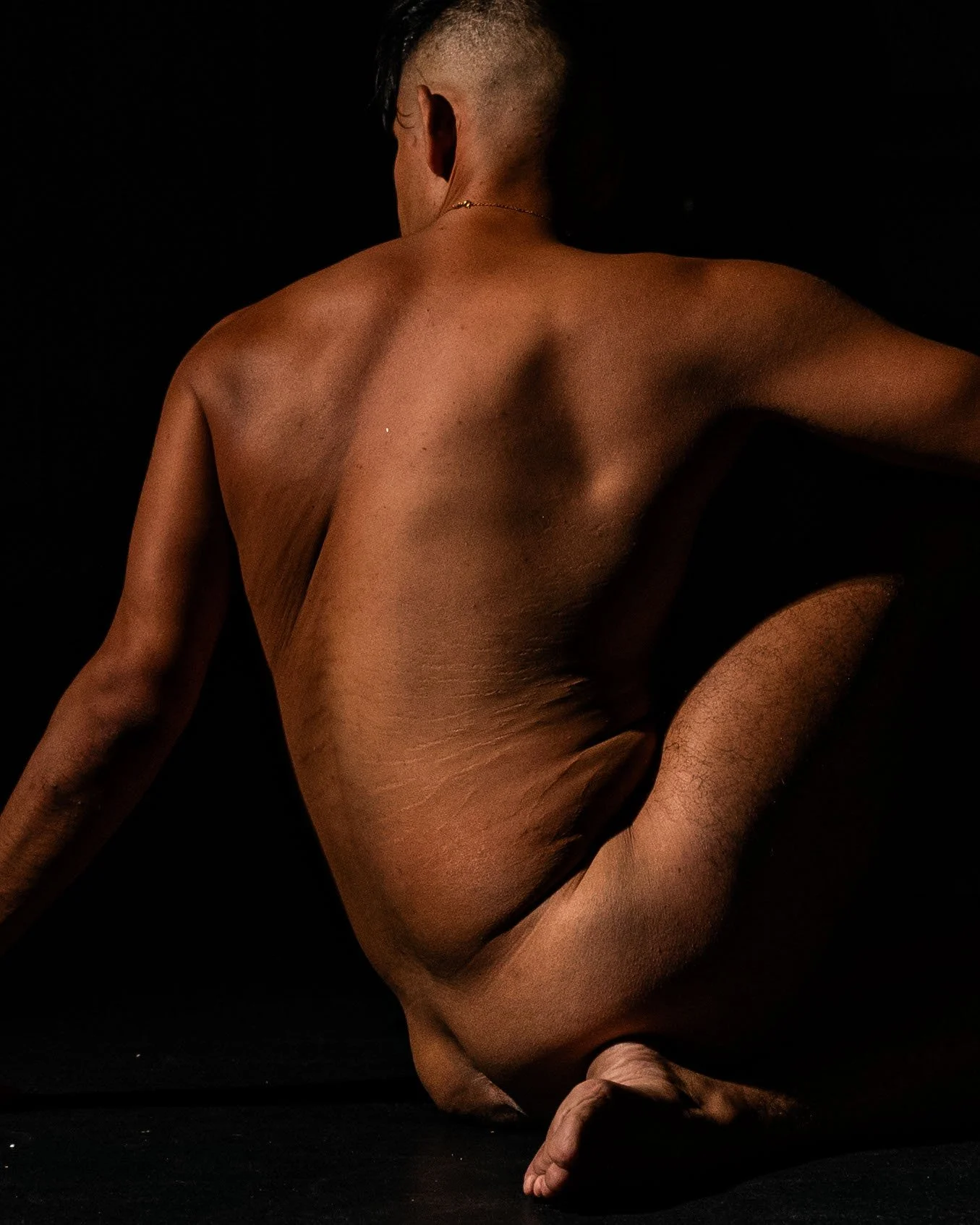
Self Portrait by Diego Lozano
The title emerged during a visit to Chichén Itzá in 2023. While exploring the ancient Maya site, Lozano learned about obsidian, a highly reflective volcanic glass used for tools, ceremonial objects, and self-observation.
"The guide explained that people would use obsidian to observe themselves, their surroundings, and where they were in their present journey," Lozano recalls. "Then he said, 'Necesitas conocerte al hueso.'"
The phrase immediately resonated. For Lozano, it reflected everything he had been exploring through photography, fitness, therapy, and personal growth. It felt less like a revelation and more of a confirmation of work he was already doing.
Created during a period marked by a major breakup, professional upheaval, and personal reckoning, the book became a way to process experiences that felt too large to contain anywhere else.
"I had a lot to say and nowhere to express it," he writes.
Rather than creating a retrospective of existing work, Lozano chose to make an entirely new body of photographs focused on that specific chapter of his life. The decision was intentional. He wanted the work to document a moment of transition rather than summarize a career.
The finished project remains one of the works he values most, not simply because it became a book, but because it allowed him to see how far he had come.
For some viewers, the nudity can be surprising. Friends and colleagues who know him through activism, graphic design, or community work are often startled by the level of openness in the images. But that reaction is part of the point.
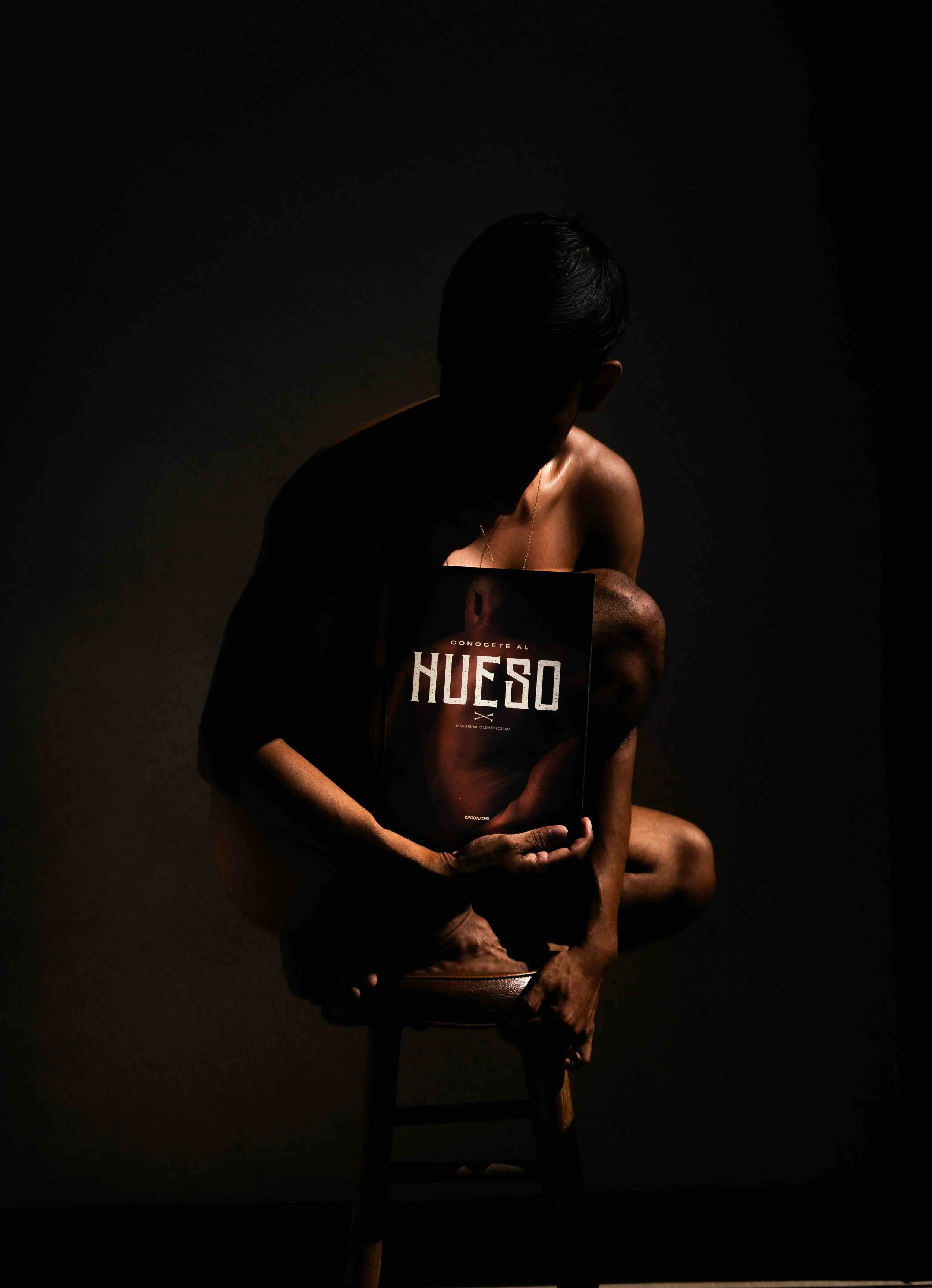
Self Portrait by Diego Lozano
By stripping everything away, Lozano creates space to examine what remains. Masculinity. Politics. Religion. Culture. Art. The forces that shape us all become visible when there is nothing left to hide behind.
Looking ahead, he is developing an installation piece that combines mirrors, wooden panels, and self-portrait imagery. Viewers will look through openings in the structure, discovering photographs reflected back through mirrors and creating an experience centered on observation, reflection, and perspective.
The project is still evolving, but the questions behind it feel a bit familiar.
For more than a decade, Lozano has used self-portraiture to challenge expectations and look beyond the surface. His photographs ask viewers to do the same.
By stripping away everything that separates us from ourselves, he reveals something deeper: the complicated, often uncomfortable, and ultimately human truths we all carry beneath the surface.
You can order Diego’s wonderful book here: https://www.diegonacho.com/hueso
Follow Diego’s journey on Instagram @diegonacho.