
Best Reselling Platforms in 2026: Where to Sell Clothes, Art, Vintage & More
By KBR
Who knew selling your creative work online can be surprisingly complicated?
You might have a closet full of pieces you no longer wear, a stack of original artwork, vintage finds, handmade jewelry, collectibles, or products from a small creative brand. The obvious question you ask is, “Where can I sell this?”
The less obvious question is where will it actually make sense to sell it?
There is no universal best resale platform. A handmade artist, vintage seller, fashion reseller and collector may all have completely different answers. The right marketplace comes down to your product, your audience, your price point and how much work you want to put into selling.
So instead of ranking platforms from one to ten, here is a more practical way to look at the biggest marketplaces in 2026.
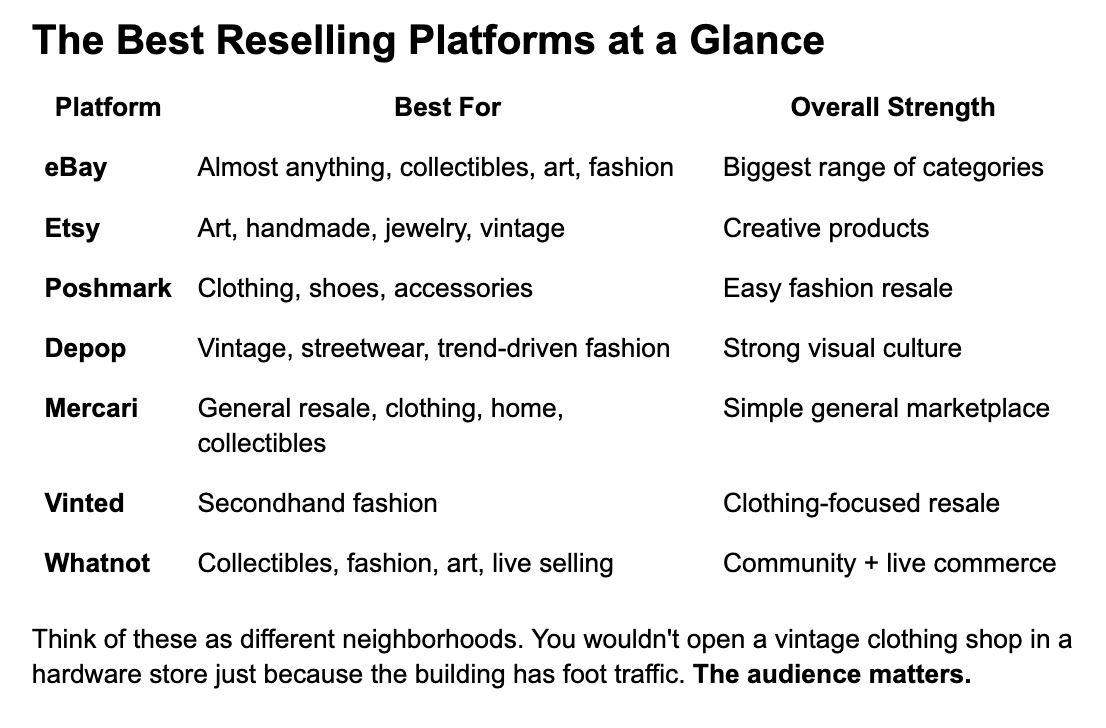
Think of these as different neighborhoods. You would not open a vintage clothing shop in a hardware store just because the building has foot traffic. The audience matters.
Best Overall: eBay
If you sell a little bit of everything, eBay is hard to ignore.
It has one of the broadest marketplaces for resale, from clothing and jewelry to collectibles, cameras, art and vintage objects. It is especially handy when you have something unusual that doesn't fit neatly into another platform's culture.

Photo by HBS | Adobe Stock
eBay also gives sellers several ways to list, including fixed-price listings and auctions. For US sellers, the platform currently provides up to 250 zero-insertion-fee listings per month, although selling fees vary by category and other factors.
Best for: The creative seller with varied inventory, collectibles, vintage pieces or harder-to-categorize products.
Watch out for: Fees can vary significantly by category, and eBay rewards sellers who are willing to learn the platform rather than simply uploading an item and forgetting about it.
Best for Artists & Handmade Sellers: Etsy

Photo by Gorodenkoff | Adobe Stock
For artists and creative entrepreneurs, Etsy is one of the most natural places to start.
Original artwork, prints, jewelry, handmade products, craft supplies and vintage goods all have a built-in audience. The biggest advantage is that shoppers are already arriving with the expectation that they are going to discover something more personal than what they might find at a traditional retailer.
That distinction absolutely matters.
If your product has a story, aesthetic or handmade quality behind it, Etsy can make more sense than a general resale marketplace.
It is also worth remembering that Etsy is not simply an art marketplace. Its strength is creative commerce.
Best for: Artists, jewelry makers, designers, handmade sellers, vintage sellers and creative entrepreneurs.
Watch out for: Competition is high, so strong photography, searchable titles and a recognizable shop identity matter.

Photo by Tada Images | Adobe Stock
Best for Fashion Resale: Poshmark
If you are primarily selling clothing, shoes, handbags and accessories, Poshmark remains one of the easiest places to begin.
Its entire experience is built around resale, and shoppers know what they are there for. That makes it especially convenient for closet cleanouts and sellers who don't want to build a storefront.
For US sellers, Poshmark currently takes a flat $2.95 on sales under $15 and 20% on sales of $15 or more.
That 20% can feel significant, particularly on higher-priced items, so price accordingly.
Best for: Clothing, shoes, accessories, designer pieces and closet resale.
Watch out for: Competition and seller fees. A $100 sale is not the same as $100 in your pocket.
Best for Vintage & Trend-Driven Fashion: Depop
Depop is particularly interesting for creative sellers because fashion there is often treated as culture rather than simply inventory.
Photo by piter2121 | Adobe Stock
Vintage, Y2K, streetwear, alternative fashion, upcycled clothing and statement pieces can all find an audience. Strong styling and photography can be just as important as the brand name on the tag.
If you are the type of seller who enjoys creating a look around a product, Depop may feel more natural than a traditional resale site.
Best for: Vintage, Y2K, streetwear, alternative fashion and visually distinctive pieces.
Watch out for: Trends move at a quick pace. What feels highly desirable one month may be much harder to sell the next. You have to be ahead of the trends.
Best Simple General Marketplace: Mercari
Mercari is useful when your inventory does not fit neatly into one category.
You can sell clothing, accessories, home goods, collectibles, electronics and plenty of other everyday items. That makes it a practical option for someone who wants one relatively straightforward marketplace rather than managing several specialized shops.
For US listings created or updated under Mercari's current fee structure, sellers pay a 10% selling fee on the item price plus buyer-paid shipping.
Best for: General resale and sellers with mixed inventory.
Watch out for: Buyer and seller fees can affect the final price, so always calculate your expected payout before accepting an offer.
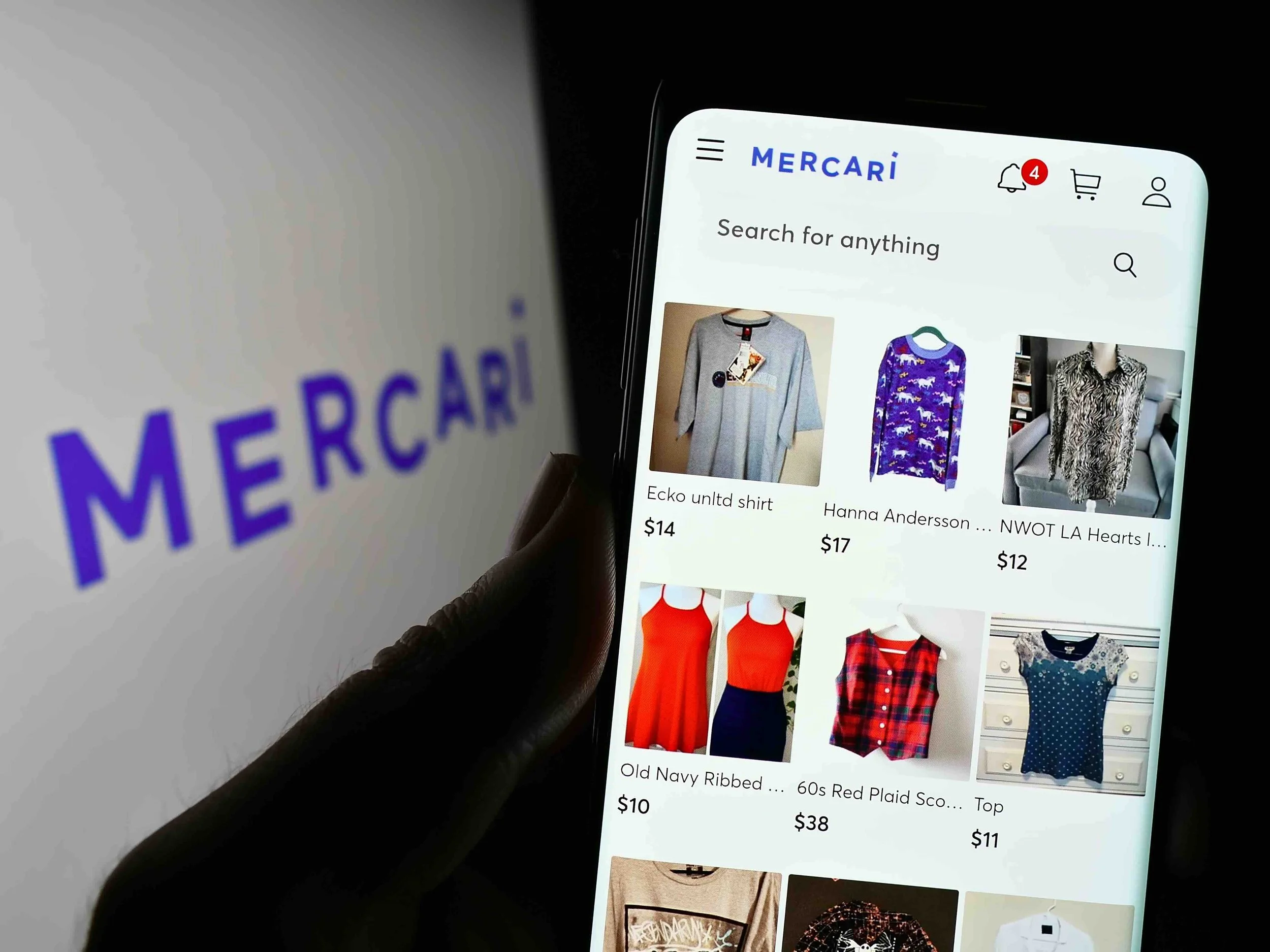
Photo by Timon | Adobe Stock
Best for Secondhand Fashion: Vinted
Vinted has become another major name in secondhand fashion, particularly for sellers looking for a clothing-focused marketplace.
The appeal is simple: buyers come specifically looking for secondhand goods, which means you do not have to convince them that buying used is a good idea.
Vinted's fee structure varies by market, and its current US information places a buyer-paid platform fee at checkout rather than treating every marketplace fee as a seller expense.
Best for: Clothing, accessories and casual secondhand fashion.
Watch out for: Platform rules and fee structures can change, so check the current terms for your market before pricing inventory.
Best for Live Selling: Whatnot
If traditional listings feel a little too quiet for you, Whatnot is a completely different experience.
The platform was built around live shopping, auctions and community. It can be particularly interesting for collectibles, fashion, jewelry, art and sellers who enjoy interacting with an audience while they sell.

Photo by Charlie's | Adobe Stock
Whatnot's US seller commission currently starts at 8% and decreases as sellers reach higher sales tiers, with payment processing charged separately.
That makes it particularly worth exploring if you're comfortable on camera, enjoy storytelling or already have an audience that likes to shop with you.
Best for: Live sellers, collectors, fashion sellers, artists and community-driven commerce.
Watch out for: Live selling requires more energy and preparation than simply posting a listing. You are not just selling an object; you're hosting an experience.
So... Which Platform Should You Actually Use?
This is where things get interesting.
You do not necessarily have to choose one.
A photographer selling limited-edition prints might find Etsy useful. A fashion designer clearing out samples might use Depop or Poshmark. Someone selling vintage cameras could have better luck on eBay. A collector with an engaging personality might build an audience on Whatnot.
And if you have different types of inventory, cross-listing can make sense.
You could start with one platform, learn what sells, refine your photography and descriptions, then expand to another marketplace once your process is working.
That is generally smarter than immediately creating six accounts and giving yourself six more places to maintain.
Don't Choose a Platform Based on Fees Alone
A platform taking 10% is not automatically better than one taking 20%.
What matters is what you receive in exchange for that fee.
A marketplace might charge more but put your product in front of a much larger or more relevant audience. Another might have lower fees but require significantly more effort to generate your own traffic.
Before choosing a platform, ask:
Who already shops here?
Does my product fit the culture of the marketplace?
What will I actually keep after fees?
How much work will photography, listing and shipping require?
Can buyers easily discover my products?
Does the platform help me build a recognizable brand, or am I simply another listing?
That last question becomes especially important once resale turns into a real creative business.

Photo by Andrii Lysenko | Adobe Stock
Your Best Platform Might Be More Than One
For artists and creative entrepreneurs, selling online is not necessarily about finding one magical marketplace.
It is about finding the places where your work makes sense.
Start where your ideal customer already shops. Learn that platform well. Photograph your work thoughtfully. Write descriptions that sound like a person, not a product database. Price based on the actual market rather than what you wish something were worth. Then experiment.
And do not underestimate your own data. After a few months, you may discover that your original artwork sells best in one place while your vintage clothing performs somewhere completely different.
There is no rule saying your entire creative business has to live on one platform.
Have you had a surprisingly good or bad experience selling on one of these marketplaces? Tell us what you sell, where you sell it and what you have learned. Your experience could help another artist or creative entrepreneur choose their next platform.
Edited by Marquez Rodriguez on October 12, 2026