
How to Price Your Art Without Underselling Yourself
By Earthly Upchurch
You’ve poured your heart into every step, every note, every frame, and now comes the tricky part: assigning a dollar value to your creative sweat and tears. It can feel a little like putting a price on your soul, but trust me, you deserve to be paid what you’re worth. Whether you’re a dancer, musician, or photographer, this guide will help you confidently set rates that honor your time, talent, and passion.
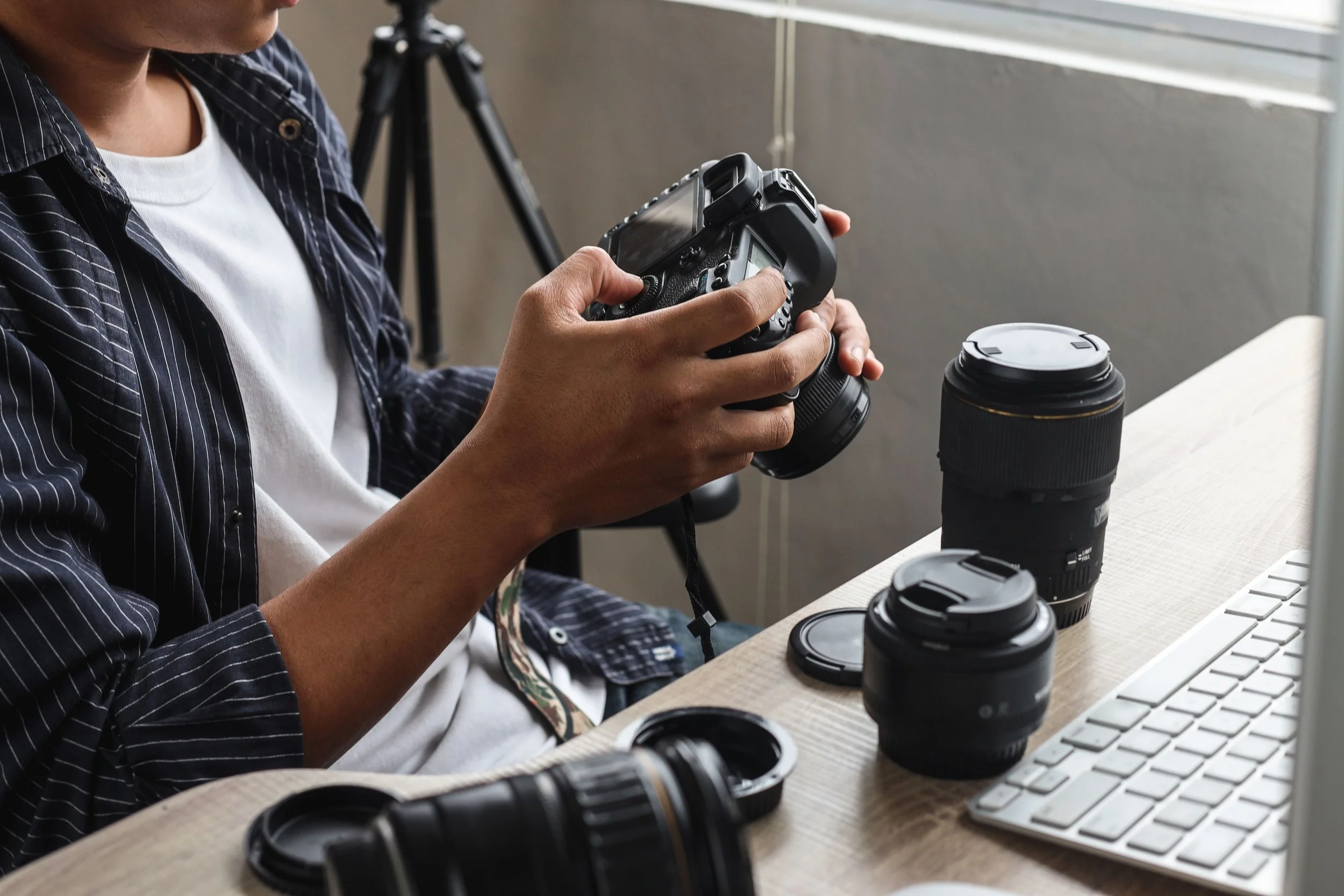
Photo by Queenmoonlite Studio | Adobe Stock
1. Break Down Your Investment
Before you name your price, map out what goes into your craft:
Time: Every rehearsal, every practice beat drop, every edit session. Those hours (and valuable skills)add up fast.
Money: Studio rentals, instrument upgrades, camera bodies and lenses, costumes, props, software licenses—you know the drill. Once you’ve totaled those numbers, add a healthy margin for your creative spark. After all, that’s what makes your art stand out!
2. Peek at the Neighborhood, Then Stand Out
Do some friendly reconnaissance: what are fellow dancers, indie bands, or portrait photographers charging in your area? Use those figures as a baseline, but don’t let the lowest rates drag you down. You are never competing on price alone but are offering something no one else can. Consider the market, supply, demand, etc.
Pro Tip: If you see wildly low fees, consider reaching out to those artists and asking what they include for that price. You might discover hidden costs you’d rather absorb yourself than undercut the market or consider adding extra to account for these costs depending on your market and situation.

Photo by pressmaster | Adobe Stock
3. Learn from the Legends: Kendrick Lamar’s Premium Pricing
Remember when Kendrick Lamar dropped those early CDs with sticker-shock price tags? Some fans balked, but others recognized that his lyrical genius was worth every cent. He wasn’t just selling music; he was selling an experience.
Lesson: Don’t underestimate your value. If a future rap legend can charge top dollar for his vision, you can too, especially if you believe in your own artistry and have the expertise to back it up.
4. Spotlight vs. Paycheck: The Super Bowl Phenomenon
Here’s a head-scratcher: Super Bowl halftime performers don’t get a paycheck. They actually cover production expenses, yet they line up for the chance to play on the world’s biggest stage. Their reward? Global exposure, a surge in streams, ticket sales, product sales, and an undeniable career boost.
Takeaway for You: Sometimes, the “price” of performing pro bono can be worth it. If the exposure leads to paid opportunities down the line. Just make sure you’re strategic: don’t give away your work unless the trade-off truly elevates your brand.
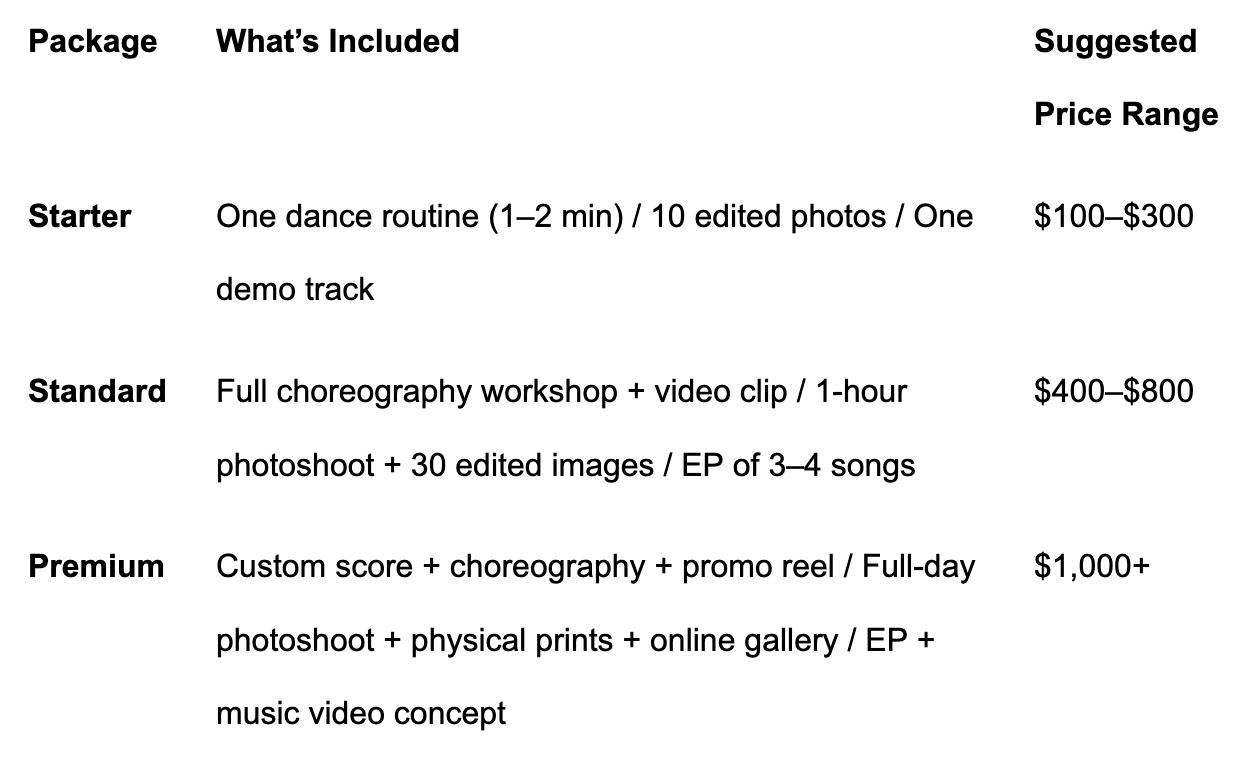
Table 1, By Earthly Upchurch
5. Crafting Irresistible Packages
Create tiered offerings that add value at every level. Created for photography services (Table 1), this structure lets clients choose how deep they want to dive—while ensuring you’re compensated for every extra service. Consider applying this type of pricing structure for your products and/or services to increase your lead generation and make your offer more accessible.
6. Negotiation: Your Second Art Form
When a potential client balks, welcome the conversation:
Ask for their budget.
Explain what fits—and what doesn’t.
Offer alternatives. If they can’t afford your top package, scale back features rather than slashing your hourly rate.
Although negotiating and working with a potential client’s budget can help seal the deal, weigh the benefits and potential downsides to every deal. Sometimes a client with a lower budget can be much more demanding than a high-paying client.

Photo by pressmaster | Adobe Stock
7. Protect Your Work
Contracts: Always. Even. For. A. Gig.
Deposits: Require 30–50% up front. It shows commitment and covers initial costs.
Clear Deliverables: Spell out exactly what you’ll deliver, when, and in what format.
8. Reassess and Raise
Every six to twelve months, revisit your rates. As you gain skills, invest in better equipment, or build a bigger following, it’s perfectly fair to increase your prices. Your art and (your audience) will grow right alongside you.
Pricing your art is part math, part market savvy, and a whole lot of self-respect. By breaking down costs, researching peers, creating dynamic packages, and negotiating smartly, you’ll never undersell your brilliance again. Go forth, set those rates, and let your art shine! Have your own pricing tips or valuable negotiation stories? Drop them in the comments below; let’s learn together!
Edited by KBR on December 9, 2025